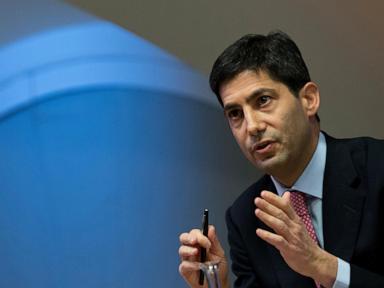
Senator Elizabeth Warren isn't just picking a fight over paperwork. When she calls Kevin Warsh’s financial disclosures a "red flag surrounded by fireworks and sparklers," she’s pointing to a systemic breakdown in how we vet the people who control our money. Warsh, President Trump’s pick to lead the Federal Reserve, is currently sitting on a fortune north of $100 million. That's fine—success isn't a crime. The problem is that he won't say exactly where that money is, and in the world of central banking, what you don't know can absolutely hurt you.
The Federal Reserve is arguably the most powerful economic institution on the planet. Its chair can tank the stock market or spark a recovery with a single sentence. Because of that power, we usually demand total clarity on what the chair owns to ensure they aren't padding their own pockets while setting interest rates. Warsh is testing the limits of that tradition, citing "pre-existing confidentiality agreements" as a reason to keep the specifics of his portfolio under wraps. Meanwhile, you can explore similar developments here: Securing the Strait: The Mechanics of the Hormuz Multinational Maritime Shield.
The Massive Holes in the Warsh Disclosures
It’s hard to overstate how much we’re missing here. Warsh has admitted to owning a stake in Polymarket—the crypto-based prediction market that has become a lightning rod for controversy—but he hasn't disclosed the size of that stake. He also runs a solo financial advisory firm called Vicarage LLC. Who are the clients? We don't know. He’s worked as an advisor to billionaire Stanley Druckenmiller, pulling in roughly $10 million for the privilege.
Warren’s meeting with Warsh on Thursday didn't go well. She asked for more detail; he basically told her his hands were tied by private contracts. That’s a bold move for someone asking for a job that requires Senate confirmation. If you want to run the Fed, "trust me" shouldn't be your primary argument. To see the complete picture, check out the recent article by The Guardian.
The timing is even more chaotic because of what’s happening at the Fed right now. Jerome Powell’s term as chair ends on May 15, but he’s not just fading into the sunset. There’s a Department of Justice investigation into Powell regarding cost overruns for a $2.5 billion building renovation. Some see this as a legitimate probe; others, like Senator Thom Tillis, see it as a "frivolous" attempt to bully Powell out of the way. Tillis has already said he won't vote for Warsh until that investigation is resolved. This isn't just a Democrat vs. Republican thing. It’s a fight about the Fed’s independence from the White House.
Why Transparency is Not Optional
Central bank ethics shouldn't be a "nice to have" feature. We’ve already seen what happens when Fed officials play fast and loose with their personal trades. Just last summer, Governor Adriana Kugler had to resign after her spouse’s financial transactions violated the rules. Before that, the 2021 trading scandal involving Robert Kaplan and Eric Rosengren forced both to retire early and trashed the Fed's reputation for impartiality.
The Fed's current rules are strict for a reason:
- Officials can't hold bank stocks.
- They can't hold cryptocurrencies.
- They can't hold individual bonds or agency-backed securities.
Warsh’s portfolio is a minefield of these exact assets. He owns stakes in Tenderly (an Ethereum developer platform), Stashfin (a neobank), and Lemon Cash (a crypto platform). He says he’ll sell them if confirmed. But without knowing the exact values or the nature of his "confidential" agreements, the Senate can't verify if he’s actually unentangled by May 15. If he’s still tied to these assets while the Fed is deciding on crypto regulations or interest rate hikes that affect neobanks, the conflict of interest is immediate.
The Iran War and the Inflation Pressure Cooker
If Warsh gets confirmed, he isn't walking into an easy job. The war with Iran has sent oil prices screaming higher, which means inflation is acting up again. Normally, the Fed would keep rates high to fight that. But President Trump has been loud about wanting rate cuts.
Imagine a Fed Chair who owes his job to a President who wants lower rates, while that same Chair has undisclosed financial ties to private investment funds that would profit immensely from those same rate cuts. That’s the nightmare scenario Warren is trying to prevent. It isn't just about being "transparent"; it’s about whether the public can believe the Fed is acting for the economy or for a small circle of wealthy insiders.
The Epstein Connection and the FBI Question
One of the more jarring details to emerge from Warren's talk with reporters was her mention of Jeffrey Epstein. She noted that Warsh's name appeared in documents related to the late convicted sex criminal. When she pressed the White House briefer on this, she was told the FBI hadn't investigated those specific connections or Warsh’s undisclosed assets.
Is there a "smoking gun" there? Maybe not. But Warren’s point is that the vetting process feels rushed and incomplete. When you combine a $100 million opaque portfolio with controversial names and a DOJ investigation into the sitting Chair, the whole thing starts to look like a mess.
What Happens Next
The Senate Banking Committee is scheduled to hold a hearing on Tuesday, April 21. All 11 Democrats on the committee have asked for a delay. They want the DOJ investigations finished and the financial disclosures fixed before anyone votes.
If you're tracking this, don't just watch the party lines. Watch the Republicans like Thom Tillis. If they don't budge on the Powell investigation, Warsh doesn't have the votes. This could lead to a scenario where the Fed is leaderless, or Powell stays on in a diminished capacity, which would be the most awkward "handoff" in the history of the central bank.
Pay attention to the specific assets Warsh eventually (or doesn't) disclose. If the confidentiality agreements stay in place, expect the hearing to be a bloodbath. If you’re an investor, this uncertainty is the last thing you want to see. The Fed needs a steady hand, not a question mark.



