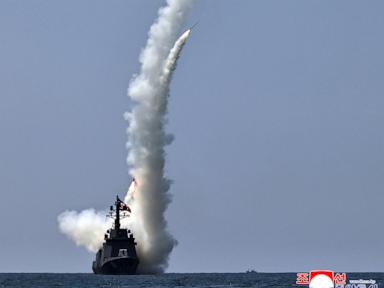
North Korea just fired a strategic cruise missile into the East Sea from a massive warship. Kim Jong Un stood on the coast, watching the test with a clear agenda. He isn't just trying to grab headlines this time. He wants a blue-water navy that can deliver nuclear strikes far from his shores.
The state-run Korean Central News Agency reported that the North Korean leader supervised live-fire tests aboard the Kang Kon, a new 5,000-ton destroyer. The Friday trials included firing Hwasal-series strategic cruise missiles, testing naval artillery, and running electronic warfare drills. The South Korean military detected the launch on July 3, and intelligence agencies in Seoul and Washington are combing through the data.
Kim didn't just watch the show. He gave the military a strict two-month deadline to get this warship fully commissioned and out on active duty. It's a frantic pace that signals a massive shift in Pyongyang's military doctrine. For decades, North Korea built its leverage on land-based ballistic missiles hidden in mountains. Now, it's taking that nuclear threat out to sea.
The Resurrection of the Kang Kon
Building this ship wasn't easy. The Kang Kon represents a significant engineering push for the regime, but it almost didn't happen. In May 2025, the ship actually capsized and tipped over during a botched initial launching ceremony at the northeastern port of Chongjin. The failure triggered a furious response from Kim, who demanded immediate repairs.
Pyongyang managed to salvage the vessel, quietly relaunching it after extensive repairs. The Friday tests were designed to prove the ship can actually fight after its embarrassing start. Technicians put the vessel's target detection, information processing, and integrated firepower systems through their paces.
This latest push comes right on the heels of another major naval milestone. In late June, North Korea commissioned the Choe Hyon, a sister 5,000-ton destroyer assigned to defend the West Sea. By putting the Choe Hyon on the west coast and rushing the Kang Kon to the east coast, Kim is creating a two-pronged maritime threat that complicates defense plans for South Korea, Japan, and the United States.
Behind the Sudden Naval Expansion
Why build large surface warships when American and South Korean submarines can track them relatively easily? The answer lies in the regime's long-term defense strategy. Kim wants an absolute power projection capability that cannot be wiped out in a single first strike.
During the Workers' Party congress, Kim outlined an aggressive five-year military plan running through 2030. He wants his shipyards to churn out two 5,000-ton warships every single year. He also ordered the development of a massive 10,000-ton cruiser and called for large, multi-functional naval bases to house these bigger fleets.
"He affirmed that we will demonstrate through more obvious actions our political will and determination to have an absolute power," reported state media.
Security analysts in Seoul suspect North Korea isn't doing this alone. Deepening military ties between Pyongyang and Moscow have raised concerns that Russian naval technology is flowing into North Korean shipyards. While the regime claims these ships are entirely domestic triumphs, the sudden jump from small patrol boats to 5,000-ton guided-missile destroyers suggests external technical help.
What These Naval Tests Mean for Global Security
A surface navy is vulnerable, but it gives Kim options he never had before. A strategic cruise missile fired from a mobile warship can hide its launch point better than a fixed land silo. The blue camouflage paint observed on the newly tested cruise missiles indicates an attempt to mask the weapons against the ocean surface during flight.
The word "strategic" is the key detail here. In North Korean military terminology, strategic means nuclear-capable. If the Hwasal cruise missiles can reliably carry miniaturized nuclear warheads, every new destroyer Kim puts into service becomes a floating nuclear launch pad.
The immediate next steps for regional security forces are clear. Expect Western intelligence to ramp up satellite surveillance on the Chongjin and Sinpo shipyards to track the construction of the next warships in the pipeline. Naval forces in the Pacific will likely increase anti-submarine and surface tracking drills in the East Sea to monitor the Kang Kon the moment its two-month trial window closes and it officially joins the fleet.