The traditional equation of structural demolition dictated that to breach reinforced concrete, an offensive force required heavy tactical aviation or high-caliber towed artillery. This relationship is bound by physical law: transferring sufficient kinetic energy to rupture reinforced materials historically necessitated massive delivery systems.
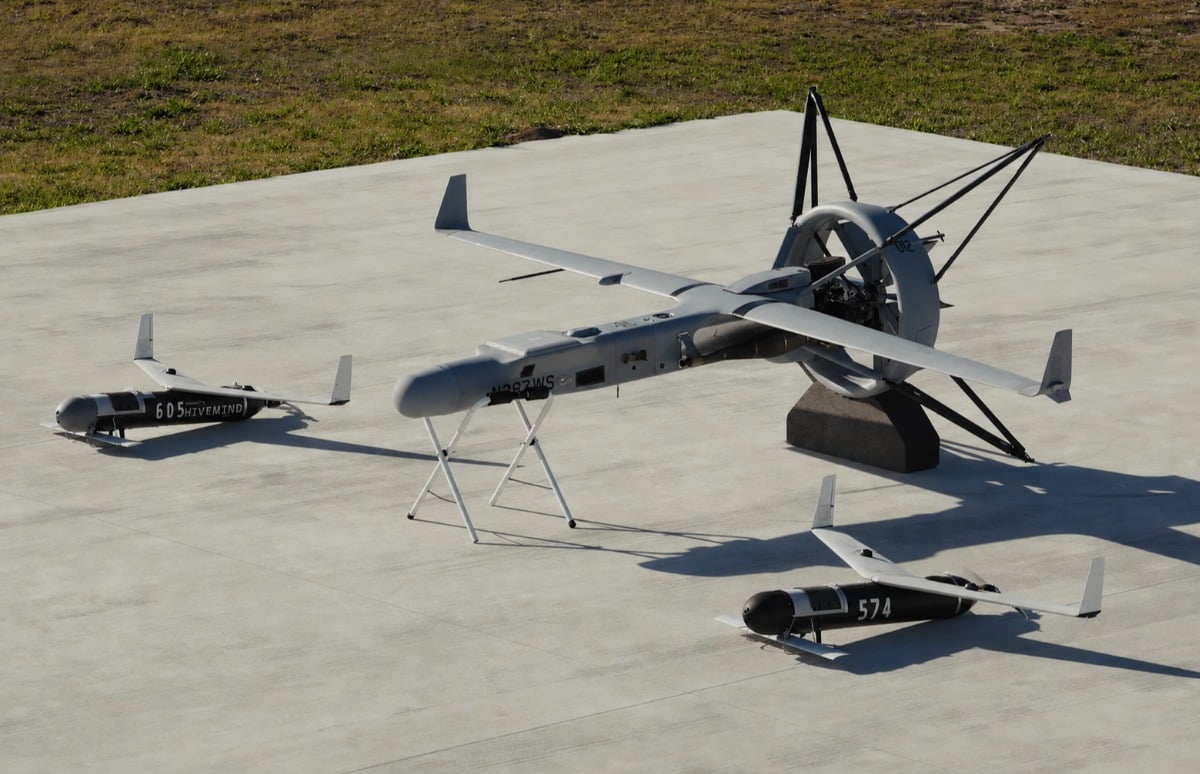
The introduction of specialized, small-form-factor bunker-busting munitions deployed via low-cost unmanned aerial vehicles (UAVs) breaks this capital-intensive model. By altering the delivery mechanics, terminal velocity dependencies, and explosive geometries, this technical evolution shifts fortification defeat from a problem of raw mass to one of localized structural failure.
The Triad of Low-Mass Structural Penetration
To understand how a lightweight drone-delivered munition defeats a hardened structure, the mechanism must be broken down into three independent variables: structural impedance, localized kinetic energy concentration, and directional explosive yield.
                  [ Terminal Precision Flight ]
                               |
                               v
               +-------------------------------+
               |  Primary Penetration Phase    |
               |  - High-Density Nose Cone     |
               |  - Chemical Booster Acceleration|
               +-------------------------------+
                               |
                               v
               +-------------------------------+
               |   Terminal Breaching Phase    |
               |  - High-Velocity Jet Inflow   |
               |  - Concrete Spalling / Cavity |
               +-------------------------------+
                               |
                               v
               +-------------------------------+
               | Internal Overpressure Phase   |
               |  - Delayed Fuse Detonation   |
               |  - Total Structural Rupture   |
               +-------------------------------+
Standard industrial concrete exhibits compressive strength ratings ranging from 30 to 50 megapascals (MPa), while specialized military fortifications can exceed 100 MPa. Conventional artillery relies on mass and gravitational acceleration to yield the requisite kinetic energy ($E_k = \frac{1}{2}mv^2$) to pierce these barriers.
A drone platform, constrained by limited maximum takeoff weight (MTOW), cannot scale mass ($m$). Therefore, the engineering solution optimizes velocity ($v$) at the point of impact and minimizes the area of contact ($A$) to maximize localized pressure ($P = \frac{F}{A}$).
1. The Multi-Stage Explosive Sequence
Rather than relying on a single, monolithic blast, modern micro-bunker-busters deploy a tandem-charge configuration or an Explosively Formed Penetrator (EFP). The process functions via a precise two-step chronology:
- The Precursor Charge: Upon contact, a highly concentrated shaped charge fires a high-velocity plasma jet forward. This jet does not destroy the bunker; instead, it creates a narrow, deep borehole by hyper-velocity impact, neutralizing the outer layers of reinforcement steel and concrete.
- The Follow-Through Warhead: Safely trailing milliseconds behind the initial blast, a secondary high-explosive block enters the newly formed channel. A delayed-action fuse ensures detonation occurs deep within the substrate or inside the interior cavity of the structure.
2. Materials and Geometric Optimization
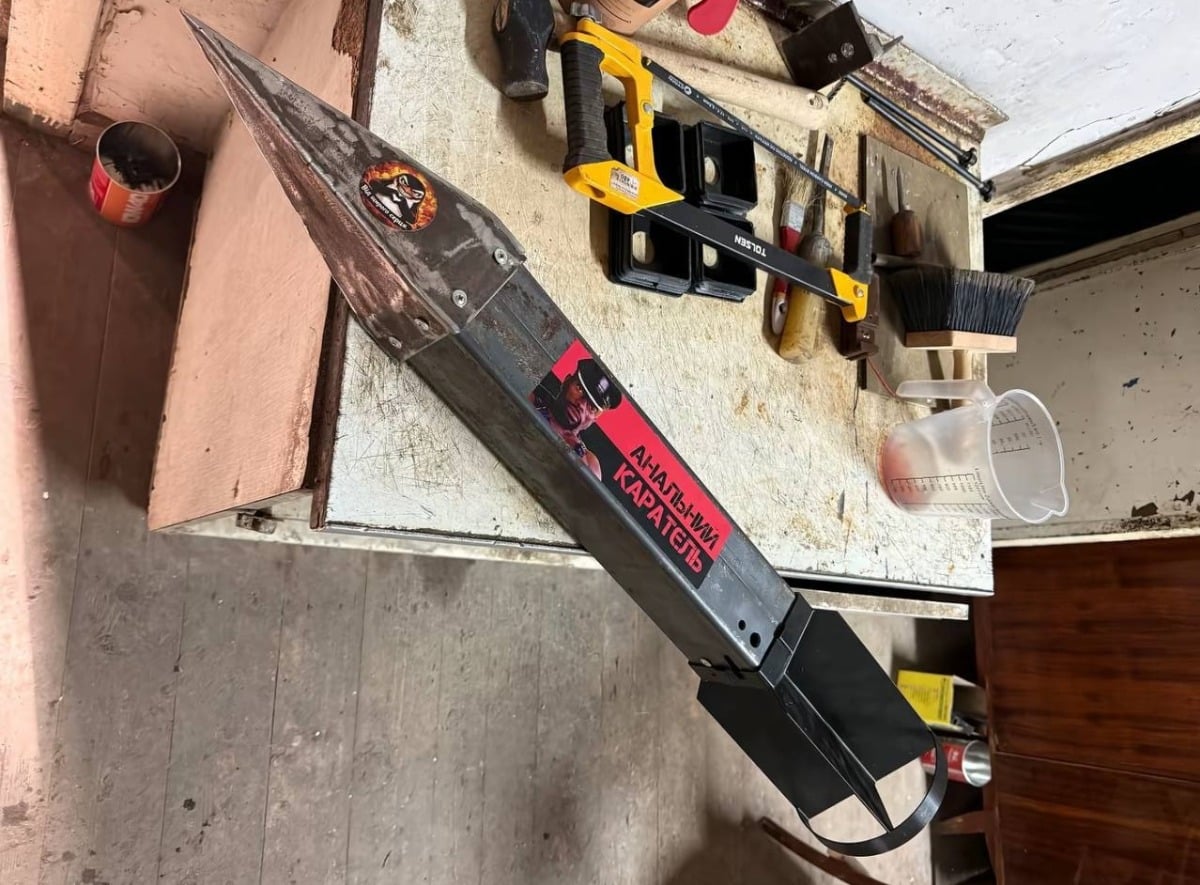
Standard casings shatter on impact against military-grade concrete, dissipating energy outward instead of inward. To circumvent this structural collapse, the warhead housing utilizes dense materials such as depleted uranium or tungsten alloys.
By sharpening the nose-cone geometry and concentrating the center of gravity forward, the projectile preserves its vector upon impact, preventing deflection or premature disintegration.
3. Flight-Phase Acceleration Mechanics
Because quadcopter or hexacopter platforms release payloads at low initial velocities compared to fixed-wing aircraft, gravity alone cannot generate the terminal velocity required for deep penetration. To solve this, developers integrate chemical boosters or compact rocket motors into the munition housing.
When the drone achieves its terminal dive angle, the chemical booster ignites, accelerating the payload beyond its free-fall velocity directly into the target face. This integration preserves battery life during the transit phase while delivering the required kinetic energy during the strike phase.
Technical Constraints and Structural Bottlenecks
While the tactical utility of low-cost fortification defeat is clear, physical and engineering limitations prevent it from becoming an absolute replacement for heavy ordnance.
The Weight-to-Yield Ratio
A strict mathematical ceiling exists when translating this technology to small-scale drones. Standard heavy bombers carry munitions weighing between 250 kilograms and 2,000 kilograms. A tactical quadcopter (such as the Ukrainian Heavy "Vampire" or "Baba Yaga" platforms) operates with a typical payload capacity limited to 10 to 15 kilograms.
+---------------------------+-----------------------+-------------------------+
| Platform Class            | Payload Limit (kg)    | Penetration Depth (m)   |
+---------------------------+-----------------------+-------------------------+
| Micro-FPV Drone           | 1.5 - 3.0             | 0.1 - 0.2               |
| Heavy Bomber Quadcopter   | 10.0 - 15.0           | 0.5 - 1.0               |
| Fixed-Wing Glide Bomb     | 250.0 - 500.0         | 2.0 - 5.0               |
+---------------------------+-----------------------+-------------------------+
Because structural concrete damage scales logarithmically with the mass of the explosive charge, a 10-kilogram munition utilizing an EFP can successfully compromise specific high-value nodes—such as field command points, reinforced machine-gun nests, or ammunition storage cellars—but lacks the sheer displacement mass to collapse subterranean concrete complexes.
The Angle of Attack Dependency
For an EFP or shaped charge to successfully penetrate a concrete barrier, the vector of impact must match the perpendicular axis of the target surface as closely as possible. If the drone delivers the munition at an oblique angle, the plasma jet deflects across the surface, causing a shallow crater rather than a deep breach.
This requires sophisticated terminal guidance systems capable of automated flight-path adjustments during the final fractions of a second, compensating for crosswinds and defensive jamming.
The Economics of Fortification Neutralization
The primary driver for implementing drone-delivered bunker-busting weapons is an asymmetric cost-to-effect ratio. The traditional method for neutralizing a hardened target involves firing extensive artillery barrages or launching high-precision cruise missiles.
[Traditional Cruise Missile Strike] -----> High Capital Outlay ($1M+) -----> Low Scalability
[Autonomous Micro-Munition Strike] -----> Low Capital Outlay (<$10k) ------> High Scalability
A standard cruise missile presents an acquisition cost between $1 million and $3 million, drawing down highly complex global supply chains. Conversely, a customized heavy quadcopter carrying a 3D-printed, chemically accelerated tandem-charge munition costs less than $10,000 to manufacture and assemble.
When analyzing this through an industrial friction model, the defensive asset (the concrete bunker) requires significant time, heavy machinery, and material assets to construct. The offensive asset (the micro-munition) can be produced in decentralized workshops at a scale of hundreds of units per day.
This imbalance forces a structural shift in defensive posture: holding fixed, fortified ground becomes economically non-viable when the cost to breach the position is orders of magnitude lower than the cost to construct it.
Tactical Implementation and Deployment Architecture
To successfully deploy these munitions within active electronic warfare environments, operations must move away from manual piloting toward localized algorithmic autonomy.
- Surveillance and Structural Reconnaissance: Long-range reconnaissance drones map the target asset using multi-spectral imaging to locate weak points, such as ventilation shafts, door seals, or structural seams.
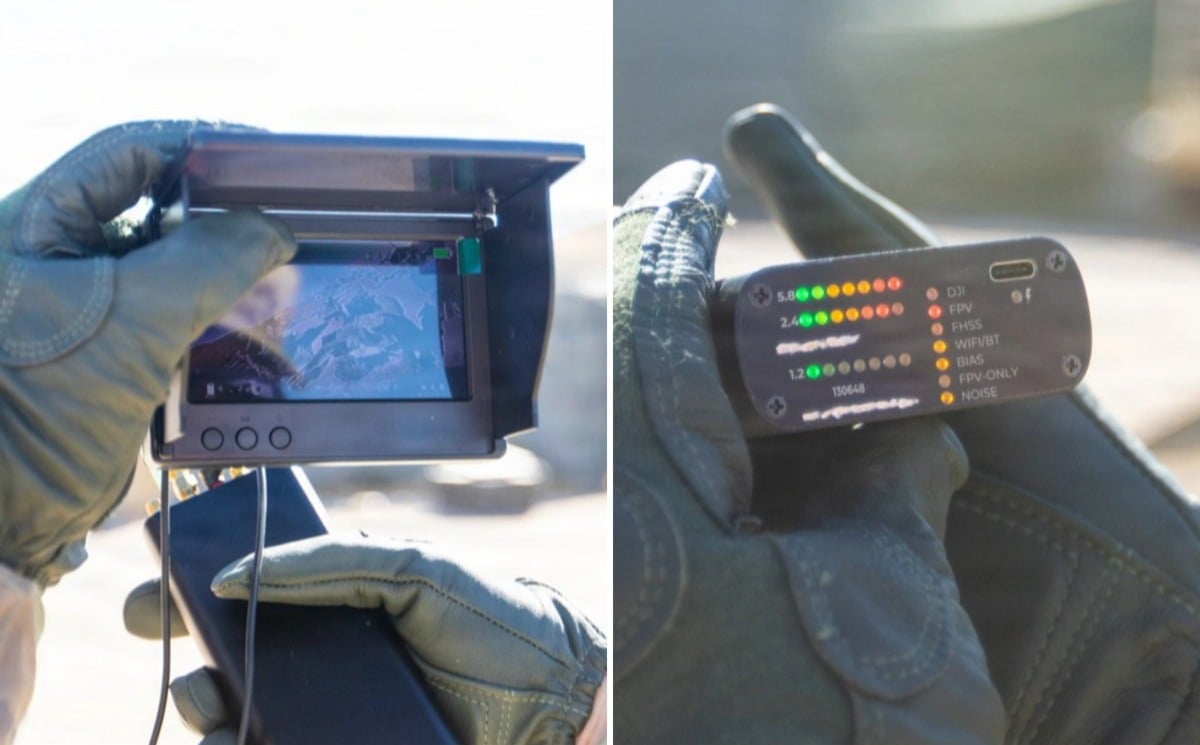
- Electronic Warfare Mitigation: The strike drone approaches via low-altitude flight paths, utilizing optical flow and inertial navigation systems to bypass localized GPS-jamming fields.
- Terminal Target Lock: Once within visual range, an onboard edge-computing processor identifies the specific entrance or structural vulnerability, transitions control from the operator to the internal tracking algorithm, and initiates the terminal dive.
- Booster Ignition and Impact: The chemical propulsion unit fires, driving the stabilized tandem-charge warhead into the concrete face at optimal velocity and angle, collapsing the internal structure.
The defense industry must now adapt to a reality where physical thickness no longer guarantees survivability. The path forward demands dynamic, mobile defensive arrays and active interception systems, as static concrete barriers can now be systematically unseated by low-cost, high-precision kinetic attrition.