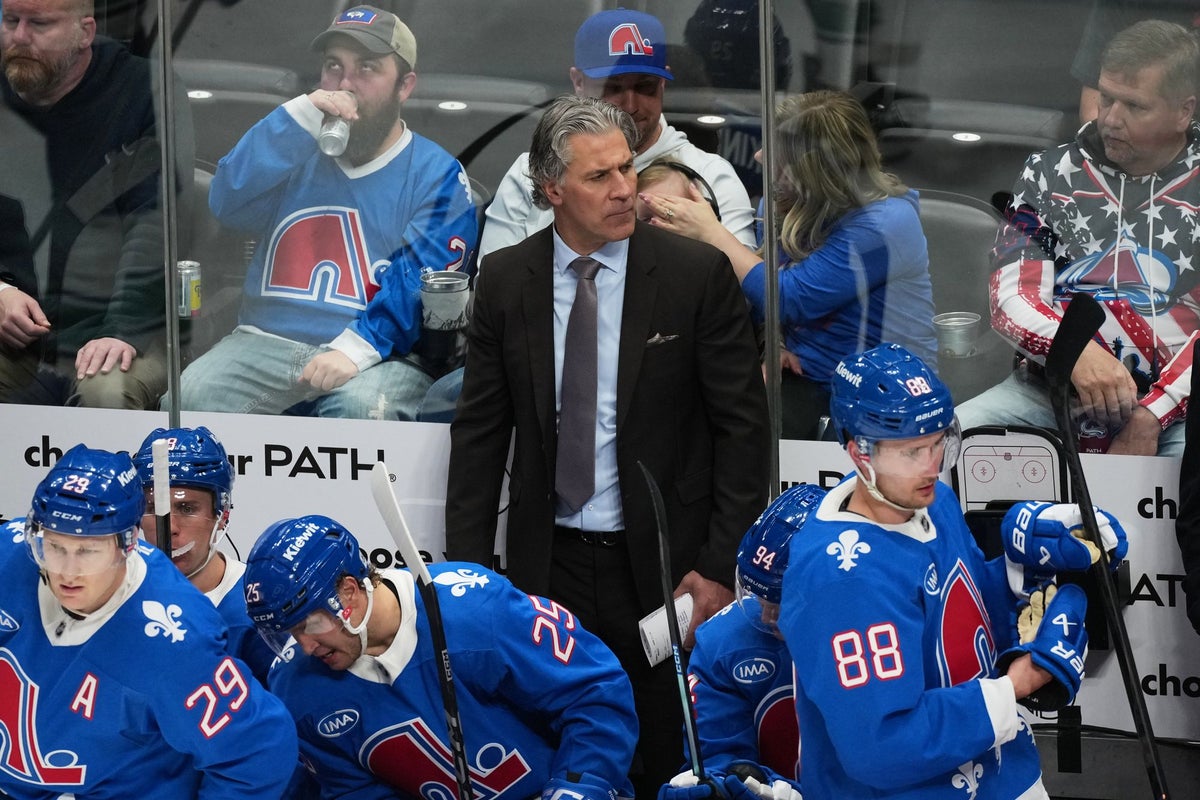
The recent incident involving an NHL coach sustaining multiple facial fractures from a deflected puck serves as a clinical demonstration of the vulnerability inherent in modern professional hockey's technical area. While players are increasingly shielded by evolving polycarbonate visors and reinforced helmets, the coaching staff remains exposed to ballistic-level projectiles within a high-velocity environment. An analysis of the physics involved reveals that a standard 6-ounce vulcanized rubber puck, traveling at professional speeds, carries sufficient kinetic energy to exceed the structural load-bearing capacity of the human maxillofacial skeleton upon impact.
The Physics of Vulcanized Projectiles
To understand the severity of facial fractures in this context, one must first quantify the energy transfer occurring at the point of contact. A professional-grade hockey puck possesses specific physical properties that make it a uniquely dangerous projectile. For a more detailed analysis into this area, we suggest: this related article.
- Mass and Density: Weighing between 156 and 170 grams, the puck is dense and inelastic. Unlike a tennis ball or even a baseball, it does not deform significantly upon impact, meaning the entirety of its kinetic energy is transferred directly to the target surface.
- Velocity Profiles: While a slapshot can exceed 100 mph, even a deflected puck or a "clearance" attempt often travels between 60 and 80 mph. At 80 mph (approximately 35.7 meters per second), a 170-gram puck carries a kinetic energy of roughly 108 Joules.
- Surface Area Concentration: The edge of a puck presents a narrow strike surface. When this edge hits the zygomatic bone (cheekbone) or the orbital rim, the force is concentrated into a small area, creating massive localized pressure that far exceeds the fracture threshold of human bone.
The formula for kinetic energy, $E_k = \frac{1}{2}mv^2$, highlights why velocity is the primary driver of injury severity. Because velocity is squared, a marginal increase in puck speed results in a disproportionate increase in the potential for structural bone failure.
Structural Vulnerability of the Maxillofacial Skeleton
The human face is not a solid block of bone; it is a complex architecture of "buttresses" designed to protect the brain and support sensory organs. These vertical and horizontal pillars are meant to withstand the forces of mastication (chewing), not high-velocity blunt force trauma. For further information on this development, extensive coverage can also be found on Bleacher Report.
The Zygomaticomaxillary Complex (ZMC)
The ZMC is the most frequent site of fracture in hockey-related facial trauma. It involves four points of attachment: the frontal bone, the maxilla, the temporal bone, and the sphenoid bone. When a puck strikes the cheek, it often causes a "tripod" or "quadripod" fracture, effectively breaking the cheekbone away from the rest of the skull. This results in functional deficits, such as trismus (difficulty opening the jaw) or diplopia (double vision), as the orbital floor collapses and traps the eye muscles.
Orbital Blowout Mechanisms
Even if the puck does not hit the cheek directly, a strike to the soft tissue of the eye can cause an orbital blowout fracture. The sudden increase in intraorbital pressure forces the thin bones of the orbital floor to "blow out" into the maxillary sinus. This is a biological safety valve intended to prevent the globe of the eye from rupturing, but it requires immediate surgical intervention to prevent permanent vision loss.
The Gap in Operational Safety Protocols
The NHL's current safety architecture is heavily weighted toward active participants—the players and officials. This creates a security asymmetry behind the bench.
- Fixed Positions: Unlike players who are in constant motion and can use their equipment to deflect incoming objects, coaches often stand in a fixed position. Their focus is directed toward tactical execution, which reduces their reaction time to "freak" deflections.
- The Sightline Conflict: Coaches resist physical barriers like higher glass or protective shields because these obstructions distort the field of view and hinder the ability to communicate with players and officials.
- Equipment Disparity: While players wear Kevlar-reinforced neck guards and high-impact helmets, coaches typically wear standard business attire or team tracksuits, offering zero protection to the cranium or face.
Clinical Management of Multi-Fragment Fractures
Recovery from facial fractures in a high-performance environment is not merely about bone healing; it is about restoring symmetry and sensory function.
The first phase involves reducing inflammation to assess the degree of nerve damage, particularly to the infraorbital nerve, which provides sensation to the cheek and upper lip. If the fractures are displaced, Open Reduction Internal Fixation (ORIF) becomes mandatory. This involves the permanent placement of titanium plates and screws to bridge the gaps in the bone.
The second phase addresses the psychological and physiological "blink reflex." Athletes and staff who have suffered high-velocity facial trauma often experience a subconscious flinch response when returning to the environment. This neurological recalibration is as critical to the "return to work" timeline as the physical knitting of the bone.
Comparative Risk: Bench vs. Ice
Data suggests that while the frequency of injury is higher for players, the severity of facial injury per incident can be higher for coaches due to the lack of protective gear. A player hit in the face usually has a visor that absorbs a portion of the Joules before the puck reaches skin. A coach receives the full 100% energy transfer.
The proximity of the bench to the "danger zone"—the area where pucks are frequently cleared along the glass or deflected high off sticks—means the probability of an incident is a statistical certainty over a long enough timeline. The league must eventually reconcile the aesthetics of an open bench with the liability of unshielded personnel.
Strategic Mitigation for Professional Staff
The mitigation of these risks requires a shift from reactive medical treatment to proactive structural engineering within the arena.
- Mandatory High-Impact Eye Protection: If full shields are rejected, the implementation of low-profile, ballistic-grade eyewear for bench staff would protect the orbital socket from the most catastrophic vision-threatening injuries.
- Redesigning the Bench Canopy: Integrating transparent, high-strength polycarbonate "lips" that extend slightly over the bench area could deflect pucks traveling on an upward trajectory from the ice.
- Real-time Kinetic Tracking: Using existing player-tracking technology to map "danger zones" on the ice where pucks most frequently exit play could allow coaches to reposition themselves during specific play types, such as defensive zone face-offs where high clearances are common.
The current trajectory of the game—faster players, stiffer carbon-fiber sticks, and increased shot velocity—guarantees that the force of impacts will only increase. Professional hockey must decide if the traditional "open" look of the bench is worth the recurring cost of reconstructive facial surgery for its tactical leadership.