The travel industry has a script for Lanzarote, and you’ve likely bought into it.
The brochure version goes like this: a mystical land of 100 volcanoes, an untouched lunar desert, and a sanctuary of white-washed villages preserved by the artistic vision of César Manrique. It’s framed as the "authentic" Canary Island, the sophisticated sibling to the neon-soaked strips of Tenerife or the sandy sprawl of Fuerteventura.
That narrative is a curated illusion.
If you go to Lanzarote looking for raw nature, you’re actually walking into a highly managed theme park. The "heat rising from the ground" at Timanfaya? It’s a choreographed tourist demonstration involving dry brush and water pipes. The "unspoiled" architecture? It’s a rigid building code that has turned an entire island into a monoculture of aesthetic conformity.
We need to stop romanticizing the "volcanic soul" and start looking at how Lanzarote became the world’s most successful experiment in architectural brand management—and why that’s actually making it a boring place to visit.
The Manrique Myth: Architecture as a Straightjacket
Every travel writer mentions César Manrique as if he were a local deity who saved the island from the "evils" of high-rise tourism. While his intent was noble—protecting the skyline from the concrete monstrosities of the 1970s—the result has been the fossilization of a living culture.
In most parts of the world, architecture evolves. It breathes. It reflects the changing needs and identities of its people. In Lanzarote, if you want to paint your shutters a shade of blue that isn't the government-approved "Atlantic Blue," or if you want to use a building material that doesn't look like white lime, you’re in for a legal battle.
This isn't preservation; it’s a stylistic blockade. By forcing every village to look identical, the island has sacrificed its genuine history for a "vibe." When every house looks like a boutique hotel, none of them feel like homes. You aren't visiting a Spanish island; you're visiting a 3D render of what Northern Europeans think a Spanish island should look like.
I have seen developers across the Mediterranean try to replicate this "Lanzarote Effect." They fail because they realize that living humans don't want to exist in a museum. The "shining white villages" the competitor article raves about are essentially high-maintenance stage sets.
The Timanfaya Trap: Geothermal Gimmicks
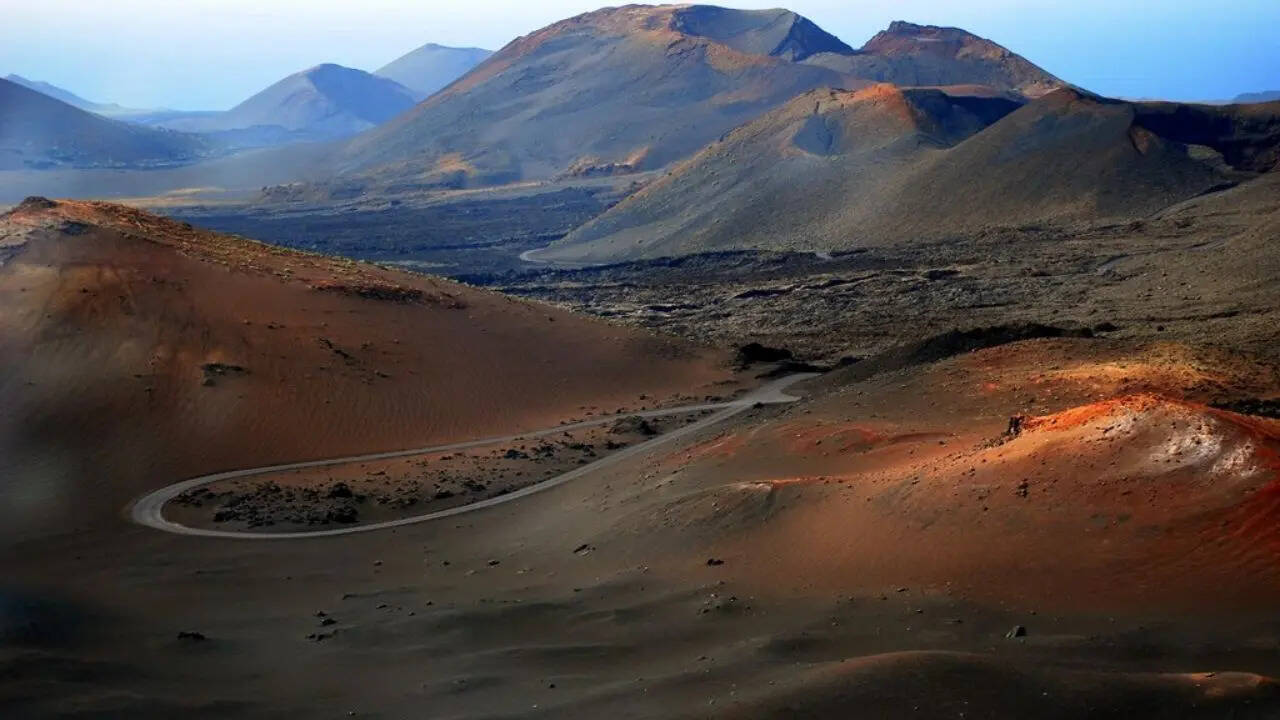
Let’s talk about the volcanoes. The "Isle of Fire" branding suggests a place where the earth is still screaming. In reality, Timanfaya National Park is one of the most restricted, sterile outdoor experiences in Europe.
You aren't allowed to hike freely. You aren't allowed to touch the rocks. You are funneled into a bus—the "Volcano Route"—where you stare through a glass window while a pre-recorded soundtrack of dramatic classical music plays over the speakers. It’s the Disney Jungle Cruise, but with basalt.
The geothermal demonstrations at the El Diablo restaurant are the peak of this artifice. A park ranger drops dry gorse into a hole, it catches fire, and the tourists clap. They pour water into a pipe, a geyser shoots up, and everyone takes the same Instagram photo.
The Reality of Geothermal Energy
If the island were actually as geothermally active as the marketing claims, Lanzarote would be a global leader in renewable energy. It isn't. Despite the "heat beneath your feet," the island remains heavily dependent on imported fuels and desalination plants that guzzle oil.
- The Fact: The shallow heat at Timanfaya is a localized residual pocket, not a massive, untapped power source.
- The Fiction: The idea that you are standing on a "living" volcano. The last eruption was in 1824. In geological terms, that’s yesterday; in human terms, it’s a dormant relic being used as a space heater for a grill.
Stop asking "how hot is the ground?" and start asking why the island hasn't moved faster toward a grid that matches its "green" reputation.
The Malvasia Delusion: Why You’re Paying Too Much for Wine
Lanzarote’s Geria vineyard region is objectively stunning. The zocos—the semi-circular stone walls protecting individual vines—create a geometric pattern that looks alien and beautiful.
But let’s be brutally honest about the wine.
The labor-intensive nature of this farming means the yield is incredibly low. Because everything must be done by hand, the price of a bottle of Lanzarote Malvasía is significantly higher than superior wines from the mainland or even neighboring islands like Tenerife. You aren't paying for the complexity of the grape; you’re paying for the maintenance of the stone walls.
The "volcanic minerality" people claim to taste is often a placebo effect triggered by the black ash under their boots. If you did a blind tasting of a high-end Lanzarote Malvasía against a solid Albariño, most travelers wouldn't be able to justify the €25 price jump. Enjoy the view, but don't let the "insider" narrative convince you that you've discovered the pinnacle of viticulture. You’ve discovered a very expensive landscape gardening project.
The "Quiet Luxury" Lie
The competitor article paints Lanzarote as an escape from the "mass tourism" of the other islands. This is a classic bait-and-switch.
Lanzarote is mass tourism; it just wears a linen shirt.
Puerto del Carmen, Costa Teguise, and Playa Blanca are built entirely around the British and German holiday cycle. The "quiet" parts of the island are only quiet because the government has restricted the growth of the local economy to keep the aesthetic intact for visitors.
This creates a weird, hollowed-out feeling in the interior. You find villages where the only people on the street are tourists taking photos of cactus gardens. The "local" experience is often a performance staged for the 10:00 AM bus arrival.
What People Also Ask (And Why They’re Wrong)
- "Is Lanzarote the most beautiful Canary Island?"
Beauty is subjective, but if you want diversity, go to La Palma or Gran Canaria. Lanzarote is monochromatic. If you’ve seen one black-rock-white-house vista, you have seen the entire island. It lacks the cloud forests, the massive ravines, and the alpine peaks found elsewhere. - "Is it better for families or couples?"
It’s better for people who want a predictable, low-friction environment. If you want adventure, the restrictions of the national park and the lack of off-trail access will frustrate you. - "Can you see the heat rising?"
No. You see steam from a pipe when a guy pours water in it. If you see heat rising naturally, call the authorities—you’re in the middle of a geological event.
How to Actually Experience the Island (Without the Script)
If you’re going to go, stop following the Manrique trail. You’ve seen the Jameos del Agua on every travel blog—it’s a swimming pool in a cave where you can’t swim, filled with tiny blind crabs that people throw coins at despite the signs telling them not to. It’s a claustrophobic trap.
If you want the real Lanzarote, you have to find the places where the aesthetic grip slips.
- Arrecife's Grime: Go to the capital. It’s not "pretty." It has concrete blocks, graffiti, and actual locals who aren't working in the tourism trade. Eat at a place that doesn't have a menu with pictures. This is the only place where the island feels like it belongs to the 21st century rather than a 1970s architectural sketch.
- The Famara Blur: Skip the calm, southern beaches. Famara is windy, the sand gets in your teeth, and the cliffs are terrifying. It’s the one place where the "wildness" isn't a marketing slogan.
- The Abandoned Structures: Look for the half-finished skeletons of hotels that were halted by legal battles. These "ghost hotels" tell the true story of the island—a constant war between the pressure for profit and the desperate need to maintain the Manrique brand.
The Volcanic Commodity
Lanzarote has successfully commodified geology. It has taken a disaster—the 18th-century eruptions that destroyed the island's most fertile farmland—and rebranded it as a luxury aesthetic.
There is a coldness to the island that the travel brochures call "minimalism." I call it a lack of pulse. When you remove the messiness of human development, you remove the soul of a place. Lanzarote is a masterpiece of art direction, but it is a mediocre destination for anyone seeking a genuine connection with a culture that isn't for sale.
Don't go to Lanzarote to "find yourself" in the lava fields. You’ll just find a thousand other people looking for the same pre-approved photo op. Go there to see how a small rock in the Atlantic managed to convince the world that a lack of color was a luxury, and that a dormant volcano was a theme park attraction.
The heat isn't rising from the ground. It’s coming from the friction of too many rental cars driving the same loop, searching for an authenticity that was painted white and paved over decades ago.