Power has a distinct scent. It smells like polished mahogany, expensive cologne, and the peculiar, insulated silence of a room where no one has ever told you no. For decades, that silence was the default setting for Andrew Mountbatten-Windsor. He grew up inside an ancient fortress of hereditary privilege, conditioned to believe that the iron gates of royal palaces were high enough to keep the ordinary consequences of the world at bay.
Then came the fall.
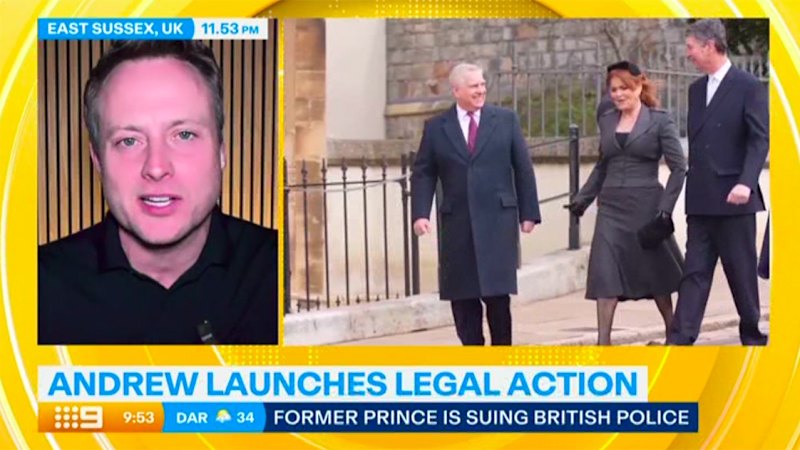
It did not happen all at once. It arrived in slow, agonizing increments—a disastrous television interview, the stripping of military titles, the quiet rustle of legal papers sliding across mahogany desks. And now, the former prince finds himself fighting a battle that no amount of royal lineage can win on charm alone. He has taken the police to court over an arrest linked to the sprawling, toxic fallout of the Jeffrey Epstein files.
Consider the sheer gravity of that courtroom scene. Imagine standing before a magistrate not as a symbol of an unbroken bloodline, but as a citizen demanding accountability from the very institutions that once swore allegiance to the Crown. It is a strange inversion of modern history. The royal shield, once impenetrable, has cracked down the middle.
To understand why this legal challenge matters beyond the breathless headlines of the tabloids, we have to look past the velvet drapery and examine how accountability actually functions in a modern democracy. When the Epstein files were prised open, they did not just reveal names; they exposed an entire ecosystem of untouchability. For years, the wealthy and the well-connected operated under an unwritten rule: proximity to power offered immunity from scrutiny.
Andrew’s legal maneuver is a desperate attempt to regain control of a narrative that slipped from his fingers long ago. By challenging the police actions tied to the document releases, his legal team is testing the boundaries of lawful inquiry against the backdrop of immense public fury. Yet, every motion filed and every hearing scheduled only deepens the public fascination with a simple, agonizing question.
Where does accountability begin when the accused holds a historic title?
Let us be entirely honest about the human element here. Behind the cold legal jargon, the injunctions, and the press releases, there are real lives forever altered by abuse and negligence. While lawyers argue fine points of procedure in quiet courtrooms, survivors of Epstein carry a weight that no legal victory can entirely lift. The contrast is jarring. On one side stands a man who once represented a global empire, fighting for procedural technicalities. On the other stand the ghosts of a massive, systemic failure of protection.
When we watch public figures stumble through legal defenses, we are witnessing the collision of two different worlds. There is the old world of divine right and unspoken accommodations, where scandals were quietly managed behind closed doors by men in gray suits. And there is the new world of relentless digital transparency, where documents are digitized in seconds, public outrage travels at the speed of fiber optics, and institutional protection is no longer guaranteed.
The police action at the heart of this court battle is not merely a localized dispute over police procedure. It is a proxy war for the soul of public trust. If the wealthy can bend the law through procedural exhaustion, faith in the justice system frays a little more. If the law holds the powerful to the exact same standard as the marginalized, a new precedent is carved into the bedrock of society.
History teaches us that empires do not usually fall to invading armies from the outside. They decay from within, rotted by the quiet assumption that the rules apply to everyone else. Every time a high-ranking official or a member of royalty attempts to use legal machinery to shield themselves from the glaring light of public accountability, the public watches closely. They are not just evaluating the guilt or innocence of one man. They are measuring the integrity of the entire system.
The courtroom doors will eventually swing open. The judges will render their decisions, and the legal briefs will gather dust in dusty archives. But the ripples of this confrontation will linger long after the headlines fade. It marks a definitive shift in how society views inherited power. The invisible walls are coming down, brick by legal brick, exposing the reality that no title is heavy enough to crush the demand for truth.
The silence is broken. And there is no going back.