The screen at the departure gate doesn't care about your wedding anniversary. It doesn't care that your daughter is starting her first day of school back in Melbourne or that your elderly father’s medication is sitting in a kitchen drawer in Perth, three flights and ten thousand miles away. When the pixels flicker from a steady green "On Time" to a jagged, pulsing red "Cancelled," the machine is just reporting a data point. But for the thousands of Australians currently standing in the humid, anxious air of Middle Eastern transit hubs, that red text is the sound of a door slamming shut.
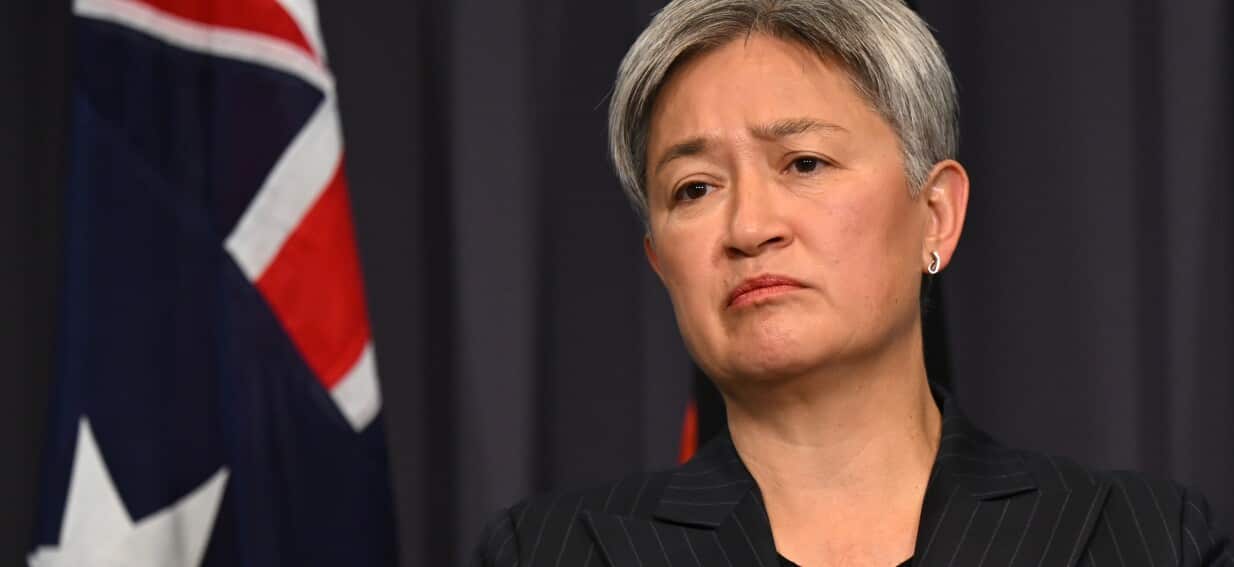
Foreign Minister Penny Wong didn't use the language of poetry when she addressed the nation this week. She used the language of a clock ticking down. Her warning was blunt: the window is closing. If you can get out, get out now. Do not wait for a better price. Do not wait for a more convenient connection. The "difficult days" she described aren't a vague geopolitical forecast; they are the lived reality of a traveler clutching a passport in a terminal where the lights might not stay on forever.
The Invisible Weight of a Boarding Pass
Consider a hypothetical traveler named Elias. He’s a civil engineer from Adelaide, currently sitting on a plastic chair in Beirut. He has a ticket. He has a bag. He even has a plan. But Elias is watching the news on his phone, seeing the flight carriers—Lufthansa, Emirates, Air France—slowly peel away from the region like skin from a wound. One by one, the options vanish.
When a major airline cancels a route in a conflict zone, it isn't just a logistics problem. It is a withdrawal of certainty. The air bridges that connect the volatile Levant to the quiet suburbs of Australia are fragile. They rely on insurance premiums, fuel security, and the simple, terrifying calculation of whether a pilot feels safe flying through a particular patch of sky at 30,000 feet. When those calculations fail, people like Elias are no longer travelers. They are stranded.
The Australian government is being uncharacteristically direct because they know the math of a crisis. There are an estimated 15,000 Australians in Lebanon alone. If the Beirut airport closes, there is no "Plan B" that involves a simple bus ride. The geography of the region turns into a cage. To the west is the sea; to the south and east, borders that are currently humming with the machinery of war.
Why the Silence from the Airlines Matters
The cancellations started as a trickle. A few night flights were moved to day slots. Then, certain hubs were bypassed. Now, we are seeing the structural collapse of commercial transit in the region.
Airlines are the canaries in the coal mine of global stability. They have the most sophisticated risk-assessment departments on the planet. When they pull out, they aren't just reacting to what happened yesterday; they are pricing in what they fear will happen tomorrow. For an Australian family trying to navigate this, the "market" has suddenly become an enemy. Prices for the remaining seats on the few departing planes have spiked into the thousands of dollars.
This is the "difficult day" Wong warned about. It’s the moment when a standard credit card limit isn't enough to buy your way to safety. It’s the realization that the Australian government, despite its best efforts, cannot conjure a fleet of evacuation planes out of thin air the moment a full-scale conflict erupts.
The Logistics of a Ghost Port
The tension in Lebanon, Israel, and the surrounding territories isn't a new story, but the current escalation has a different gravity. For decades, the Lebanese diaspora has moved back and forth with a seasoned resilience. They have seen "troubles" before. They have waited out skirmishes. But the government’s shift in tone suggests that the old rules of "wait and see" are now a dangerous gamble.
If the airport shuts down, the only way out is by sea or by highly coordinated, high-risk military evacuations. We saw this in 2006. It was slow. It was chaotic. It involved thousands of people waiting on docks under a blistering sun, hoping for a spot on a chartered ferry. The government is trying to prevent a repeat of that trauma by pleading with people to use the commercial infrastructure while it still exists.
But there is a psychological barrier to leaving. Imagine you have a house in Tyre or a business in Beirut. Leaving "now" means abandoning your life based on a warning. It means choosing the certainty of loss—the cost of the flight, the abandonment of property—over the hope that things might just simmer down. It is a choice between a difficult departure today or a potentially impossible one tomorrow.
The Geography of Fear
Distance is a strange thing. For those of us sitting in Sydney or Brisbane, the Middle East feels like a world away. We see the footage of rockets and the maps with red arrows, but it feels academic. However, for the families sitting in Western Sydney tonight, staring at their WhatsApp messages, the distance has vanished. They are feeling every vibration of the explosions through their screens.
The government’s advice is a cold splash of water. It reminds us that your citizenship is a powerful shield, but it isn't a magic carpet. A passport can get you through a gate, but it cannot make a plane appear on a runway that is under fire.
Wong’s message was also a subtle admission of the limits of state power. In a world of "just-in-time" logistics and global connectivity, we have become used to the idea that help is always a phone call away. We believe the embassy will have all the answers. We believe the RAAF will land a C-17 on the tarmac just for us. But the reality of modern warfare is that the sky can be closed to everyone, including the rescuers.
The Choice That Remains
Right now, there are still planes taking off. They are loud, expensive, and inconvenient. They require long layovers in Cyprus or Doha. They involve leaving behind family members who don't hold the same visa or the same passport.
The "human element" here is the agonizing silence of a living room in Beirut where a family is deciding whether to pack a single suitcase or stay and protect what they own. It’s the sound of a phone ringing in a Canberra office where diplomats are trying to negotiate "safe zones" that they know might not hold.
It is easy to read a headline about "difficult days ahead" and move on to the sports scores or the weather. But for the people in the thick of it, the difficulty isn't coming—it’s already here. The difficulty is the weight of the suitcase. The difficulty is the price of the ticket. The difficulty is the look in a child’s eyes when you tell them we are leaving, and we don't know when we’re coming back.
The window is sliding down. The gap between the frame and the sill is narrowing. You can still see the light of the runway through it, but you have to move. You have to move before the latch clicks, and the only thing left to do is wait in the dark for a rescue that may be a long, long time in coming.
The red text on the screen is still flickering.
Cancelled.
Cancelled.
Go.