The desk in the Apostolic Palace is remarkably free of clutter. No glowing monitors flash urgent updates from the financial markets. No stacks of intelligence briefs threaten to topple over onto the Persian rug. There is only a heavy wooden pen, a blotter stained with decades of dark ink, and the quiet weight of an office that has witnessed empires crumble and ideologies burn themselves to ash.
Outside, Rome hums with the familiar chaos of roaring scooters, sirens, and the indifferent chatter of tourists tossing coins into the Trevi Fountain. Inside, the air is thick with a silence that feels almost prehistoric. In similar updates, take a look at: Why the Panama Earthquakes Caught Everyone Off Guard.
We live in an age of staggering noise. If you want to know what the world thinks right now, you do not look to a parliament. You look at your phone. You watch elected officials stumble over rehearsed soundbites, their eyes darting nervously toward the shifting metrics of public approval. Trust in political leadership has eroded into a fine, gray dust. Citizens across the globe look at their highest offices and see performance art, marketing campaigns, public relations exercises designed to survive the next twenty-four hours.
Yet, in this vacuum of moral authority, a strange thing has happened. Al Jazeera has also covered this critical issue in extensive detail.
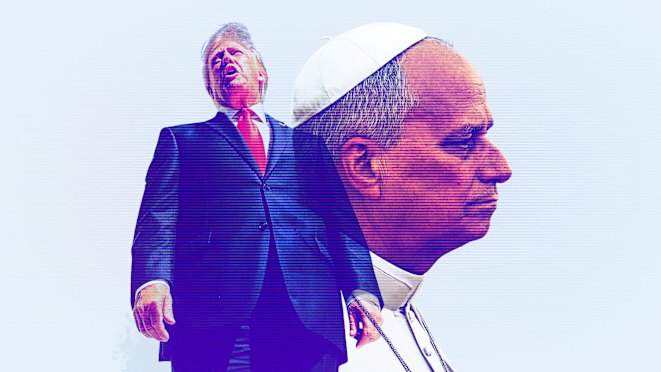
The Vatican’s soft power—that intangible, centuries-old currency of moral suasion, diplomatic backchannels, and spiritual gravity—is undergoing an unexpected renaissance. And at the center of it sits a man in simple white vestments who commands no battalions, holds no nuclear codes, and collects no taxes.
Consider what happens when algorithms begin to write the rules of human conflict.
In laboratories scattered across Silicon Valley and defense installations tucked deep inside the American Southwest, brilliant engineers are teaching machines how to kill with chilling efficiency. Autonomous drone swarms calculate wind resistance, thermal signatures, and heartbeat frequencies, stripping the human element entirely out of the battlefield. It is clean. It is bloodless for the victors. It is entirely devoid of a conscience.
When Pope Francis stepped forward to address the G7 leaders gathered in the sun-drenched hills of Apulia, he did not speak in the sterile language of arms control treaties or tactical deterrence. He spoke as a grandfather warning his family about a fire in the kitchen. He looked into the eyes of presidents and prime ministers—people accustomed to managing power rather than questioning its soul—and asked a terrifyingly simple question: Who gave the algorithm permission to decide who lives and who dies?
He called it the mechanization of death.
It was a moment that exposed the profound bankruptcy of our modern political vocabulary. Politicians talk about defense budgets, supply chains, and strategic deterrence. The Vatican talks about the dignity of the human face. When a moral voice cuts through the technocratic jargon, the contrast is jarring. You realize how accustomed we have become to leaders who manage decline rather than inspire greatness.
Soft power is an elusive beast. It cannot be measured in tonnage or gross domestic product. It is built entirely on the fragile currency of credibility. When a politician breaks a promise, the penalty is usually just a clever spin room defense. When the Vatican speaks, its authority relies on a historical arc measured not in election cycles, but in millennia.
Walking through the corridors of the Roman Curia, you feel the ghost of a thousand negotiations. For centuries, papal diplomats have sat in the shadows of peace talks, whispering caution into the ears of kings who thought they were invincible. Today, those same diplomats are navigating a terrifyingly complex geopolitical map where the old rules of engagement have been shredded.
Take the war in Ukraine. For months, critics accused the Vatican of moral ambiguity, of failing to point an unambiguous finger of blame. They wanted a chaplain for their crusade. Instead, they got something far more unsettling: a pastor trying to keep the door to peace cracked open, even when both sides were screaming for total victory.
Diplomacy in the age of polarization is a lonely business. If you refuse to take a side in a blood sport, both sides will throw stones at you. Yet, the Vatican’s insistence on maintaining open channels with actors that the West has declared untouchable is not cowardice; it is a cold-eyed recognition of reality. Wars do not end when one side obliterates the other into total submission. They end when people sit across a wooden table and talk.
And who is left to guard the table when everyone else has smashed the chairs?
The erosion of trust in secular leadership is not an accident of history. It is the logical outcome of a system built on short-term incentives. A democratic leader is trapped on a treadmill, forced to deliver immediate economic wins or face the guillotine of a primary challenge. Long-term thinking—the kind required to address climate collapse, artificial intelligence ethics, or global migration—is routinely sacrificed for the sake of the evening news cycle.
This is why the Vatican’s interventions resonate so deeply, even among people who have not set foot in a church in decades. When an institution speaks without needing a campaign contribution, without polling focus groups, and without fear of an upcoming election, it sounds like a voice from another planet.
It sounds like truth.
Think about the global refugee crisis. To a domestic politician staring at election maps, a desperate family crossing a sea in a rubber boat is often framed as a logistical problem, a security threat, or a talking point for a campaign rally. To the Vatican, that same family is simply a human being. The contrast is not merely political; it is spiritual. It forces a mirror onto our societies, reflecting back an image of ourselves that we find deeply uncomfortable. We have built extraordinarily rich, technologically advanced societies, yet we have somehow forgotten how to look a stranger in the eye and care whether they live or die.
The skeptics will scoff. They will point out the Vatican's own dark history, its institutional scandals, its internal political infighting, and the undeniable limitations of its influence. They will argue that soft power is a luxury of the weak, a toothless substitute for aircraft carriers and economic sanctions.
They are missing the point entirely.
Power built purely on coercion has an expiration date. It works until someone comes along with a bigger stick. But moral authority—the power to make people feel the weight of their own choices—operates on a completely different frequency. It is the grit in the gears of the machine. It is the quiet voice at the back of a leader's mind when they are alone in a dark room, wondering if history will judge them as a statesman or a butcher.
As artificial intelligence advances toward general intelligence, and as political polarization threatens to tear democratic fabrics apart at the seams, the world is hurtling toward a cliff. We are inventing tools we do not understand and adopting ideologies that demand our absolute loyalty while offering nothing in return.
In that gathering storm, the old man sitting in the Vatican remains an anomaly. He is a reminder that there is still a language older than code, deeper than politics, and more resilient than steel. It is the language of human dignity.
And as long as that voice speaks from the heart of Rome, the powerful will never quite be able to sleep soundly at night.