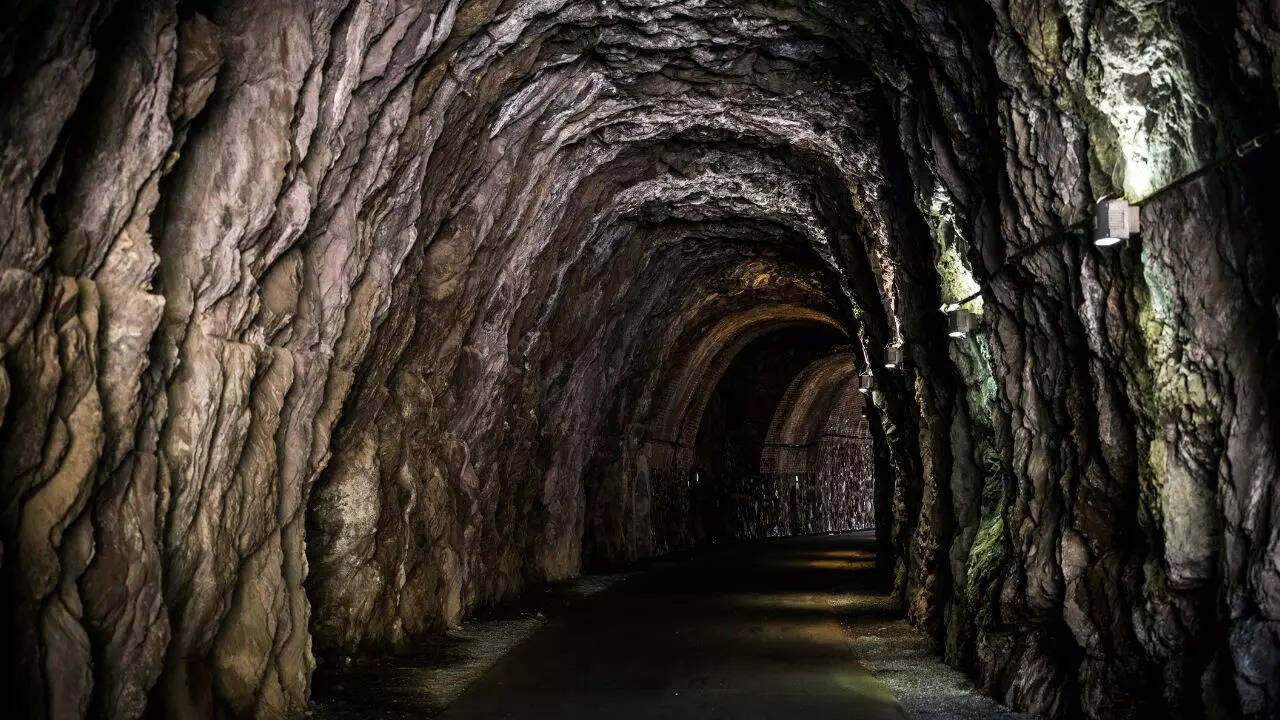
The air inside a stone chamber that hasn’t breathed for twenty-six centuries doesn’t smell like death. It smells like silence. It is a heavy, pressurized stillness that clings to the back of your throat, a vacuum of time that suggests the world outside—with its roaring internal combustion engines and glowing smartphone screens—is merely a frantic, passing hallucination.
When the heavy stone slab sealing the Tomb of the Silver Flabella in Italy’s Vulci archaeological park was finally winched aside, the modern world didn't just find artifacts. It stumbled into the middle of a private conversation.
The Etruscans are the ghosts of the Italian peninsula. Before Rome was a sprawling empire, before the Caesars took their first breath, the Etruscans built a sophisticated, art-obsessed, and deeply spiritual civilization. Then, they vanished, absorbed by the Roman machine. They left no great novels or histories. They left only their houses of the dead.
The Unbroken Seal
Archaeology is usually a process of piecing together crumbs. Most ancient sites have been ravaged by time, weather, or "tombaroli"—grave robbers who have spent decades tunneling into history to sell its remnants on the black market. Finding an unlooted tomb is like winning a lottery where the jackpot is the preservation of a human soul’s final dignity.
This particular tomb, nestled in the Osteria necropolis, remained untouched because of a quirk of engineering. A massive tuff slab blocked the entrance, so heavy and so perfectly fitted that it defied the casual thief.
As the archaeologists moved the stone, the flashlights cut through the dark. They didn't find a dusty chaotic mess. They found a layout that looked as though the owners had just stepped out for a moment. Two platforms stood out in the gloom. On one lay the remains of a woman, wrapped in the invisible shroud of twenty-six centuries. On the other, a man.
The Woman with the Silver Fans
We don't know her name. We will never know the sound of her voice or the specific things that made her laugh. But we know she was loved. Or, at the very least, she was significant.
Near her remains, the team discovered the objects that gave the tomb its name: silver flabella. These are ornate, ceremonial fans. In the eighth and seventh centuries BCE, these weren't just for cooling oneself. They were symbols of high status, items used by the elite to signal their place in the social hierarchy. To carry a flabellum was to be someone.
But the objects around her weren't just trophies. They were domestic. There were bronze vessels, delicate ceramics, and jewelry that still shimmered under the dust. Imagine the person who placed those items there. Was it a son? A grieving husband? The act of placing a favorite piece of jewelry next to a body isn't an academic exercise. It is a desperate, tactile attempt to bridge the gap between "here" and "gone."
It is the ancient equivalent of leaving a favorite sweater in the casket because the thought of the person being cold in the dark is too much to bear.
A Feast for the Afterlife
The Etruscans viewed death not as an end, but as a relocation. They didn't want their loved ones to go into the Great Unknown empty-handed. They wanted them to have a dinner party.
Inside the tomb, the archaeologists found a collection of ritual vessels—cups, plates, and jars used for food and wine. In one corner sat a brazier, a small portable stove used for burning charcoal to provide warmth or to cook. There were skewers for meat.
Consider the implications. This wasn't a hole in the ground; it was a dining room. The survivors believed that by providing these tools, they were ensuring the deceased could continue the most human of traditions: the shared meal.
This is where the "dry facts" of archaeology become a visceral human drama. We often look at 2,600 years as an abstract number. But if you look at that brazier and those skewers, the distance collapses. You recognize the impulse. You see the fear of the dark and the hope that, wherever we go next, there is a warm fire and something to eat.
The man and woman were laid out in a way that suggested companionship. They weren't thrown in. They were positioned. This was their final house, designed to withstand the crushing weight of the earth and the relentless march of centuries.
The Weight of the Tuff
The soil in this part of Italy is volcanic. Tuff is a soft, porous rock made of consolidated volcanic ash. It is easy to carve but strong enough to hold up the ceiling of a tomb for millennia.
The archaeologists working at Vulci—a joint effort between the Soprintendenza and local authorities—had to be surgeons. One wrong move and the fragile equilibrium of the chamber would be destroyed. When a tomb is sealed for that long, the atmosphere inside reaches a delicate balance. Introducing modern, humid air can cause ancient fabrics or organic remains to disintegrate in minutes.
Watching the video of the opening, you see the tension in the researchers' shoulders. They aren't just looking for gold. They are looking for context. A gold earring is a beautiful thing, but an earring found exactly where it fell from a woman's earlobe tells a story about her height, her posture, and the way her body was laid to rest.
The "Silver Flabella" tomb is part of a larger complex that continues to rewrite what we know about the Etruscan transition into the Roman era. It shows a culture at its peak—wealthy, artistic, and deeply concerned with the aesthetics of the end.
The Invisible Stakes
Why do we care about a couple buried in the dirt two and a half millennia ago?
Because we are currently living in a world of the ephemeral. Our photos are stored in clouds that might vanish. Our buildings are made of glass and steel that will rust and shatter. We move fast and leave very little behind.
The people of Vulci moved slowly and left everything behind. They carved their lives into the bedrock. They spent as much time preparing for the "after" as they did for the "now." When we look into that tomb, we are looking at a mirror. We are forced to ask ourselves what we value enough to carry with us into the silence.
The jewellery found wasn't just gold; it was a signature. The pottery wasn't just clay; it was a menu of a life well-lived.
As the sun sets over the Osteria necropolis today, the tomb is no longer a secret. The woman and the man have been moved, their bones cataloged, their silver fans cleaned of the grime of ages. But the space they occupied for 2,600 years remains—a hollowed-out piece of volcanic rock that served as the ultimate safe-deposit box for human emotion.
The real discovery wasn't the silver. It was the realization that even across the vast, terrifying gulf of twenty-six centuries, we still speak the same language of grief, hope, and the desire to never, ever be forgotten.
The stone slab is open now, and the silence has been broken.