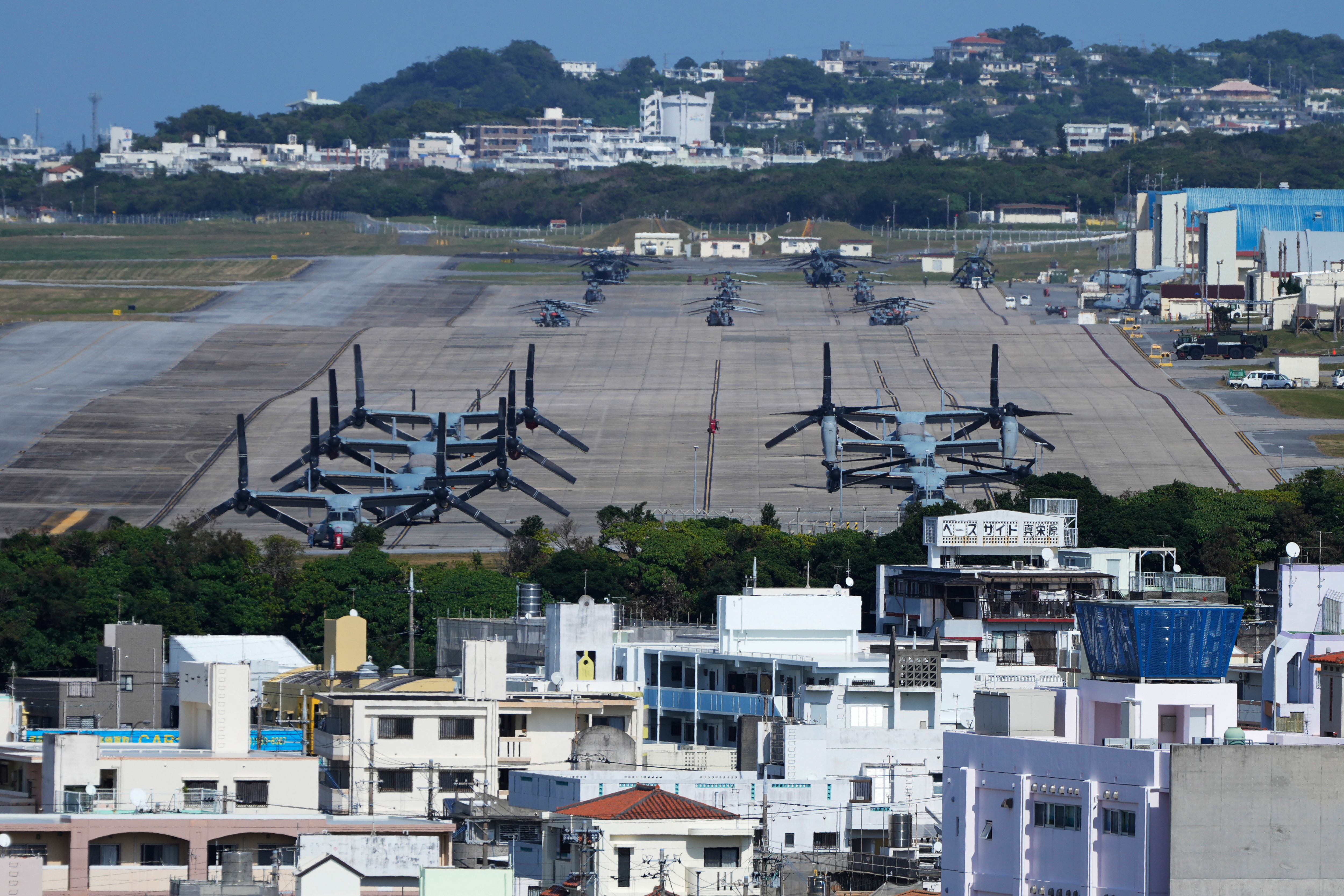
Another violent crime on Okinawa has reignited a decades-old fury. When a local woman named Anna Yagi was found murdered in a Naha hotel, the arrest of 20-year-old U.S. Marine Lance Cpl. Devin Jacob Ballard did more than shatter a family—it blew the lid off simmering tensions between Tokyo and Washington.
If you've followed the history of American military bases in Japan, you know this script by heart. A horrific crime occurs, local citizens take to the streets, politicians issue stern apologies, and military brass impose heavy lockdowns. Then, months later, the cycle repeats. But this time feels heavier. Prime Minister-led outcries, strict curfews, and intense public scrutiny mean the old playbook isn't working anymore.
Inside the Incident and the Immediate Fallout
The details coming out of Okinawa Prefecture are grim. Police state that Ballard, stationed at Futenma Air Station, strangled Yagi and stole her wallet and backpack. Security footage placed them entering a hotel together before he left alone. Ballard has denied the allegations, but Okinawan prosecutors indicted him on murder and robbery charges, setting the stage for a high-stakes legal battle.
The reaction from the U.S. military was swift, but locals argue it's too little, too late. The command slapped
Why the Okinawa Marine Murder Case Keeps Exposing a Broken Alliance
news
Geopolitics often feels abstract until a real tragedy brings the friction right to someone's doorstep. When a U.S. Marine is arrested for the alleged murder of a local woman in Okinawa, Japan, the shockwave hits far beyond a single courtroom. It strikes at the heart of an uneasy military partnership that has lasted for decades.
If you live in Japan, or follow international security closely, this story isn't just about a single criminal charge. It is a harsh reminder of a massive geographic burden borne almost entirely by one prefecture. Okinawa hosts the vast majority of U.S. military footprint in Japan despite making up a tiny fraction of the country's total land area.
When crimes happen, old wounds tear open. Protests erupt outside bases. Politicians trade tense statements. And everyday citizens ask the same exhausted question: why do we shoulder this risk?
The Heavy Price of Strategic Geography
Okinawa sits at a critical choke point in East Asia. Military planners view the island chain as an irreplaceable asset for regional defense, deterrence, and rapid response. Because of this, massive air bases, training ranges, and thousands of armed service members occupy prime land across the prefecture.
Strategic value comes with severe local friction. Noise pollution, environmental concerns, and recurring incidents involving military personnel create chronic tension between residents and the central government in Tokyo.
Crimes involving U.S. service members amplify that friction into outright outrage. When an alleged murder occurs, it triggers a visceral reaction because it shatters the fragile sense of security local communities try to maintain. People stop seeing friendly allies and start seeing an unwanted occupying force.
How the Status of Forces Agreement Shields Soldiers
A major flashpoint in every single one of these cases is the Status of Forces Agreement, commonly known as SOFA. This legal framework determines jurisdiction when American military personnel commit offenses off-base.
Critics argue that SOFA gives the U.S. military too much control over suspects during the early stages of an investigation. Local police often find themselves locked out or delayed when trying to secure evidence, interview suspects, or take custody immediately.
The Japanese public hates this dynamic. It creates a profound sense of injustice. If a civilian commits a crime, the local legal system operates swiftly. When a service member is involved, a bureaucratic tug-of-war begins.
Transparency matters immensely here. If the U.S. military wants to maintain any goodwill in host nations, procedural roadblocks need to vanish. Justice delayed for grieving families feels like justice denied.
The Political Fallout for Tokyo and Washington
Incidents like this send shockwaves through diplomatic channels. Leaders in Tokyo face immense pressure from local governors and outraged citizens to demand sweeping base reductions or stricter curfews.
Meanwhile, American defense officials offer apologies, promise full cooperation, and vow tighter discipline. Yet, the cycle repeats. A high-profile crime happens, promises are made, tensions eventually simmer down, and the structural problem remains untouched.
Real change requires hard conversations about force posture. Relocating certain operations away from densely populated areas in Okinawa has been debated for years, but progress moves at a glacial pace. Bureaucratic inertia and strategic stubbornness keep the status quo locked in place.
Moving Beyond Empty Apologies
Treating these events as isolated bad-apple incidents fails to address reality. When a systemic arrangement concentrates thousands of young, armed personnel inside civilian neighborhoods year after year, statistical probabilities dictate that severe conflicts will happen.
Commanders can enforce curfews and conduct sensitivity training until they are blue in the face, but human behavior cannot be completely micro-managed. The fundamental fix requires reducing the footprint, sharing the security burden more equitably across the Japanese mainland, and overhauling legal frameworks to ensure absolute accountability without jurisdictional loopholes.
Ignore the root causes, and you are simply waiting for the next tragedy to drop.


