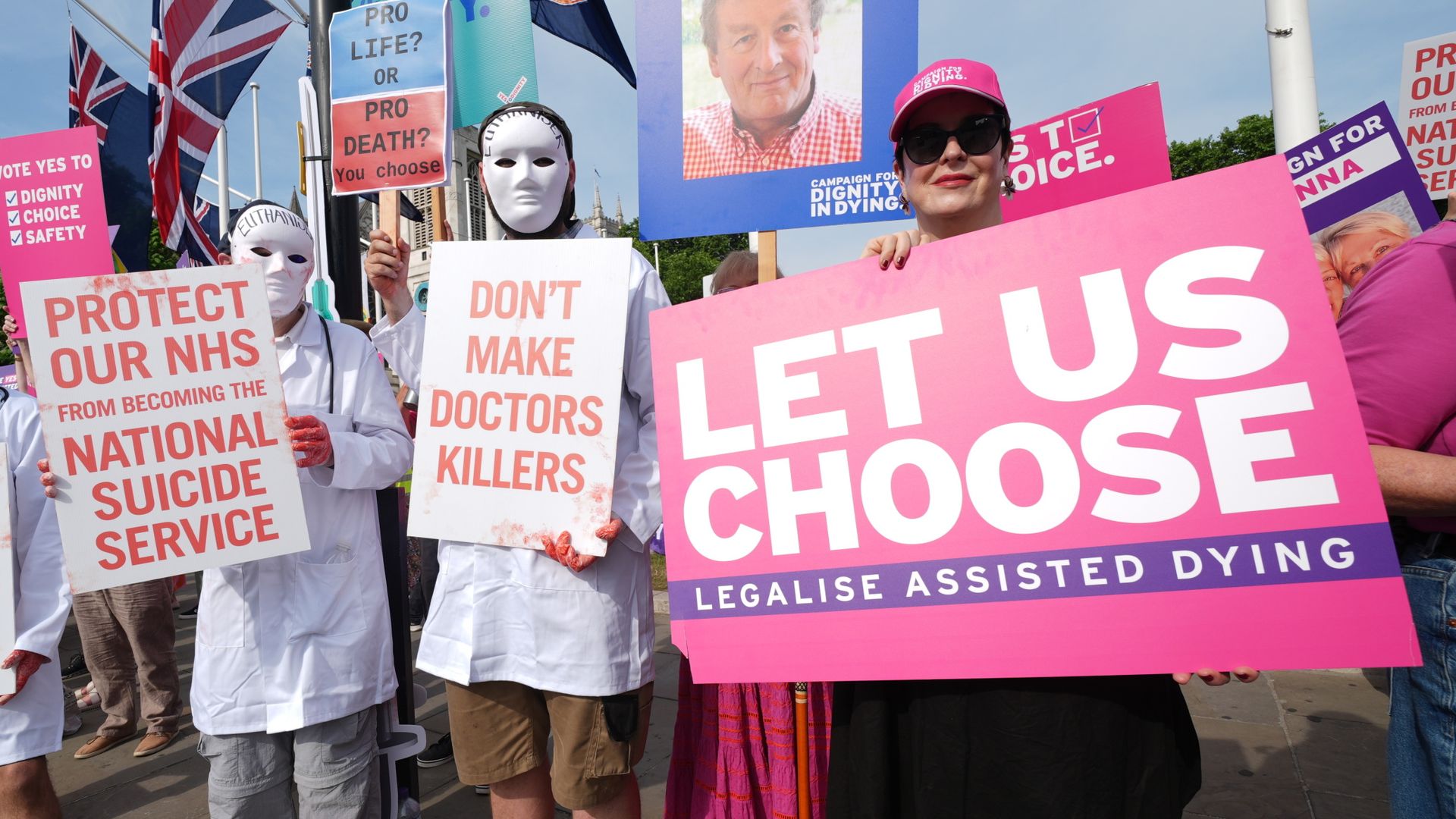
The debate surrounding assisted dying legislation is frequently framed as a recurring moral deadlock, but its persistent return to legislative agendas is driven by a predictable structural mechanism. When a parliament repeatedly introduces and rejects bills on terminal illness and voluntary ending of life, it is not merely experiencing a cycle of shifting public opinion. Instead, the legislative process suffers from a fundamental design flaw: the misalignment between static statutory frameworks and dynamic demographic and medical realities. The warning that a piece of legislation will return "again and again" is an acknowledgment of a systemic feedback loop. Until the core legislative friction points are quantified and systematically addressed, the issue cannot achieve equilibrium.
The cycle of legislative return is governed by three underlying variables:
- The Demographic Pressure Function: The linear progression of population aging, which increases the absolute volume of individuals confronting end-of-life choices.
- The Jurisprudential Friction Coefficient: The inherent resistance within a legal system to alter fundamental statutes regarding the sanctity of life and state-sanctioned medical intervention.
- The Medical Capability Divergence: The widening gap between a medical system's capacity to prolong biological existence and its capacity to mitigate subjective suffering.
The Three Pillars of Legislative Feedback Loops
To understand why assisted dying bills possess an inherent velocity that forces them back onto parliamentary tables, the issue must be broken down into three operational pillars. These pillars create an compounding demand curve that political bodies cannot permanently suppress through negative votes.
1. The Demographic Compound Demand
Legislative bodies operate on discrete electoral cycles, typically ranging from four to five years. In contrast, population demographics shift on a continuous, compounding trajectory. As a population's median age advances, the prevalence of neurodegenerative diseases, advanced malignancies, and multi-system organ failures increases.
This creates a shifting baseline of public experience. Every year a bill is delayed, a new cohort of citizens witnesses the operational limitations of palliative care within their immediate families. This creates a continuous pipeline of grassroots advocacy that replenishes the political capital expended during previous legislative defeats. The political energy driving the bill is not static; it is indexed to mortality data.
2. Institutional Risk Asymmetry
The primary structural bottleneck within any parliament evaluating assisted dying is risk asymmetry. For a legislator, the perceived risks of passing a bill are concentrated and immediate: potential systemic abuse, litigation, and electoral backlash from highly organized interest groups. Conversely, the risks of rejecting the bill are distributed and deferred: the ongoing, unquantified suffering of individuals behind closed doors.
This asymmetry incentivizes institutional inertia. Parliamentarians default to the status quo because the legal mechanics of prohibition require zero regulatory oversight, whereas the legal mechanics of permission require the construction of a complex, highly scrutinized oversight apparatus.
3. The Palliative Boundary Limitation
Opponents of assisted dying frequently cite the optimization of palliative care as a complete solution to end-of-life distress. However, this argument ignores the biological boundary conditions of modern medicine. Palliative sedation can manage a broad spectrum of physical pain, but it cannot eliminate refractory symptoms such as existential distress, loss of bodily autonomy, or certain forms of neurological decay without inducing a permanent vegetative state.
When legislation is rejected on the assumption that palliative care can scale infinitely to meet all human needs, it creates a structural failure point. The reality of these clinical boundary conditions guarantees that a subset of patients will always fall through the safety net, generating the exact legal and moral crises that force the legislation back into the chamber.
The Cost Function of Status Quo Maintenance
Maintaining the legal prohibition on assisted dying is not a zero-cost strategy for a state. It imposes measurable institutional, financial, and societal burdens that compound over time. A rigorous analysis requires mapping these hidden costs against the projected expenditures of a regulated framework.
Total Status Quo Cost = C_clinical + C_judicial + C_political
Where:
C_clinicalrepresents the compounding cost of prolonged intensive interventions in terminal phases where curative care has failed and palliative efficacy has plateaued.C_judicialrepresents the operational expenditure of the state apparatus prosecuting or investigating unauthorized end-of-life assistance, alongside international legal challenges brought by citizens seeking services abroad.C_politicalrepresents the opportunity cost of parliamentary time consumed by repetitive backbench motions, committee hearings, and public consultations that fail to produce a definitive policy resolution.
This cost function explains why the legislative debate cannot be permanently archived. The friction is cumulative. Each failed bill increases the judicial pressure, as courts are forced to adjudicate individual cases of extreme suffering through human rights frameworks, creating a conflict between statutory law and judicial precedent.
Structural Safeguards and Regulatory Design
When an assisted dying bill is reintroduced, the debate typically collapses into binary moral arguments. A more effective approach treats the issue as a complex regulatory engineering challenge. The durability of the legislation depends entirely on the design of its eligibility criteria and enforcement mechanisms.
To prevent systemic drift—frequently categorized by critics as the "slippery slope"—the regulatory framework must utilize explicit, non-arbitrary boundary conditions:
- Objective Clinical Staging: Eligibility must be tied to verifiable pathophysiological markers of terminal disease with a objective prognosis of decline, rather than subjective assessments of quality of life alone.
- Dual-Gatekeeper Diagnostics: The assessment of both terminal status and cognitive competence must require independent verification by specialized clinicians who operate outside the patient's primary care circle, eliminating conflicts of interest.
- Sequential Volition Verification: The request must be logged across multiple distinct intervals, separated by mandatory cooling-off periods, to isolate the decision from transient depressive episodes or acute spikes in pain.
The failure to define these parameters with clinical precision is the precise reason previous legislative attempts have stalled. When a bill leaves these boundaries ambiguous, it triggers the institutional risk aversion of the legislature, ensuring its defeat and subsequent re-drafting cycle.
Strategic Recommendation for Legislative Resolution
To break out of the cycle of repetitive legislative failure, policy architects must abandon the strategy of introducing broad, emotionally driven bills. The path to a stable policy equilibrium requires a transition from moral advocacy to rigorous institutional design.
The optimal strategy requires the immediate establishment of an independent, cross-disciplinary regulatory design commission. This body must be tasked with a specific mandate: decouple the ethical debate from the operational mechanics. Before a vote is called, the commission must produce a fully realized regulatory blueprint that outlines the exact data-tracking infrastructure, clinical protocols, and judicial review mechanisms that would govern the law.
By presenting parliament with a concrete, highly regulated operational system rather than an abstract concept, the institutional risk asymmetry is neutralized. This shifts the legislative debate from a terrifying choice between the unknown and the status quo to a calculated evaluation of a defined administrative framework. This is the only mechanism that can resolve the underlying friction and prevent the bill from becoming a permanent, destabilizing fixture of the parliamentary calendar.