The bell rings at a public high school in West Java. Inside a humid classroom, thirty teenagers shuffle their feet, flip open notebooks, and wait for the lesson to begin. But today, the blackboard does not feature algebra or chemistry formulas. Instead, the teacher writes two words in bold, chalky strokes: behavioral deviance.
For a sixteen-year-old student sitting in the third row—let us call him Dimas—the room suddenly feels entirely devoid of oxygen. Dimas has spent the last year realizing he is different from his classmates. He doesn't speak of it. He barely admits it to himself in the mirror. But as the teacher begins reading from a new, government-approved curriculum designed to identify and "cure" LGBT traits, Dimas shrinks into his uniform. He realizes his school is no longer just a place of learning. It has become a surveillance state, and he is the target.
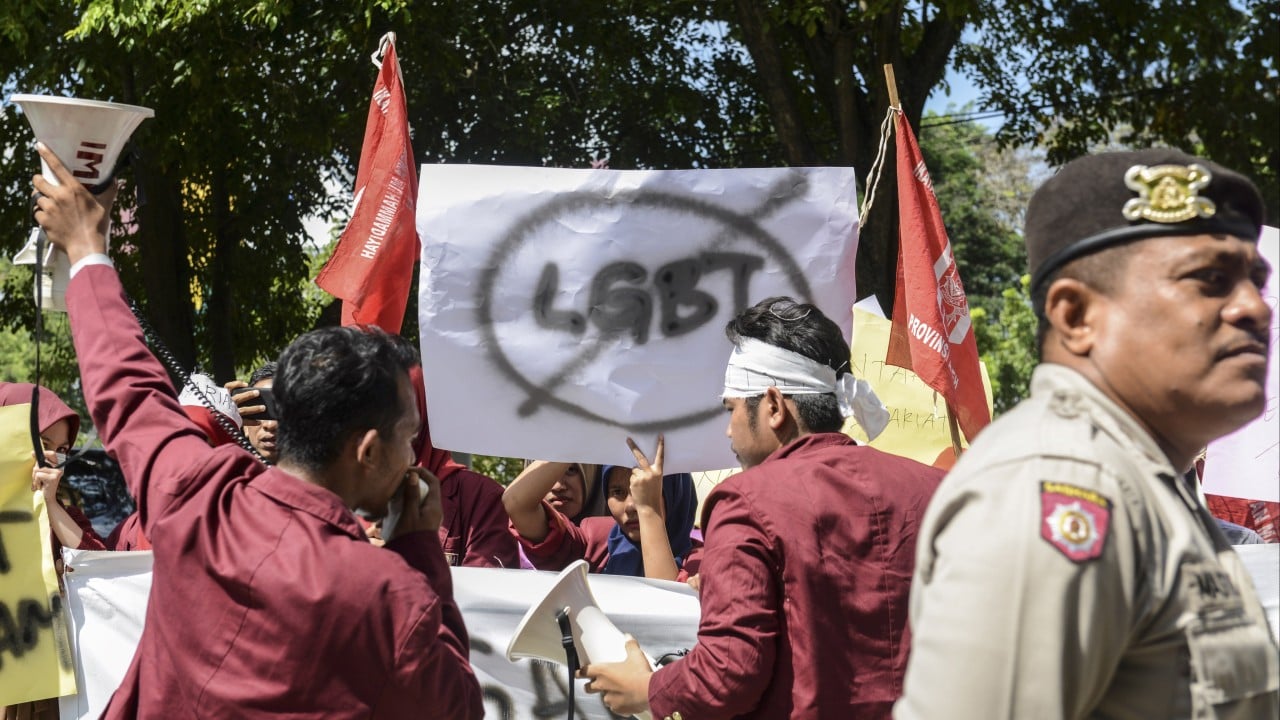
Across Indonesia, this scene is shifting from a rare nightmare into a standardized reality. Regional governments and educational boards are quietly rolling out anti-LGBT educational initiatives, anti-deviance modules, and institutionalized policing under the guise of protecting traditional values and child welfare. What is marketed as a shield for youth is rapidly turning into a weapon against them. The classroom, historically a sanctuary for growth, is being refitted into an engine of profound, state-sanctioned alienation.
The Bureaucracy of Exclusion
This shift did not happen overnight. It is the result of a calculated, bureaucratic creep. For years, human rights organizations have watched Indonesian authorities leverage local ordinances to restrict the rights of sexual minorities. But the latest strategy bypasses public squares and protest lines entirely. It targets the curriculum.
In various regencies across the archipelago, local education departments have begun distributing guidelines that instruct teachers, counselors, and even student monitors to actively look for signs of non-normative gender behavior. A boy who speaks too softly. A girl who cuts her hair too short. These are no longer viewed as personality traits or standard adolescent experimentation. They are flagged as early warning signs of a psychological malady that requires intervention.
Consider the mechanics of these policies. School districts are implementing seminars that explicitly label LGBT identities as contagious threats to national morality. In some districts, officials have proposed mandatory psychological screenings, while others encourage students to report peers who display "suspicious" behaviors.
This creates an environment of pervasive paranoia. When a state apparatus enlists children to police the identities of other children, the social fabric of a classroom dissolves. Trust disappears.
The Mirage of "Protection"
Proponents of these educational rollouts argue that they are acting out of love and civic duty. They frame these programs as a necessary intervention to protect the Indonesian family structure and insulate youth from Western cultural imperialism. The rhetoric is potent, wrapped in the language of health, preservation, and spiritual safety.
But look closer at the actual mechanisms of these lessons. They do not protect; they pathologize.
When a school board introduces a curriculum that defines a student's fundamental sense of self as a defect, the psychological toll is immediate. Human rights researchers and local counselors report a sharp uptick in anxiety, severe depression, and suicidal ideation among queer Indonesian youth. The irony is staggering. In the name of safeguarding children's well-being, institutions are actively generating the exact mental health crises they claim to prevent.
There is a vast difference between teaching civic morality and institutionalizing stigma. The current push does not teach students how to be good citizens; it teaches them whom to fear, whom to isolate, and how to hate themselves if they happen to fit the description written on the blackboard.
The Invisible Costs of a Silent Classroom
The damage extends far beyond the emotional landscape of individual students. It fundamentally alters the quality of education itself.
When survival becomes a student's primary objective, academic achievement takes a backseat. A teenager terrified of being outed or reported by a classmate cannot focus on geometry. They skip school. They drop out. They disappear from the system entirely, sacrificing their future prospects just to find a space where they can breathe without scrutiny.
But the real problem lies elsewhere, rooted in the broader cultural psyche. By embedding discrimination into the official school curriculum, the state is effectively training the next generation of Indonesian citizens to view human rights as a conditional privilege rather than an inherent right. They are learning that state protection is only extended to those who fit a rigid, homogenized mold.
This creates a dangerous precedent. If the educational system can be weaponized to marginalize one specific group today under the banner of moral protection, it can be pivoted to target any other minority group tomorrow. The tools of exclusion, once built and validated, are rarely left to gather dust.
The Fractured Mirror
Imagine being a parent in this environment. You send your child to school hoping they will learn how to navigate the complexities of the world, how to think critically, and how to build a stable future. Instead, they return home quiet, watchful, and deeply withdrawn.
You might not even know why. The pervasive nature of the stigma means that many youth cannot turn to their families for comfort. They are trapped between a school system that hunts for their perceived flaws and a home life where discovery could mean banishment or forced conversion therapy. They are utterly alone, navigating a cultural minefield with no map and no allies.
The current anti-LGBT education push in Indonesia is often discussed in global policy spheres as a abstract debate over cultural sovereignty versus universal human rights. It is treated as a political talking point, a chess piece moved by conservative politicians looking to secure votes in upcoming election cycles.
But for the children sitting in those humid classrooms, there is nothing abstract about it.
The chalk dust settles on the teacher's desk. The lesson ends, and the students file out into the hallway, laughing, talking, and blending into the crowd. Except for Dimas, who lingers behind, pretending to organize his backpack, waiting for the hallway to clear so he can walk home without looking anyone in the eye. The lesson has been learned, but it isn't the one the curriculum intended. He has learned that his country views his survival as a threat to its own.