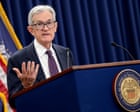
The headlines wept. The purity police wailed. When the Department of Justice quietly closed the book on its inquiry into former Federal Reserve Chair Jay Powell without laying charges or issuing a scathing indictment, the consensus screamed corruption. Pundits framed it as another institutional cop-out, a classic display of the elite protecting their own while ordinary citizens face the full wrath of federal prosecutors.
They have it completely backward.
Closing that investigation was not a miscarriage of justice. It was an institutional survival mechanism, executed by people who realized that putting a central bank chief in the crosshairs of a criminal court would detonate the plumbing of global finance. I have spent two decades watching Washington institutions bend the rules to protect their own machinery, and while that instinct usually makes me sick, this time they got it right. The lazy narrative is that Powell dodged a bullet because of his political connections. The reality is far more dangerous: prosecuting the Fed chair would have forced a constitutional collision between monetary policy and the penal code that the United States dollar simply cannot survive.
Let's dispense with the sentimental garbage about equal justice under law. Equal justice is a noble courtroom fiction; system preservation is the actual law of the state.
The Absurdity of Criminalizing Monetary Policy
The core grievance against Powell centered on the Fed's aggressive asset-purchase programs, whispered allegations of policy leaks, and routine stock disclosures made by regional bank presidents during the pandemic liquidity frenzy. To hear the critics tell it, Powell was running a hedge fund out of the Eccles Building, trading on insider knowledge of emergency rate cuts.
Let us look at the actual data. Did regional Fed officials engage in deeply embarrassing, tone-deaf personal trading while the central bank was backstopping the entire corporate bond market in 2020? Yes. Was it an institutional disaster of optics? Absolutely. Was it criminal insider trading under the current statutory definition? Not even close.
To prove insider trading, prosecutors must establish a breach of a fiduciary duty and the exploitation of material non-public information for personal pecuniary gain. Monetary policy decisions are not corporate earnings reports. They are macro-level interventions created by statute. When the Federal Open Market Committee votes to lower rates or buy commercial paper, they are not trading on a secret; they are creating the reality that moves the market.
If the Department of Justice had decided to indict Powell or drag him before a grand jury over disclosure technicalities or policy timing, they would have crossed a fatal Rubicon. They would have established the legal precedent that the subjective motives and schedule disclosures of central bankers are subject to criminal review by politically appointed prosecutors and juries.
Imagine a scenario where every time the Fed raises interest rates to fight inflation—crushing housing markets and sending tech valuations into a tailspin—an aggrieved Attorney General or a grand jury in a hostile district opens a criminal probe into whether the Fed Chair acted with corrupt intent to benefit specific financial actors. Monetary policy would become impossible. Every rate hike would be litigated in a courtroom. Central bank independence, the fragile anchor of the entire Western financial system, would shatter overnight.
The Real Scandal Nobody Wants to Talk About
The anger directed at Powell is misplaced because people are looking at the wrong crime. The real scandal of the Powell era was never personal corruption or sloppy stock trading disclosures. The real scandal was the outright conversion of the Federal Reserve into the fiscal arm of the federal government.
For decades, the ideological fiction was maintained that the central bank was independent, technocratic, and apolitical. Then came 2020. Within weeks, the Fed obliterated that boundary, backstopping municipal debt, buying high-yield corporate junk bonds, and monetizing trillions of dollars of federal deficits to finance emergency stimulus packages. Powell did not break the law; he stretched the elastic limits of the Federal Reserve Act until it snapped, stepping into the void because Congress was too paralyzed by partisan warfare to do its job.
Critics want a criminal trial for Powell because they want someone to pay for the inflation spike that followed. They want a perp walk to atone for the grocery bills and housing costs that devoured middle-class savings.
That is not how accountability works. A criminal indictment is designed to punish an individual for breaking a statute, not to punish a technocrat for making policy choices that had catastrophic macroeconomic side effects. If you want to punish Powell for the inflation of the early 2020s, you have to prosecute forty years of bipartisan congressional deficit spending and decades of addiction to cheap debt. But nobody wants to put Congress on trial because voters keep re-electing them. It is much easier to demand the head of the man at the top of the monetary masthead.
Why Institutional Self-Preservation Triumphed
The Department of Justice understands something that populist firebrands refuse to accept: confidence in fiat money is entirely psychological.
Paper currency is a shared hallucination backed by the full faith and credit of the United States government. That faith rests on two pillars: the military might of the state and the unquestioned stability of its financial arbiters. If you pull the legal rug out from under the head of the central bank—if you signal to global capital markets that the Fed is just another corrupt political agency whose leaders are vulnerable to criminal prosecution by incoming administrations—foreign central banks will accelerate their flight away from dollar hegemony.
The DOJ's decision to quietly close the investigation was an act of cold, calculated institutional triage. They looked at the evidence, realized they had a weak statutory case that would trigger a constitutional crisis, and chose to drop the matter rather than burn down the temple to punish one priest.
This is the dirty secret of modern governance: the system is designed to protect itself from its own laws when enforcement threatens systemic collapse. You can call it corruption, you can call it a cover-up, and you can rage against the elite consensus. But if you want your pension to clear, your paycheck to buy groceries, and the global banking grid to keep humming, you should be thanking whatever cynical bureaucrat made the call to walk away.
Stop pretending that a criminal trial would have purified American finance. It would have torched it.
Powell walks because the alternative was unthinkable. It is time to deal with the messy reality of the machine we built, rather than crying because the gears refused to grind themselves to dust.