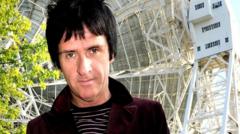
If you think closing a world-class scientific observatory to save the price of a minor infrastructure project makes financial sense, you aren't paying attention. The Jodrell Bank Observatory, a cornerstone of British innovation and a UNESCO World Heritage Site, faces a complete halt to scientific observations by April 2028. Why? Because UK Research and Innovation (UKRI) decided to pull the plug on the e-Merlin network, starving the site of its vital annual funding.
Over 200 public figures, including musicians like Sir Brian May and New Order alongside scientists like Professor Brian Cox, have signed an open letter demanding the government rethink this disaster. We are talking about an annual bill of just 2.8 million pounds. Sashing a globally renowned facility over a sum that governments regularly misplace in couch cushions is more than short-sighted. It is outright vandalism of our scientific heritage.
What Jodrell Bank Actually Does for Science
Most people recognize the iconic Lovell Telescope as a massive silhouette against the Cheshire skyline. It looks impressive in tourist brochures. But it is not a dusty monument. It is a hyper-active, bleeding-edge instrument used constantly by nearly 3,000 physicists worldwide.
As the operational hub for e-Merlin—the national radio astronomy facility linking seven telescopes across Great Britain—Jodrell Bank functions like the Hubble Space Telescope, but built across the earth. It delivers unmatched resolution, tracking everything from stellar formation to space debris the size of a human hand orbiting 36,000 kilometers above us.
When funding disappears, active research stops. You cannot simply pause a network of radio telescopes and turn them back on later like a household appliance. Teams scatter, specialized skills vanish, and decades of accumulated expertise evaporate.
The Real Cost of Government Bureaucracy
The justification from funding bodies always sounds reasonable on paper. They claim a need to prioritize long-term scientific capability and value. But saving 2.8 million pounds a year by cutting off the UK's primary window to deep space destroys far more value than it preserves.
Consider the broader ecosystem. Jodrell Bank acts as the headquarters for the Square Kilometre Array Observatory (SKAO), coordinating international efforts across sixteen nations building the most powerful telescopes on the planet. Walking away from Jodrell Bank signals to our international partners that the UK is retreating from fundamental science.
Cultural icons like writer Paul Morley and musician John Robb have pointed out that Jodrell Bank shaped the imagination of generations in the North of England and beyond. It represents a rare bridge between high-level academic research and public inspiration. More than 25,000 school children visit the site every year. Turning that living laboratory into a static museum exhibit tells young people that Britain no longer values discovery.
How You Can Push Back
Public pressure works because politicians hate defending indefensible spreadsheets. Thousands have already signed petitions demanding that leaders like Andy Burnham and government ministers step in to reverse these cuts.
If you want to see this decision overturned, you don't need a degree in astrophysics. You just need to make noise. Share the petition, write to your local representative, and refuse to let a world-leading facility die quietly in a bureaucratic audit. We either fund our scientific future, or we watch it get dismantled piece by piece.