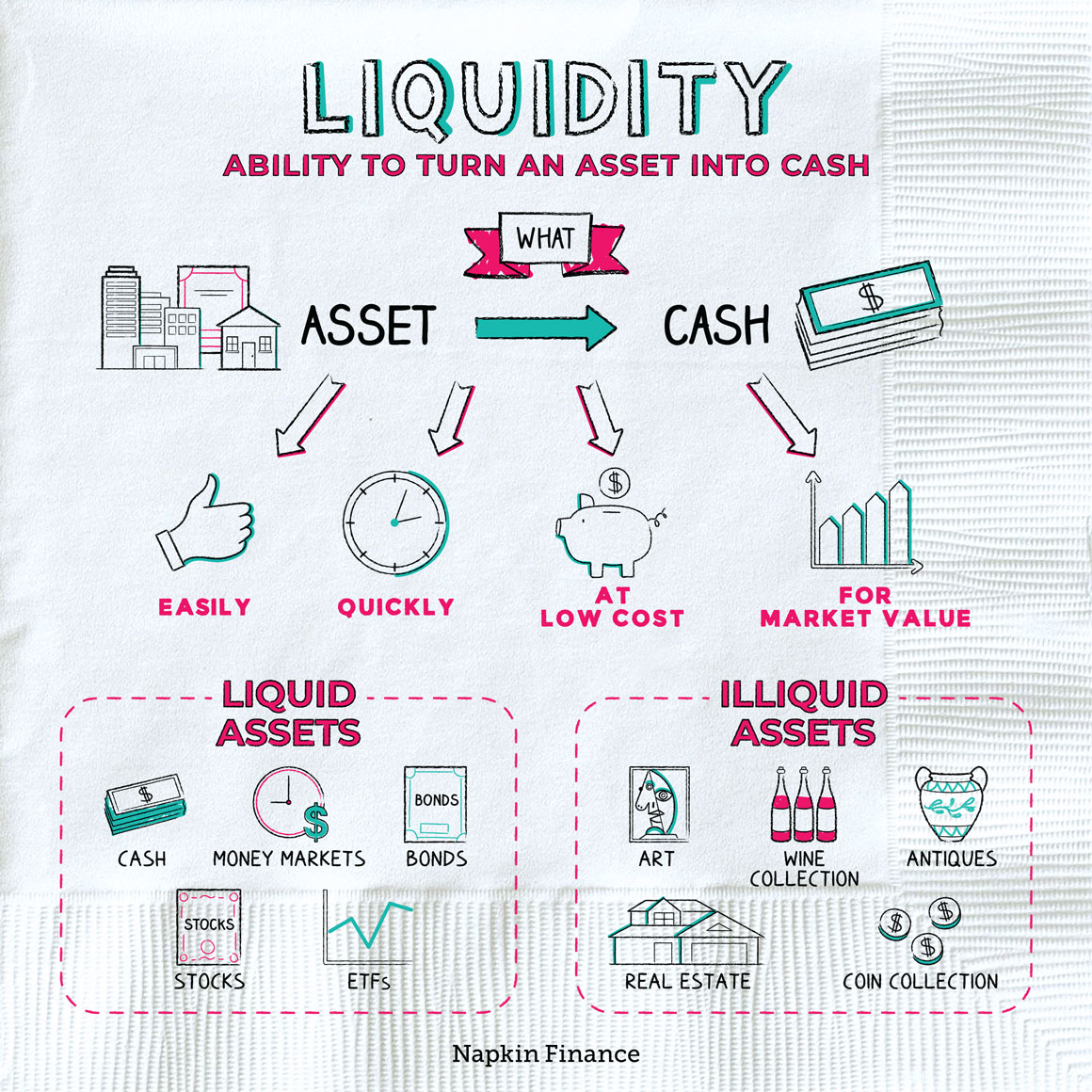
Over 100,000 United Kingdom retail investors attempting to acquire equity exposure to Anthropic demonstrates a structural breakdown in how private market risk is priced and distributed to non-institutional capital. Rather than signaling a democratization of venture capital, mass retail aggregation into late-stage artificial intelligence companies creates an asymmetric liquidity trap where individual investors absorb terminal valuation risk without institutional governance protections. Understanding this capital flow requires examining the legal intermediaries enabling retail entry, the unit economics of foundation model developers, and the structural divergence between public equity liquidity and private secondary pricing.
The Structural Mechanics of Retail Pre-IPO Aggregation
Direct equity ownership in a Delaware C-corporation like Anthropic is legally restricted to accredited investors under United States securities law and high-net-worth or sophisticated investor exemptions under the United Kingdom Financial Conduct Authority framework. Retail investors cannot purchase primary shares directly from the issuing entity. Instead, platforms facilitate access through layered financial engineering that separates economic exposure from legal ownership.
Special Purpose Vehicles and Nominee Structures
To bypass minimum check sizes—which typically range from $250,000 to several million dollars in late-stage private rounds—intermediaries pool retail capital into a Special Purpose Vehicle (SPV) or a UK-regulated nominee structure. Under this arrangement, the platform acts as the single registered shareholder on the issuer's capitalization table, or more frequently, acquires shares from an existing secondary seller via a forward contract.
This mechanism introduces three distinct layers of friction that erode retail returns before the underlying asset appreciates:
- Fee Drag: Intermediary platforms routinely charge upfront management fees between 2% and 5%, alongside carried interest ranging from 10% to 20% on net profits. A retail participant must see the underlying equity appreciate significantly merely to break even on entry costs.
- Information Asymmetry: Institutional investors participating in primary rounds receive audited financial statements, compute burn schedules, and customer concentration metrics under strict non-disclosure agreements. Retail participants in pooled vehicles receive marketing summaries devoid of granular unit economics.
- Transfer Restrictions: Private companies enforce strict Right of First Refusal (ROFR) clauses and outright bans on unauthorized secondary transfers. Many retail-facing platforms do not hold direct shares on the cap table; they hold derivative claims or interests in multi-layered funds that own shares, creating counterparty risk if the intermediary faces insolvency or regulatory intervention.
The Adverse Selection Problem in Secondary Markets
When 100,000 retail investors rush into a late-stage private offering, they are rarely buying newly issued treasury stock designed to fund research and development. They are predominantly providing exit liquidity to early employees, seed investors, or secondary brokers offloading concentrated positions.
In financial economics, this dynamic exemplifies Akerlof's market for lemons. Insiders possess superior knowledge regarding model training bottlenecks, enterprise churn rates, and upcoming capital expenditure requirements. When insiders elect to sell equity at a multi-billion-dollar valuation to a fragmented pool of retail buyers, the transaction transfers concentration risk from informed operators to uninformed capital. Retail investors treat the availability of shares as a rare opportunity, failing to recognize that availability in an illiquid private market often signals that institutional buyers have declined to clear the market at that specific valuation multiple.
Valuation Distortion and Capital Intensity in Foundation Models
Evaluating a foundation model developer requires abandoning traditional Software-as-a-Service (SaaS) valuation heuristics. Traditional SaaS businesses exhibit near-zero marginal cost of replication, gross margins exceeding 80%, and predictable net dollar retention. Foundation model developers operate closer to capital-intensive industrial utilities than pure software vendors.
The Compute-to-Revenue Ratio
The primary cost driver for an entity like Anthropic is not human capital, though compensation for elite research scientists remains substantial. The dominant cost is compute infrastructure—specifically, clusters of specialized graphics processing units (GPUs) or tensor processing units (TPUs) required for both pre-training next-generation models and serving inference queries at scale.
Unlike traditional software where code is written once and sold infinitely, every token generated by a large language model incurs a direct variable compute cost. While inference costs per million tokens decline through quantization, distillation, and hardware improvements, total compute expenditure scales linearly or super-linearly with user adoption and context window length. Simultaneously, the capital expenditure required to train frontier models grows by roughly an order of magnitude every 18 to 24 months.
The Strategic Investor Distortion
Anthropic's capitalization table is heavily anchored by hyperscale cloud providers, notably Amazon and Google. When analyzing the valuation at which retail investors enter, one must isolate commercial round-tripping from pure financial investment.
Hyperscalers invest billions of dollars into foundation model developers largely in the form of cloud compute credits and binding multi-year infrastructure commitments. The mechanism works as follows:
- A cloud provider commits $4 billion to the AI developer.
- The AI developer agrees to use the cloud provider as its primary training and inference infrastructure vendor, returning a substantial fraction of that capital as cloud revenue.
- The headline valuation of the AI developer is marked up based on the post-money implied equity price of the strategic transaction.
Strategic investors justify paying elevated equity multiples because they capture downstream infrastructure margins and lock in high-volume cloud workloads. Retail investors buying shares at or above that headline valuation receive none of those ancillary commercial benefits. They pay a strategic price for a purely financial asset, assuming an immediate valuation overhang that requires massive organic revenue growth to justify.
Behavioral Drivers Behind Mass Retail Capital Inflows
The aggregation of over 100,000 individual investors into a single private tech offering is driven by predictable cognitive biases and structural shifts in retail brokerage interfaces.
Availability Heuristic and Product Familiarity
Retail investors routinely conflate consumer product utility with equity investment merit. Because millions of users interact daily with conversational AI interfaces like Claude, the brand achieves high cognitive availability. Investors observe rapid capability improvements in code generation, reasoning, and document synthesis, and extrapolate linear product improvement into exponential equity returns.
This conflation ignores the distinction between consumer surplus and producer surplus. In highly competitive technological shifts—historically observed in airlines, telecommunications, and early internet service providers—immense value is created for end-users while intense price competition compresses margins for the underlying providers. Open-weight models and rival frontier laboratories continuously compress API pricing, forcing foundation model developers to compete on razor-thin inference margins while funding massive fixed research costs.
The FOMO Architecture of Modern Fintech Platforms
Modern UK retail investment platforms utilize consumer-grade engagement mechanics—waitlists, live funding progress bars, and fractional minimums—to compress due diligence timelines. By lowering the entry threshold to £10 or £100, platforms eliminate the psychological friction that typically forces an investor to evaluate balance sheet fundamentals.
When capital commitment is trivial on an individual basis, due diligence becomes economically irrational; spending ten hours analyzing corporate governance documents to protect a £100 allocation yields a negative return on time. Aggregated across 100,000 participants, however, this rational individual apathy mobilizes tens of millions of pounds into complex, illiquid structures without institutional price discovery.
Governance Deficits and Dilution Mechanics
Public market investors rely on regulatory disclosure regimes, quarterly earnings calls, and liquid secondary markets to discipline management and reprice risk continuously. Retail investors entering private AI companies via pooled vehicles surrender all three mechanisms.
Liquidation Preferences and Seniority Stacks
Late-stage private companies raise capital across multiple preferred stock series (Series A through Series E and beyond). Institutional investors negotiate senior liquidation preferences, participating preferred rights, and anti-dilution protections.
In an exit scenario—whether an Initial Public Offering (IPO) or an acquisition—capital is distributed according to the seniority stack, not pro-rata ownership. If a company exits at a valuation lower than its peak private round, institutional holders of senior preferred shares recover their principal (and potentially multiples thereof) before common shareholders or junior SPV participants receive a single penny. Retail investors buying secondary shares often acquire common stock or junior preferred equivalents, placing them at the bottom of the capital stack during a down-round exit or compressed IPO.
Continuous Capital Dilution
The capital requirements of frontier AI research mean that current equity holders face inevitable, substantial dilution. Unlike profitable cash-flowing enterprises that fund expansion through retained earnings, foundation model developers must repeatedly tap capital markets to finance subsequent training runs.
Each new multi-billion-dollar funding round issues new shares that dilute existing holders. Unless the company's enterprise value grows faster than the rate of share issuance and preferred stack accumulation, early secondary buyers experience stagnant or negative per-share returns even as the underlying business achieves commercial scale. Without pro-rata rights—which retail SPV participants almost universally lack—individual investors cannot inject additional capital in future rounds to defend their ownership percentage.
Liquidity Horizons and Exit Bottlenecks
The fundamental premise of retail pre-IPO investing is that an IPO or acquisition will occur within a short time horizon, converting illiquid private units into tradable public stock. In the current regulatory and macroeconomic environment, this assumption faces severe structural headwinds.
Antitrust Constraints on Strategic Acquisitions
For most venture-backed startups, acquisition by a larger technology incumbent represents the primary exit pathway. For a frontier AI developer valued in the tens of billions of dollars, traditional M&A is effectively blocked by global antitrust regulators. Competition authorities in the United States, the United Kingdom, and the European Union scrutinize any outright acquisition of a leading AI lab by Microsoft, Google, Amazon, or Meta.
Regulators have even challenged non-controlling investments and acqui-hire licensing deals. Consequently, strategic buyouts—historically the fastest route to liquidity—are largely unavailable as an exit mechanism, leaving a public listing as the sole viable path to retail liquidity.
The IPO Readiness Threshold and Lock-Up Periods
To execute a successful public offering, a foundation model developer must demonstrate predictable gross margins, stabilized compute expenditure, and defensible enterprise moats. Public market institutional investors penalize open-ended capital expenditure commitments far more aggressively than private venture backers. Until inference margins stabilize and training costs plateau relative to revenue, management teams have strong incentives to remain private, delaying the liquidity event indefinitely.
Furthermore, even if an IPO occurs, retail SPV participants do not gain immediate liquidity on the first day of trading. Standard underwriting agreements impose a 180-day lock-up period on pre-IPO shareholders. Historically, high-profile technology IPOs frequently experience significant price volatility during this six-month window, often trading below their initial offering price by the time lock-ups expire and SPV administrators distribute shares to individual brokerage accounts.
Capital Allocation Framework for Private AI Exposure
Investors seeking exposure to the economic value generated by artificial intelligence must separate technological enthusiasm from financial instrument selection. When evaluating entry into oversubscribed retail private offerings versus public alternatives, capital allocation should follow strict structural criteria:
- Audit the Underlying Instrument: Verify whether the investment vehicle holds direct title to preferred shares on the issuer's cap table, common shares purchased from employees, or a forward contract with an unverified counterparty. Reject vehicles with layered fee structures exceeding 2% upfront or 10% carry, as these mathematically guarantee underperformance relative to the underlying asset.
- Evaluate the Liquidity Premium: Private equity historically outperformed public equity because investors demanded an illiquidity premium—buying assets at a discount to public comparables to compensate for multi-year lock-ups. When retail demand pushes private secondary valuations to a premium over public market multiples, the illiquidity premium is inverted. Avoid paying public-market multiples for private-market illiquidity.
- Target the Picks-and-Shovels Layer via Liquid Markets: Rather than attempting to pick the winning foundation model developer through opaque, fee-heavy retail SPVs, allocate capital through liquid public equities capturing the mandatory capital expenditure of the sector. Semiconductor manufacturers, high-bandwidth memory producers, specialized data center real estate investment trusts, and power infrastructure providers capture guaranteed cash flows from every foundation model training run regardless of which laboratory achieves commercial dominance.
Retail capital rushing into private AI shares repeats a persistent historical pattern: paying peak cycle multiples for illiquid, junior securities precisely when institutional insiders are hedging their exposure. Disciplined capital allocation requires bypassing crowded secondary pools in favor of liquid balance sheets that monetize the infrastructure bottleneck directly.