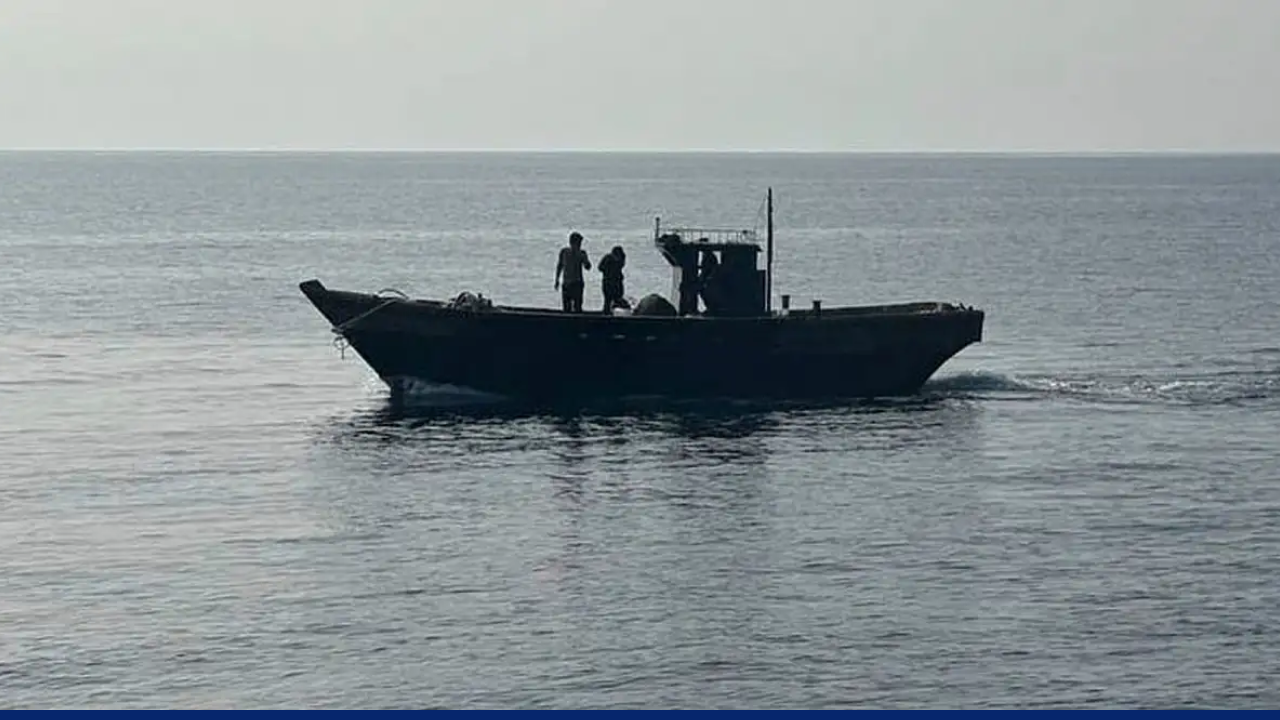
The successful extraction of 345 Indian fishermen from Iran via Armenia to Chennai represents a sophisticated logistical maneuver that transcends simple passenger transport. It functions as a case study in high-stakes supply chain management where the "cargo" is human, the operating environment is a high-intensity conflict zone, and the constraints are dictated by shifting international sanctions and closed airspaces. This operation was not a singular event but a multi-stage execution of a contingency plan designed to bypass the structural failures of traditional direct-route diplomacy during the West Asia conflict.
The Tripartite Transit Framework
To understand how 345 individuals were moved across three sovereign territories during active hostilities, one must examine the Tripartite Transit Framework. This framework involves three distinct operational zones: the Point of Origin (Iran), the Neutral Transit Hub (Armenia), and the Extraction Terminal (Chennai, India).
The necessity of this specific route—Iran to Armenia to India—stems from the degradation of direct aviation corridors. When traditional flight paths are compromised by missile activity or regulatory closures, logistics planners must identify a "Relief Node." Armenia served as this node due to its unique diplomatic positioning: it maintains functional relations with both Tehran and New Delhi, and its airspace remains relatively decoupled from the immediate kinetic activity in the Levant and the Persian Gulf.
Stage 1: The Origin Consolidation
The first logistical hurdle is the transition from a dispersed labor force to a concentrated transport unit. These 345 fishermen were not located in a single facility; they were distributed across various coastal Iranian provinces. The consolidation phase requires:
- Legal Verification and Exit Clearance: Negotiating with the Iranian Ministry of Foreign Affairs to waive or expedite exit visas under emergency protocols.
- Surface Transport Logistics: Coordinating secure bus transport from coastal regions to Tehran’s Imam Khomeini International Airport, a task complicated by internal fuel allocations and regional security checkpoints.
- Resource Sustenance: Provisioning for a cohort of 345 during a multi-day holding period where local supply chains are stressed by regional instability.
Stage 2: The Armenia Pivot
The selection of Armenia as a transit point is a strategic response to the Geopolitical Friction Variable. Direct flights between Iran and India often face increased insurance premiums or outright refusal from commercial carriers during conflict escalations. By utilizing Armenia, the operation effectively broke the journey into two lower-risk segments.
The Armenian transit functioned as a "Sanitized Buffer." It allowed for a shift in carriers—moving from regional Iranian transport to specialized charter flights—thereby mitigating the risk that a single aircraft would be tracked or targeted across the entire conflict-adjacent flight path. This stage is where the operation’s cost-function spikes, as it requires dual sets of landing rights and ground handling agreements in a non-destination country.
The Economic Architecture of Emergency Repatriation
Repatriation at this scale is a massive fiscal undertaking. While the human element is the primary focus, the underlying mechanics are driven by the Cost of Conflict Displacement.
- Charter Premium Rates: In a conflict zone, the cost of chartering a narrow-body or wide-body aircraft increases exponentially. This is due to "War Risk Insurance" surcharges, which can double the operating cost per hour.
- Opportunity Cost of Labor: For the 345 fishermen, the primary economic impact is the total loss of productivity. Most of these individuals operate on a remittance-based model. Their extraction signifies not just a loss of current wages but the forfeiture of contractual bonds and the potential loss of physical assets (fishing gear and personal property) left behind in the haste of departure.
- State-Funded Intervention: The Indian Community Welfare Fund (ICWF) often serves as the primary financial vehicle for these operations. The allocation of these funds must be balanced against the projected duration of the conflict, as a premature depletion of reserves could leave larger populations of Indian expats (particularly in the GCC) vulnerable if the conflict widens.
Structural Bottlenecks in Mass Extractions
The repatriation of the 345 fishermen highlighted three critical bottlenecks that dictate the speed of any state-led rescue operation.
The Documentation Lag
In maritime labor sectors, documentation is frequently held by employers or local sponsors. In a conflict scenario, retrieving 345 individual passports from diverse employers is a significant point of failure. The issuance of Emergency Certificates (ECs)—one-way travel documents—becomes the workaround. However, the production and biometric verification of 345 ECs in a pressurized consular environment create a data-processing backlog that can delay takeoff by 48 to 72 hours.
Capacity Constraints of the Relief Node
Armenia, while strategically located, is not a high-volume global transit hub. The arrival of 345 individuals simultaneously exceeds the processing capacity of standard transit lounges. This necessitates a "Hot Transfer" logic—where the incoming flight from Tehran and the outgoing flight to Chennai must be synchronized within a narrow 4-to-6-hour window to avoid the legal and logistical nightmare of housing 345 foreign nationals in a third country without transit visas.
The Final Mile Distribution
Arrival in Chennai is not the end of the operation; it is the beginning of the Domestic Distribution Phase. The 345 individuals are predominantly from the southern states of Tamil Nadu and Kerala. The logistics then shift from international aviation to domestic inter-city transport. This requires coordination with state governments to ensure:
- Health and Security Screening: Standard protocols for returnees from conflict zones.
- Onward Transit Logistics: Fleet management for buses or trains to move the group to their respective home districts.
- Debt and Contractual Counseling: Many returnees face immediate financial crisis due to truncated contracts.
Risk Assessment of the Armenia Corridor
While successful, the Iran-Armenia-India route is not without inherent risks. The Dynamic Risk Profile of this operation includes:
- Sovereign Airspace Volatility: The risk that Turkey or Azerbaijan might restrict their airspace to flights originating from Iran, which would effectively trap the transport aircraft in Armenian airspace.
- Diplomatic Reciprocity: The reliance on Armenia creates a "Diplomatic Debt." Future operations depend on maintaining a high level of bilateral cooperation, which may be tested if regional powers perceive the transit as a violation of neutrality.
- The Scalability Limit: While 345 people is manageable, the framework would likely collapse if the number scaled to 10,000. The infrastructure of the Armenia hub cannot support the "Air Bridge" requirements of a larger-scale evacuation.
The Strategic Shift in Indian Diaspora Management
This operation signals a transition from "Reactive Rescue" to "Proactive Extraction." By moving the fishermen before the conflict escalated to a point of total airspace closure, the Indian government avoided the far more complex and dangerous "Sea-Bridge" evacuations (similar to Operation Raahat in Yemen).
The decision to move 345 people via a third country suggests that the Ministry of External Affairs (MEA) is now prioritizing Path Diversification. Rather than waiting for direct routes to become safe, the strategy now involves identifying and pre-clearing secondary nodes like Yerevan, Muscat, or Amman as permanent contingency hubs.
The long-term implication for Indian maritime workers in West Asia is a necessary recalculation of risk. The "Protective Shield" provided by the state is effective but expensive and operationally limited. For labor agencies and the workers themselves, the new standard must include:
- Mandatory Digital Documentation: Ensuring that copies of passports and contracts are held in cloud-based government lockers (like DigiLocker) to bypass the "Documentation Lag."
- Conflict-Clauses in Labor Contracts: Legal provisions that allow for the immediate termination of contracts and repatriation without penalty in the event of regional kinetic activity.
- Emergency Fund Self-Sufficiency: A shift toward mandatory insurance schemes that cover the "Charter Premium Rates" currently absorbed by the state.
The 345 fishermen returning to Chennai are the beneficiaries of a highly calibrated logistical machine. However, the survival of this model depends on its ability to evolve from an ad-hoc emergency response into a permanent, tech-enabled infrastructure capable of managing the millions of Indian nationals residing in volatile zones.
State planners must now codify the Armenia transit logic into a standardized operating procedure. This involves securing standing agreements for emergency landing rights and pre-positioning consular task forces in these secondary hubs. The goal is to reduce the "Decision-to-Departure" interval to under 24 hours. The Chennai arrival proves the route is viable; the next challenge is making it repeatable under even more constrained conditions.