Justice moves at the speed of old paper. It rustles through filing cabinets in dusty London offices, crosses continental divides on slow cargo ships, and hides in the quiet spaces between heartbeats three decades after the fact. Time is supposed to blur the edges of horror. Distance is supposed to offer an alibi. But history has a stubborn habit of catching up, especially when the ghosts refuse to stay buried in the red soil of Rwanda.
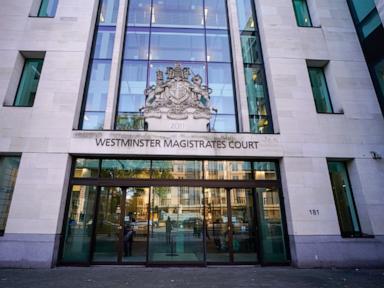
London did not look like a place of reckoning on an ordinary weekday. The grey drizzle fell with a steady, monotonous rhythm, slicking the pavements outside Westminster Magistrates Court. Inside, beneath the quiet hum of fluorescent lights and the heavy oak of the judiciary, a man stood to answer for a life that had fractured long ago.
Dr. Vincent Bajinya was once a man of science, a surgeon holding scalpels and whispering quiet reassurances to the sick. But prosecutors allege that in the spring of 1994, those same hands directed something entirely different. They allege he oversaw six killings during the Rwandan genocide, a systematic orchestration of slaughter in a country where neighbors turned on neighbors under the watchful eye of a collapsing state.
Pause for a moment and consider the mathematics of memory.
Thirty-two years. A child born the year the hills echoed with screams is now middle-aged, perhaps raising children of their own in a world that feels impossibly far removed from machetes and radio broadcasts calling for the clearing of tall trees. Yet, for the survivors, 1994 is not a year in a history textbook. It is a permanent weather pattern. It is the smell of woodsmoke and rain. It is an empty chair at a Sunday dinner table that has remained vacant for over three decades.
When people talk about genocide from a distance, they speak in the clean, sanitized language of international tribunals and extradition treaties. They use words like jurisdiction, warrants, and prima facie evidence. It sounds academic. It sounds safe.
It is not safe.
It is deeply, violently personal.
Imagine living in a city thousands of miles away from the home you were forced to abandon. You walk down a London street, past a red double-decker bus, your breath pluming in the chill air. You buy your groceries, pay your taxes, blend into the vast, indifferent tapestry of a metropolis of millions. You think you are safe. You think the ocean is wide enough and the years are deep enough to bury the past.
Then you see a face. Or you read a name in the morning paper.
The past is a phantom that does not need a passport.
Extradition hearings are rarely cinematic spectacles. There are no sudden confessions on the stand, no dramatic Hollywood reversals where the guilty party breaks down in tears before a packed gallery. Instead, there is paperwork. There are translations of witness testimonies recorded in remote villages decades ago, the ink faded, the accents thick with regional dialects that court stenographers struggle to capture. There are arguments over whether a man who has lived quietly as a medical professional for years can receive a fair trial back where the wounds remain raw and exposed.
This is the tension at the heart of universal jurisdiction. Where does a crime of this magnitude truly belong? Does it belong in the soil where the blood was spilled, where the families of the victims can sit in the gallery and watch the accused look them in the eye? Or does it belong in the sterile, neutral halls of a foreign power that prides itself on being a sanctuary, even if that sanctuary inadvertently shelters the storm?
The legal arguments drift back and forth across the courtroom. Defense lawyers point to the passage of time, the challenges of gathering reliable witnesses after thirty years, the fundamental integrity of local judicial systems. Crown prosecutors counter with the sheer gravity of the charges—crimes against humanity do not carry an expiration date. Murder on this scale leaves tracks that do not wash away in the rain.
Outside, the London traffic surges past. People rush to lunch, clutching umbrellas, arguing about football scores, worrying about mortgage rates. They brush shoulders with history and never even feel the draft.
That is the strangest part of justice pursued across borders. It happens in slow motion, muffled by legal briefs and procedural delays, while the world races ahead.
Yet, every time a court opens its doors to examine the wreckage of 1994, it sends a quiet, uncompromising signal. It says that borders are porous to accountability. It says that a quiet life built on the foundations of a hidden past is always built on sand.
The hills of Rwanda remember. The wind that sweeps down from the high plateaus carries the whispers of those who were promised tomorrow and were given only silence. And somewhere, across thousands of miles of ocean and time, a gavel falls, reminding anyone who thought they had outrun their history that the past is never really past at all. It is simply waiting for its turn to speak.