Dawn in Hualien does not break softly. It arrives with a heavy, salt-stained humidity that clings to the skin like a wet wool blanket, soon pierced by the raw, kinetic scream of afterburners tearing the gray horizon apart.
To stand at the perimeter fence of an air force base here is to feel the earth vibrate beneath your boots not just from machinery, but from an unbearable weight of anticipation. For years, the mechanics, the pilots, and the planners have waited. They have waited through diplomatic stalemates, through shifting congressional winds in Washington, through supply chain fractures that stretched months into agonizing years.
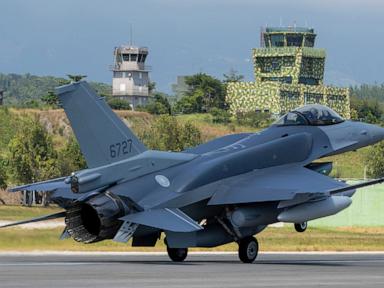
And then, they touched down. Two gray shapes cutting through the haze, bearing the insignia of the Republic of China Air Force. Two long-delayed F-16V Fighting Falcons finally home.
On paper, it is a routine delivery of military hardware. A transaction governed by foreign military sales contracts signed long ago, delayed by global industrial bottlenecks and the quiet, bureaucratic friction of modern defense logistics. But numbers on a spreadsheet cannot capture the smell of JP-8 jet fuel and ozone, nor can they measure the psychological gravity of every single fuselage that lands on this contested island.
Consider what happens next: a pilot steps down from the cockpit, flight helmet tucked under one arm, visor smudged with sweat. He does not look at the cameras. He looks at the horizon, where the gray water of the Taiwan Strait stretches toward a mainland that grows more restless by the month.
To understand why two airplanes matter so intensely, you have to understand the mathematics of anxiety.
Taiwan lives in a state of perpetual countdown. It is a modern, bustling democracy defined by neon-lit night markets, world-class semiconductor fabrication plants, and a populace that would rather debate local politics than dwell on geopolitics. Yet, behind that civilian veneer lies an acute awareness of geography. The strait between Taiwan and the People's Republic of China is barely a hundred miles wide at its narrowest point—a short commute for a supersonic cruise missile or a fifth-generation stealth fighter.
For decades, the backbone of Taiwan's aerial defense has been a aging fleet. The older F-16 A/B blocks, while upgraded over the years, are running out of airframe hours. Mirage 2000s, purchased from France in the 1990s, are brilliant interceptors but notoriously expensive and difficult to maintain in a sustained, high-intensity conflict. Indigenous Defense Fighters, built with domestic pride, fill gaps but cannot match the sheer scale of the modernization program unfolding across the water.
When Washington approved the sale of 66 new F-16V Block 70/72 jets back in 2019—the largest fighter jet sale to Taiwan in decades—it was hailed as a turning point. It was supposed to be a shield forged in the USA, delivered swiftly to reinforce a critical choke point in the First Island Chain.
Then reality intervened.
Global defense supply chains suffered a cascade of failures. Software integration challenges for the advanced Active Electronically Scanned Array (AESA) radar systems proved more stubborn than anticipated. Production lines in Greenville, South Carolina, juggled competing global demands. Delivery dates slipped. First it was late 2023. Then 2024. Then whispers of further delays into 2025 and 2026.
Every month of delay was measured not in corporate quarterly reports, but in sleepless nights for defense planners in Taipei. In the high-stakes game of deterrence, a promise on an order form does not stop a formation of J-20s from probing an Air Defense Identification Zone. Only iron in the sky can do that.
So when these two fighters finally touched down, the collective exhale across the island's military establishment was palpable. But relief is not the same as safety.
Sixty-four more remain on the manifest. Awaiting additional fighter jets is a tense, ongoing exercise in patience and vulnerability.
Walk through the cavernous underground hangars carved into the granite mountains of eastern Taiwan—facilities like Chiashan—and you sense the true scale of the challenge. These subterranean fortresses are masterpieces of engineering, designed to protect aircraft from an initial barrage of ballistic missiles. But a bunker is only as good as the machines inside it. Without modern avionics, advanced electronic warfare suites, and the lethal reach of AIM-120D AMRAAM missiles, even the deepest mountain cannot protect a force that has been technologically outpaced.
The F-16V is not just an update; it is an entirely different creature wrapped in a familiar aluminum skin.
Imagine looking at a vintage muscle car body dropped onto the chassis of a modern electric hypercar. From the outside, it looks like the fighter jets that have patrolled these skies for a generation. Inside, the pilot is staring at a massive, high-resolution Center Pedestal Display that fuses data from infrared search and track pods, ground radar, and airborne early warning aircraft into a single, cohesive picture of the battlespace.
The APG-83 Scalable Agile Beam Radar (SABR) changes the physics of engagement. It allows pilots to detect, track, and engage multiple targets at once, operating in electronic jamming environments where older radars would be blinded into static. In a dogfight that might never involve visual contact—where missiles streak across the sky from forty miles away guided by data-links and network-centric warfare—that radar is the difference between surviving to fly tomorrow and becoming a burning wreck falling into the Pacific.
Yet, hardware is only half the equation.
Behind every jet parked on the tarmac stands an invisible army of maintainers, avionics specialists, logicians, and software engineers. The human element of military deterrence is often overlooked in favor of glossy brochures and weapons-count statistics.
Talk to a crew chief who has spent twenty years wrenching on airframes in the biting salt air of the coast. He will tell you that advanced technology demands absolute perfection from the humans who service it. A loose fastener on a legacy jet might cause a vibration; a loose data connection on a Viper's neural network can blind a pilot's situational awareness at the worst possible microsecond.
Training takes time. Simulator hours must be logged. Tactics must be rewritten to account for the leap in capabilities. When pilots transition from older blocks to the V-configuration, they are not just learning new switches; they are rewiring how they think under extreme G-forces. They must trust a screen that processes millions of data points a second, even when their instincts scream at them to rely on their own eyes.
This is the hidden cost of the delivery delays. Every month the new jets are parked in factory yards across the ocean instead of mountain bases in Hualien is a month where pilots must train on yesterday's capabilities while potential adversaries train on tomorrow's.
Geopolitics rarely moves in a straight line. It is a series of nudges, checks, counter-checks, and sudden, violent spasms.
When foreign ministers issue statements about peace and stability in the Taiwan Strait, the words are parsed in capitals around the world like ancient scripture. But deterrence is not maintained by communiqués. It is maintained by the grim, undeniable calculus of attrition. A potential aggressor does not calculate the sincerity of a foreign policy speech; they calculate how many aircraft they will lose trying to achieve air superiority over a heavily defended, mountainous coastline.
Every F-16V that arrives shifts that calculation slightly back toward equilibrium. It raises the price of admission. It complicates the planner's playbook in Beijing, forcing them to weigh the cost of escalation against the reality of facing a modernized, interoperable defense network tied directly into regional data-sharing architecture.
Two jets have arrived. Sixty-four are still coming.
The maintenance crews in their green flight suits will spend the afternoon towing the new arrivals into the deep shadows of the hangars. Panels will be opened. Diagnostics will be run. The smell of hot metal and aviation fuel will fade into the damp evening air as the sun dips below the central mountain range, casting long, dark shadows across the runway.
Out over the water, the night patrol continues. The sky remains quiet, for now. But the runway is ready, the pilots are waiting, and the long shadow of the future has finally landed.