Political pundits love a neat demographic boxes. It makes their television hits easier to script and their column inches effortless to fill. Right now, the lazy consensus blanketing Los Angeles political coverage is that the race for City Hall comes down to a generational cage match—boomers versus millennials, old guard versus young radicals, nostalgia versus progress.
That narrative is pure fiction.
If you look closely at precinct-level voting behavior across the Los Angeles basin, birth years explain almost nothing. A 28-year-old software engineer renting a studio in Silver Lake and a 28-year-old third-generation homeowner in Downey share an age bracket, yet they inhabit entirely different political universes. Meanwhile, that same Downey millennial votes almost identically to a 68-year-old retiree in Woodland Hills.
The real fault line tearing through Los Angeles isn't generational. It is a brutal, zero-sum class war between the landed gentry and the permanently precarious. It is a battle between those who hold a property deed—or a decades-old rent-stabilized lease—and those who are paying market rate for the privilege of breathing L.A. smog.
The Myth of the Youth Vote Tsunami
Every four years, campaign consultants burn millions of dollars chasing the mirage of a unified youth bloc. I have watched strategy rooms in downtown L.A. obsess over TikTok ad buys and campus organizing, convinced that mobilizing voters under 35 will automatically tilt the city toward progressive urbanism. They always end up shocked on election night when the turnout numbers roll in and their models collapse.
Here is the uncomfortable math that campaign managers ignore: off-cycle and municipal elections in Los Angeles are structurally engineered to silence the young and the mobile.
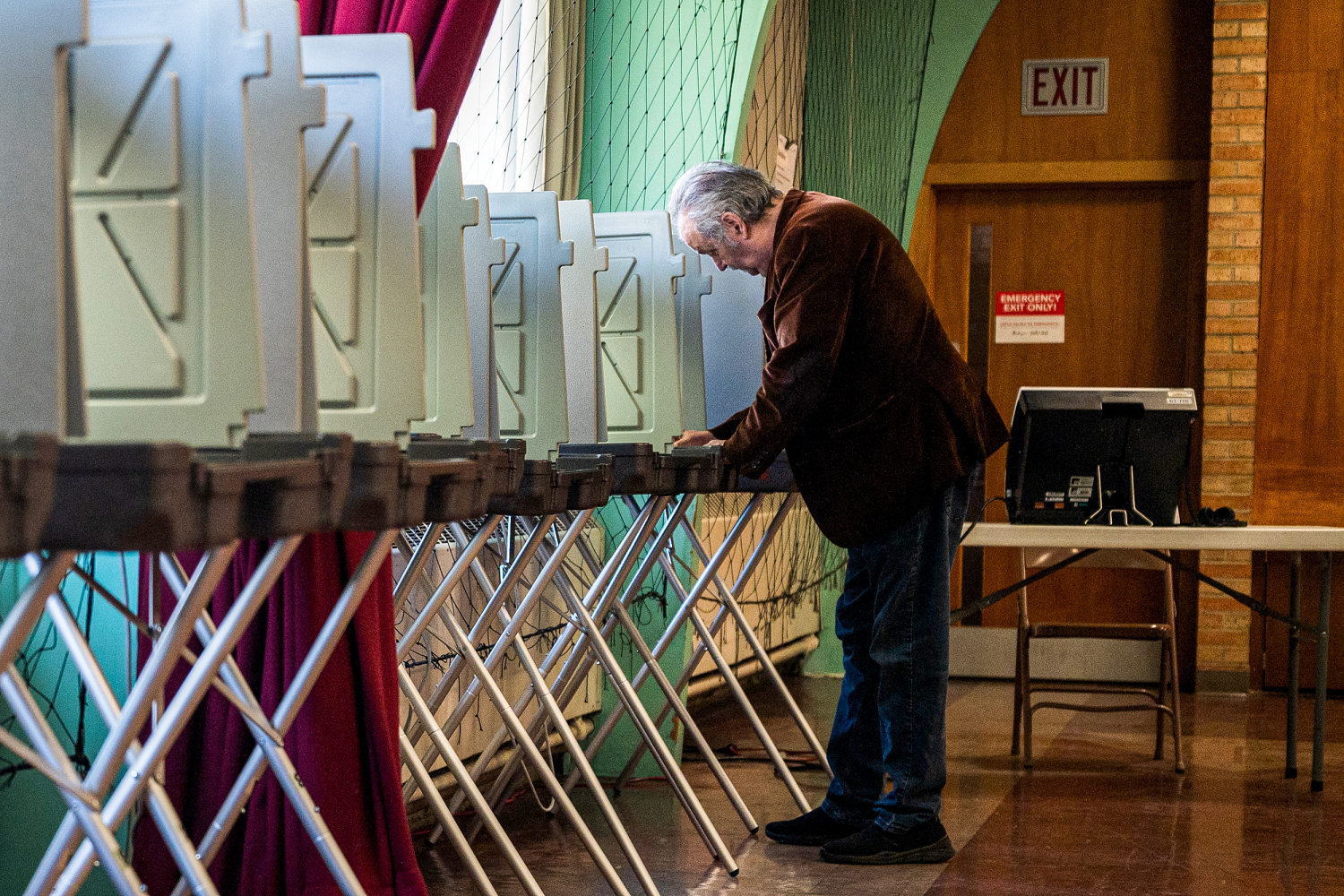
Los Angeles County Registrar-Recorder data consistently shows that municipal election turnout skews heavily toward older, wealthier, and whiter precincts on the Westside and in the San Fernando Valley. Why? Because voting is a habit anchored by residential stability. When you move apartments every fourteen months because your landlord jacked up the rent by eight percent, updating your voter registration falls behind surviving the month.
Even when young Angelenos do show up to the ballot box, they do not vote as a monolith. The pundit class mistakes the loud, hyper-online activist wing of Los Angeles politics for the actual demographic reality of twenty- and thirty-somethings living in the city.
The Renter vs. Owner Split
To understand who actually picks the Mayor of Los Angeles, stop looking at birth certificates and start looking at Zillow.
Los Angeles is a majority-renter city—roughly 63 percent of households lease their homes, one of the highest rates of any major American metropolis. Yet the electorate that actually decides citywide races is overwhelmingly composed of homeowners. This creates a massive democratic distortion. The people setting the policy agenda at City Hall are insulated from the primary economic crisis destroying the city's middle class.
Consider how two voters react to the exact same mayoral platform:
- The Homeowner: Bought a three-bedroom house in Mar Vista in 1998. Thanks to California's Proposition 13, their property taxes are capped at a fraction of the home's current two-million-dollar valuation. Their primary political anxieties are street cleanliness, property crime, and preventing multi-family apartment buildings from casting a shadow on their backyard.
- The Market-Rate Renter: Lives three miles away in Palms. They spend 48 percent of their take-home pay on a one-bedroom apartment built in 1974. Their primary political anxieties are eviction threats, stagnant wages, and the fact that their commute on the 405 takes ninety minutes because they cannot afford to live near their job.
Notice that age isn't the variable here. If that 32-year-old in Palms inherits their grandmother's house in Hancock Park tomorrow, their political instincts will shift rightward on housing and policing within six months. Property ownership is the most powerful ideological converter in municipal politics.
Why "Generational Divide" Punditry Is Dangerous
Treating this election as a generational squabble isn't just bad analysis; it is actively harmful to voters trying to evaluate candidates. When media outlets frame a candidate's platform as "appealing to younger voters," they usually mean the candidate uses modern cultural buzzwords, talks about climate resilience, and supports transit expansion.
That framing lets candidates off the hook on the mechanics of power.
A mayoral hopeful can court the "youth vote" by promising bold green initiatives while quietly backing zoning restrictions that keep single-family neighborhoods locked in amber. Conversely, a candidate painted as a "boomer favorite" for emphasizing public safety and rapid street sweeps might actually be articulating the exact frustrations of young working-class families in South L.A. and the Eastside who are tired of dodging open-air drug markets on their walk to the Metro station.
Let's dismantle the common assumptions voters have been fed about this race.
Do younger L.A. voters want to defund the police?
No. That is a coastal media caricature detached from street-level reality. While younger voters across the city overwhelmingly support police accountability, body-camera transparency, and unarmed crisis response teams for mental health calls, polling from the Loyola Marymount University Center for the Study of Los Angeles consistently reveals that public safety ranks as a top concern across every age bracket.
Younger residents in lower-income neighborhoods bear the brunt of violent crime and slow 911 response times. They do not want an absence of policing; they want competent, constitutional policing that actually shows up when a catalytic converter is being sawed off or a storefront is being robbed. Candidates who treat public safety as a "boomer issue" are handing working-class precincts directly to their opponents.
Is the housing crisis really a battle between NIMBY boomers and YIMBY millennials?
Only on Twitter. In the real world, resistance to dense housing development crosses generational lines the moment a construction crane appears next door.
Plenty of twenty-something tenants in historic neighborhoods like Echo Park or Highland Park vehemently oppose market-rate apartment developments because they view new construction as a Trojan horse for gentrification and displacement. Meanwhile, plenty of sixty-something homeowners support upzoning commercial corridors because they want their adult children to be able to afford a condo within twenty miles of them. Calling housing policy a generational war obscures the real fight: incumbent residents protecting their turf versus newcomers fighting for a foothold.
The Mechanics of the L.A. Power Brokers
If you want to know who is really pulling the strings in the mayor's race, follow the institutional money and the labor unions. Los Angeles politics does not run on viral moments; it runs on ground games funded by massive special interests that have zero interest in generational harmony.
- The Public Sector Unions: Organizations like SEIU Local 721 and the Los Angeles Police Protective League do not care how old you are. They care about municipal budgets, pension obligations, and contract negotiations. When they endorse a candidate, they deploy thousands of paid canvassers and millions in independent expenditures that completely swamp grassroots youth organizing.
- The Building Trades vs. Environmentalists: This is the classic split inside the L.A. Democratic machine. The Los Angeles/Orange Counties Building and Construction Trades Council wants massive infrastructure projects, stadium deals, and housing developments built with union labor. Environmental groups want strict California Environmental Quality Act (CEQA) enforcement that often stalls those exact projects for years. Both sides have 25-year-old foot soldiers and 65-year-old generals.
- The Neighborhood Council Class: Los Angeles has nearly a hundred neighborhood councils. In theory, they are hyper-local democratic bodies. In practice, they are dominated by retirees and hyper-engaged homeowners who have the free time to attend four-hour Zoom meetings on Tuesday nights. Mayoral candidates terrify themselves into catering to this tiny slice of the electorate because these individuals write the angry emails and organize the recall petitions.
How to Actually Read the Race
Imagine a scenario where two candidates face off in a November runoff. Candidate A is 42 years old, speaks fluently about equity, rides a bike to press conferences, and has the backing of major progressive non-profits. Candidate B is 64 years old, speaks in measured bureaucratic prose, emphasizes fiscal discipline, and has the backing of the Chamber of Commerce and moderate labor unions.
The lazy pundit will immediately slap a "Generation Gap" headline on that matchup. They will predict a clash between the future and the past.
Here is how you actually strip away the noise and see which candidate will govern effectively:
- Look at their position on Executive Directive 1 and streamlining permits: Do they believe the Mayor's office should override local councilmembers' discretionary veto power over housing projects? In Los Angeles, the fifteen City Council members act like feudal lords over their districts. A mayor who refuses to challenge councilmanic prerogative is guaranteeing four more years of housing gridlock, regardless of how young and energetic they appear on television.
- Check their math on homelessness spending: Los Angeles has poured billions of dollars into Measure HHH and Measure ULA, yet tens of thousands of people remain on the sidewalks. Ignore the emotional rhetoric about compassion versus cruelty. Ask a simple operational question: What is the per-unit cost of the shelter beds they are proposing, and how many months does it take to open a single facility? If a candidate cannot answer that without using vague platitudes, they are going to get eaten alive by the city's procurement bureaucracy.
- Examine their relationship with the Department of Water and Power (LADWP): The LADWP is a massive, semi-autonomous utility with immense political clout and a union (IBEW Local 18) that routinely bankrolls political campaigns. How a candidate plans to transition the city off natural gas without bankrupting working-class ratepayers on their monthly utility bills tells you everything about their governing seriousness.
The Flaw in My Own Thesis
Let's be honest about the blind spot in reducing everything to economics and property lines. Class and homeownership explain 80 percent of the Los Angeles electorate, but they do not explain the cultural accelerants that occasionally detonate a local race.
Every once in a while, a scandal—like the leaked City Hall audio tapes involving racist remarks by councilmembers—shatters traditional voting blocs. In those moments, identity, moral outrage, and generational expectations around institutional accountability temporarily override pocketbook issues. Younger voters, raised in a media ecosystem that demands immediate resignations over rhetorical transgressions, do react differently to cultural scandals than older voters who grew up tolerating machine-style backroom politics.
Ignoring that cultural friction would be just as foolish as pretending age is the only thing on the ballot. Cultural flashpoints create the waves, even if economic self-interest controls the tide.
Stop Buying the Demographic Bait
The next time you read an analysis claiming the Los Angeles mayor's race hinges on whether millennials and Gen Z show up to topple the boomer establishment, close the tab. You are being sold a soap opera script instead of a political analysis.
Los Angeles is a city divided by concrete freeways, brutal housing costs, and an archaic City Charter that fragments power until nobody is accountable for anything. Voters aren't stepping into the booth thinking about their birth year. They are thinking about their rent check, their property tax bill, the encampment outside their kid's elementary school, and whether the city is still livable for people who don't have a trust fund.
Follow the deeds, follow the union endorsements, and watch who actually controls the land—because in Los Angeles, real estate has always been the only demographic that truly matters.