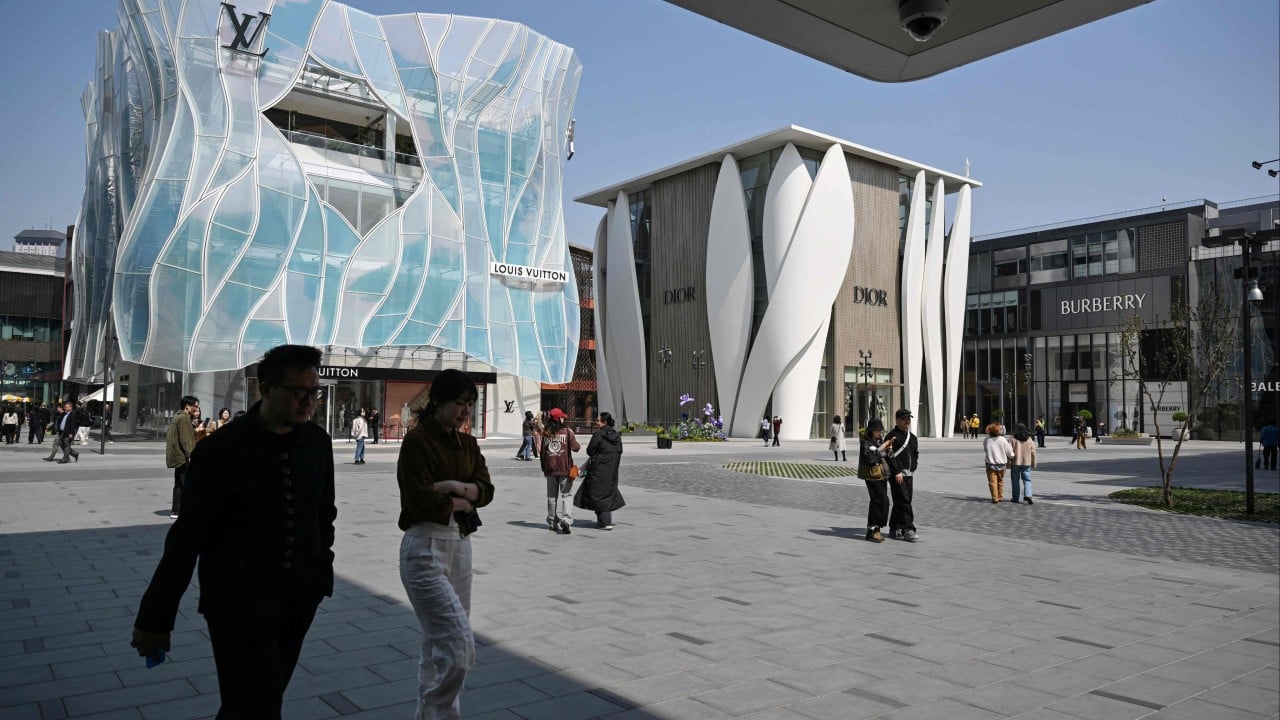
Executive rhetoric about a "special bond" with Chinese consumers cannot override a balance-sheet contraction driven by weak household wealth, property-sector drag, and stricter tax enforcement. When LVMH reported 1% organic revenue growth in the third quarter of 2026—reaching €18.50 billion—as Fashion & Leather Goods fell 5% amid double-digit declines on the Chinese mainland, the divergence exposed a central trap in global luxury strategy: treating multi-decade relational goodwill as a substitute for cyclical and structural purchasing power.
Surface-level coverage of LVMH's third-quarter 2026 earnings tends to read as a simple tug-of-war between upbeat management commentary and gloomy headlines. In that framing, executives point to decades of presence and ongoing store commitments while analysts cite a "subdued" environment. That narrative misses the underlying mechanics. A brand can maintain physical retail footprint, cultural visibility, and long-term affection among buyers while still watching unit volumes and high-ticket conversion slip when asset prices soften and conspicuous spending draws scrutiny.
Deconstructing the Surface Narrative
Standard earnings summaries treat the story around LVMH and China as a single tension: long-term attachment versus short-term macro headwinds. Their logic usually runs in three steps:
- The Goodwill Premise: Management emphasizes an enduring relationship with China and continued investment rather than retreating.
- The Macro Drag: Sluggish domestic momentum, property-market weakness, and softer consumer mood depress discretionary outlays across mainland and overseas channels.
- The Portfolio Offset: Strength in other regions—such as the United States, Europe, and Japan—or other categories helps cushion a group headline that would otherwise look far worse.
That chain of reasoning is not wrong on its face, but it flattens distinct causal layers into one blur. It treats "subdued backdrop" as an undifferentiated fog rather than separating household balance-sheet effects from fiscal enforcement, brand-specific friction, and category elasticity. It also assumes that brand affinity operates symmetrically across entry-level accessories, flagship leather goods, beauty, and high jewelry.
The Demand Architecture Behind Chinese Luxury Spending
To analyze why flagship fashion softens even when executives invoke historical ties, luxury demand in China is better modeled through four interacting mechanisms rather than a single sentiment score.
Balance-Sheet Wealth and the Property Anchor
In classical permanent-income theory, households set consumption based on expected lifetime resources rather than a single paycheck. In China, real estate has historically served as a primary store of household wealth and collateral confidence. When property values stagnate or fall and equity markets feel choppy, affluent and aspirational buyers experience a negative wealth effect. Even consumers whose current income is intact often pull back on high-margin discretionary goods when perceived net worth stops compounding.
Fiscal Scrutiny and Signaling Risk
Luxury goods are Veblen and positional goods: part of their utility comes from visible status and social signaling. When tax authorities tighten oversight on high-income earners and wealthy taxpayers, the calculus around visible extravagance shifts. Buyers do not necessarily stop wanting quality; rather, overt displays of high-priced Western luxury carry higher perceived friction—both fiscal and social—than quieter purchases or domestic alternatives.
Channel Arbitrage and Cross-Border Friction
Chinese luxury demand has never been confined to domestic boutiques; it moves across mainland stores, duty-free hubs, and overseas travel corridors. Shifts in exchange rates, travel patterns, and price gaps across jurisdictions continuously redirect where a purchase is booked. When both domestic mainland demand and overseas purchases by Chinese shoppers soften in the same window, the issue is broader than simple geographic routing—it points to genuine demand compression across the Chinese consumer cluster.
Reputational Friction at the Brand Level
Macro pressure sets the ceiling and floor of a category, while brand execution determines relative share within it. Public controversies or trademark disputes in a key market can create localized consumer pushback at the start of a trading period. Separating macro headwinds from brand-specific friction is essential for operators: macro drag requires patience and capital discipline, whereas reputational friction requires targeted messaging and commercial remediation.
| Analytical Lens | What Surface Coverage Emphasizes | What Structural Analysis Isolates | Operational Implication |
|---|---|---|---|
| Consumer Demand | "Subdued" mood and weak backdrop | Wealth-effect drag, tax scrutiny, and lower signaling appetite | Volume pressure hits aspirational and core items before top-tier icons |
| Brand Equity | "Special bond" and long-term commitment | Gap between cultural familiarity and immediate purchase conversion | Affinity preserves option value but cannot force near-term transactions |
| Portfolio Mix | Group organic growth of 1% versus 5% leather drop | Divergent elasticity across leather, jewelry, beauty, and spirits | Conglomerate breadth cushions earnings but masks core-division strain |
| Pricing & Footprint | Holding the line and keeping retail presence | Trade-off between unit velocity, gross margin, and store fixed costs | Avoiding price cuts protects heritage but tests store-level productivity |
Why Flagship Leather Feels the Squeeze First
Fashion & Leather Goods sits at the heart of LVMH—accounting for roughly 46% of group revenue over the first nine months of 2026 compared with 47.5% a year earlier—which means its trajectory shapes investor perception of the entire enterprise. After years of aggressive price increases across the luxury sector, price points on core handbags have risen substantially. In a buoyant wealth cycle, buyers absorb price hikes as proof of exclusivity. In a cautious cycle, higher entry prices raise the hurdle rate for every new purchase.
Category elasticity behaves differently across the rest of the portfolio. Lower-ticket beauty and selective retail—where Sephora gained share and expanded—can capture everyday self-care or gifting budgets even when big-ticket leather is deferred. High jewelry and select watches appeal to narrower, ultra-high-net-worth segments with different liquidity profiles, while spirits and champagne respond to hospitality, gifting, and occasion dynamics. By contrast, core leather goods sit right in the middle: expensive enough to feel like a capital allocation, yet frequent enough in past cycles that any hesitation among upper-middle and affluent shoppers shows up immediately in comparable sales.
Maintaining retail footprint without chasing volume through steep markdowns reflects a deliberate choice to defend brand equity over time. The known fact is that management has resisted across-the-board price cuts and emphasized longer-term positioning. What remains an educated hypothesis—pending subsequent quarters—is how quickly product renewal and creative momentum can restore organic leather growth without sacrificing unit economics.
Diagnostic Playbook for Luxury and Consumer Leaders
Operators navigating a slow or uneven luxury market can diagnose whether a revenue dip is cyclical, structural, or brand-inflicted by running a structured sequence:
- Separate Cluster Volume from Geographic Booking: Track Chinese clientele spending across domestic stores and international travel destinations together rather than looking at regional P&L lines in isolation. If both move down together, treat it as buyer retrenchment rather than mere cross-border leakage.
- Audit Price-Tier Elasticity: Compare unit growth and conversion across entry items, core icons, and top-end creations. When entry and mid-tier items stall faster than top-tier pieces, price ladders may have stretched ahead of current household purchasing power.
- Decompose Traffic, Conversion, and Basket Size: Distinguish between fewer shoppers walking into stores, lower conversion among visitors who do enter, and smaller average baskets. Each bottleneck points to a different fix—from clienteling and assortment relevance to store staffing and visual merchandising.
- Isolate Event-Driven Drag from Trend Decay: When sales dip around a public controversy or regulatory headline, measure whether weekly performance normalizes once media attention fades or continues trending lower. Conflating a temporary spike in friction with a permanent demand collapse leads to overreaction.
- Reallocate Store Capex Toward Productivity: Where leases come up for renewal, prioritize right-sizing, relocation to prime high-traffic nodes, or experiential upgrades over raw square-footage expansion. Protecting store-level operating leverage matters most when top-line growth is measured in low single digits.
Limitations and Boundary Conditions
No framework eliminates uncertainty when macro policy, currency swings, and consumer psychology shift simultaneously. Aggregate quarterly disclosures rarely isolate the exact dollar impact of a single news event or tax shift, and external commentary on luxury earnings often extrapolates a single quarter's softness into a permanent verdict on a brand. Moreover, protecting brand heritage by holding prices firm carries real trade-offs: if volumes stay depressed for too long, fixed store and overhead costs weigh on operating margins even when gross margins per unit remain high.
Strategic Recommendation
Luxury leaders facing a sluggish Chinese consumer backdrop should pair disciplined price and assortment restraint with aggressive clienteling and store-productivity pruning—treating brand affinity as a defensive buffer that buys time for product renewal, never as a guarantee of automatic rebound. Rather than relying on broad macro optimism or discounting core icons to force near-term volume, focus capital on high-conviction creations, sharpen CRM outreach to repeat top-tier clients, and optimize physical retail footprints so that even modest top-line growth translates into healthy cash generation.