The United Kingdom’s Consumer Prices Index (CPI) breached the 3.3% threshold in March 2026, a move that terminates the disinflationary narrative prevalent in late 2025 and signals a structural shift in the nation’s inflationary profile. This 0.6 percentage point increase from the previous month is not merely a statistical outlier; it represents the convergence of a localized energy price shock with systemic supply chain fragility. While headline figures focus on the raw percentage, the underlying mechanics reveal a "bullwhip effect" originating in the Strait of Hormuz and terminating in the UK’s retail logistics network.
Understanding this spike requires a departure from simple price-tracking toward an analysis of The Inflationary Triad: Geopolitical Risk Premia, Sterling Volatility, and the Secondary Effects of Energy Input Costs.
The Fuel Pivot and the Cost Function of Logistics
The primary driver for the March jump was a sharp appreciation in liquid fuel costs, which filtered through the economy with uncharacteristic speed. The escalation of conflict involving Iran has introduced a "war premium" into Brent Crude pricing, pushing benchmarks toward $100 per barrel. For the UK, this impact is magnified by two specific structural vulnerabilities.
- Refinement Bottlenecks: The UK's domestic refining capacity remains inelastic. When global crude prices rise, the domestic spread for petrol and diesel widens faster than the raw commodity price, as distributors price in future replacement costs.
- The Transport Multiplier: Logistics firms, already operating on razor-thin margins of 2-4%, have largely exhausted their ability to absorb cost increases. The immediate reinstatement of fuel surcharges has moved the "pain point" from the pump to the shelf within a single 30-day billing cycle.
The relationship between fuel and CPI is often viewed as a direct line. In reality, it functions as a cascading cost function. As transport costs rise, the "last-mile" delivery of perishable goods—which are highly sensitive to logistical timing—sees the most aggressive price adjustments. This explains why food and non-alcoholic beverages contributed a disproportionate weight to the 3.3% figure, despite global agricultural commodity prices remaining relatively stable.
Sterling Devaluation and Imported Inflationary Pressure
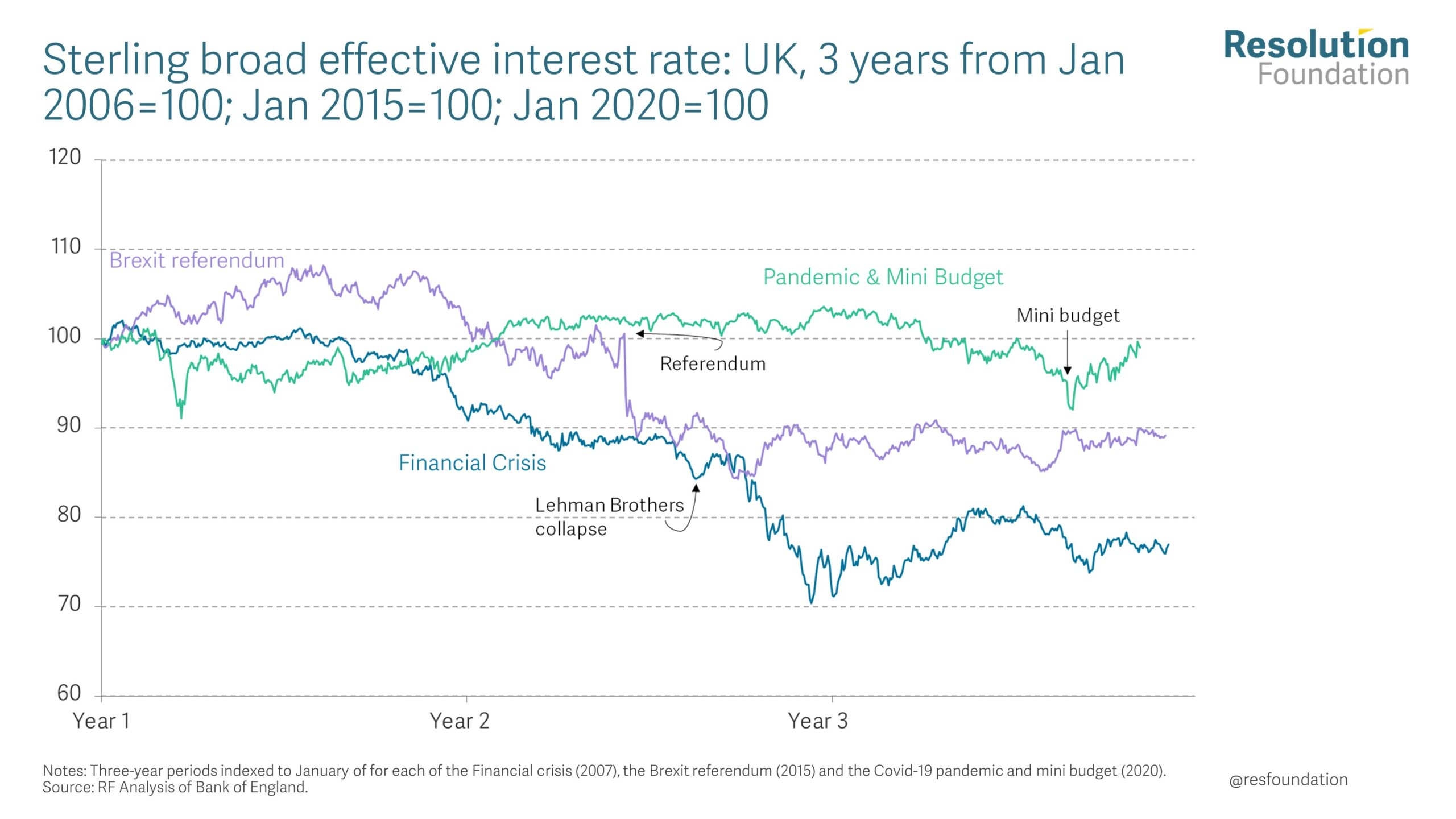
Inflation is not only a measure of rising prices but also a reflection of diminishing currency utility. The March data highlights a significant "Currency Pass-Through" effect. As geopolitical tensions rose, international capital flowed toward the US Dollar as a safe-haven asset, putting downward pressure on the British Pound.
The UK is a net importer of both energy and finished consumer goods. When Sterling weakens against the Dollar, the cost of importing components, electronics, and clothing rises instantaneously. This creates a secondary layer of inflation that is harder for the Bank of England to control via interest rate hikes alone. If the currency continues to trade at depressed levels, the "imported" component of the CPI will likely outlast the immediate volatility of oil prices.
The Core Inflation Divergence
While the headline CPI stands at 3.3%, the focus must shift to Core Inflation—which excludes volatile energy and food prices. The divergence between headline and core figures determines whether this is a transitory shock or a permanent shift in the price floor.
- Services Sector Persistence: Service inflation remains the most stubborn element of the UK economy. Wage growth, though cooling, has anchored at levels that prevent service providers from reducing prices.
- The Rental Feedback Loop: Housing costs, particularly in the private rental sector, continue to track upward. The scarcity of supply creates a "ratchet effect" where prices move up in response to interest rate signals but fail to recalibrate downward when those signals stabilize.
The March data suggests that the "easy" wins in the fight against inflation are over. The return to a 2.0% target is no longer a matter of waiting for energy prices to normalize; it requires a contraction in services demand that has yet to materialize.
Strategic Realignment of the Bank of England (BoE)
The Monetary Policy Committee (MPC) now faces a classic "Central Banker’s Dilemma." The traditional response to a supply-side shock (like rising oil prices) is to "look through" it, as interest rates cannot produce more oil. However, the 3.3% print suggests that inflationary expectations are becoming unanchored among the public.
If the BoE maintains high rates to combat the 3.3% spike, they risk over-tightening and inducing a recessionary environment in the second half of 2026. If they pivot toward cuts to support growth, they risk a further devaluation of Sterling, which would exacerbate the very inflation they seek to tame. The current data suggests the BoE will be forced into a "Hawkish Pause," maintaining current rates for longer than the market had anticipated in January.
The Hidden Cost of Protective Hedging
A factor often missed in surface-level reporting is the behavior of UK corporations in response to the Iran conflict. In anticipation of further disruptions, large-scale retailers and manufacturers have moved from "Just-in-Time" to "Just-in-Case" inventory management.
This shift involves:
- Front-loading imports to avoid future shipping delays.
- Increased warehousing costs to store excess inventory.
- Higher insurance premiums for goods transiting high-risk maritime zones.
These operational inefficiencies act as a hidden tax on the economy. Even if the conflict in the Middle East de-escalates tomorrow, the costs associated with these protective measures have already been baked into the retail prices for the next two quarters. The 3.3% figure is, in many ways, a trailing indicator of these logistical shifts.
Forecast and Quantitative Adjustment
Predictive modeling for the Q2 2026 period must account for the Base Effect. Because inflation was relatively low in the comparable months of 2025, the year-on-year calculations will likely remain elevated even if month-on-month price growth slows.
The risk is a "second peak" scenario. If the fuel surge triggers another round of wage demands in the public or private sectors, the UK could enter a wage-price spiral that necessitates a terminal interest rate higher than 5.25%.
The immediate strategic priority for stakeholders is the mitigation of energy-intensive exposure. Companies that have failed to transition to fixed-rate energy contracts or more efficient logistics models will face a significant "margin squeeze" throughout the spring. The 3.3% CPI jump serves as a final warning that the period of cheap inputs and stable supply chains has officially concluded.
Business leaders should prioritize the following tactical moves:
- Hedge Currency Exposure: Lock in exchange rates for USD-denominated imports to negate the impact of further Sterling volatility.
- Audit Logistics Chains: Shift toward rail or more fuel-efficient transport modalities where possible to decouple from the "war premium" at the pump.
- Pass-Through Calibration: Instead of broad-based price increases, apply surgical adjustments to high-margin, low-elasticity product lines to preserve overall volume while protecting net income.
The window for passive observation has closed. The March inflation data is a directive for aggressive fiscal and operational defensive posturing.