Throwing public money at deep tech is the political equivalent of buying a sports car to fix a midlife crisis. It looks expensive, it makes headlines, and it masks a deeper structural failure.
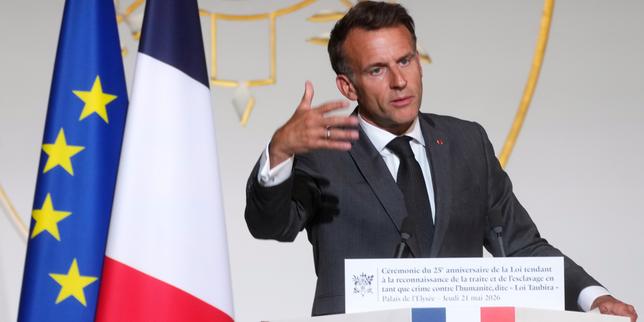
Emmanuel Macron stepped onto the floor at the CEA computing center in Bruyères-le-Châtel to announce an extra 1.55 billion euros for quantum computing and semiconductors. The press room immediately fell into line. The narrative was pre-written: France is double-downing on its technological destiny, buying its way into the elite club of sovereign superpowers, and showing the Americans and Chinese that Europe can play hardball. Building on this theme, you can also read: Japan Is Building a Trillion-Yen Museum Piece with the Global Combat Air Programme.
It is a comforting bedtime story for Eurocrats. It is also completely detached from commercial reality.
I have spent years tracking how capital flows through deep tech ecosystems, watching state-backed funds disappear into academic black holes while Silicon Valley and Shenzhen scale actual products. This latest cash injection from the remaining France 2030 budget will not build a sovereign tech fortress. It will fund expensive, isolated science experiments that have no path to market dominance. Analysts at Ars Technica have shared their thoughts on this trend.
The Subsidized Illusion of Scale
The state believes that if you aggregate enough public euros, you can manufacture industrial leaders by decree. The original 2021 French Quantum Plan injected 1.8 billion euros into the ecosystem. Now, we are adding 1.55 billion more, split between quantum infrastructure and a 550 million euro slice for European semiconductor supply chains.
Here is the problem: state subsidies build labs, not markets.
When the French government brags about local startups capturing 20% of the global market share for quantum hardware manufacturing, they are hiding a structural flaw. Who is buying these machines? Right now, the buyers are mostly other state-backed research institutes, universities, and public agencies like the CNRS or the CEA.
It is a closed-loop economy. The state funds the startup, and then the state funds the government agency to buy the startup’s prototype. This is not a market. It is an expensive, taxpayer-funded echo chamber.
Real industrial scale requires commercial customers who buy technology because it solves a brutal bottom-line problem, not because a minister wants a photo op next to a dilution refrigerator. By shielding these companies from the immediate pressure of finding private, recurring commercial revenue, the state is making them weak.
The Quantum Advantage Fallacy
The political obsession with "quantum supremacy" or achieving an "unconventional advantage" ignores how computing infrastructure actually scales. Policymakers look at a machine like the photonics-based system Lucy at Bruyères-le-Châtel and see an immediate counterweight to Nvidia or Intel.
They are fundamentally misunderstanding the technology stack.
Quantum hardware is useless without a massive, boring ecosystem of classical software, compilers, and error-correction protocols. More importantly, the hardware itself is still plagued by coherence issues and high error rates. While French politicians chase the prestige of building a 100-logical-qubit system, American tech giants are integrating early-stage quantum acceleration directly into existing cloud computing architectures.
They are not waiting for a standalone, sovereign quantum savior. They are treating quantum as a co-processor for the massive AI workloads running on traditional silicon today. France is trying to build a standalone monument; the market is building an integrated utility.
The Semiconductor Trap
The most flawed part of the new announcement is the 550 million euro allocation intended to secure semiconductor supplies and push for joint European borrowing. Macron wants a more aggressive European research and technology coalition to fight vassalization by foreign tech giants.
Let’s look at the numbers.
A single modern semiconductor fabrication plant (fab) costs upwards of 20 billion dollars to construct and equip. TSMC’s capital expenditure budget for a single year routinely crosses 30 billion dollars. A half-billion-euro initiative spread across European research institutes is a rounding error. It is bringing a pocket knife to a nuclear standoff.
Europe produces less than 10% of the world's semiconductors, mostly concentrated in older, mature nodes used for automotive and industrial machinery. Trying to jump into the leading-edge logic market via state-funded research coalitions is a fantasy. It ignores the reality of supply chain gravity. The specialized software (EDA tools), the lithography machines (ASML), and the chemical inputs are part of a deeply interconnected global web.
Thinking that 1.55 billion euros will buy independent strategic autonomy in this environment is a delusion. The downside to challenging this state-directed model is obvious: without public funding, European deep tech would starve in the short term because our private venture capital markets are notoriously risk-averse. But leaning harder into the subsidy crutch ensures that these companies will never grow the muscle mass required to survive on the global stage.
Stop Funding Prototypes, Start Buying Results
If the French government genuinely wants to build a self-sustaining tech ecosystem, it needs to stop acting like a venture capitalist that never expects a return.
Instead of hand-selecting winners via grants and subsidies, the state should use its most powerful lever: procurement.
Don't give a quantum startup 50 million euros to build a machine that sits in a state lab. Tell the ecosystem that the state will sign a massive, multi-year contract with any company—local or foreign—that can deliver a specific, verifiable computing outcome at a fixed price. Let the market figure out how to build it.
This shifts the risk from the taxpayer to the entrepreneur. It forces startups to optimize for reliability, cost, and user experience rather than optimizing for government grant applications.
Macron’s new billions will certainly keep French labs immaculate and keep research papers flowing. But if you think this top-down injection will change the geopolitical balance of power in deep tech, you are misreading the map. Sovereignty cannot be subsidized into existence. It is earned through market dominance, and the market does not care about national pride.