Sawdust.
Before you ever heard the Cockney cheerfulness, before you saw the trademark striped polo shirt or the crooked, infectious grin, you smelled the sawdust. It hung in the damp British air of the late 1990s like incense, mingling with the sharp tang of freshly poured concrete and the loamy scent of turned earth.
If you grew up in Britain during that specific, sunlit pocket of television history, you know this smell instinctively. It was the scent of Tuesday nights at eight o’clock. It was the aroma of possibility.
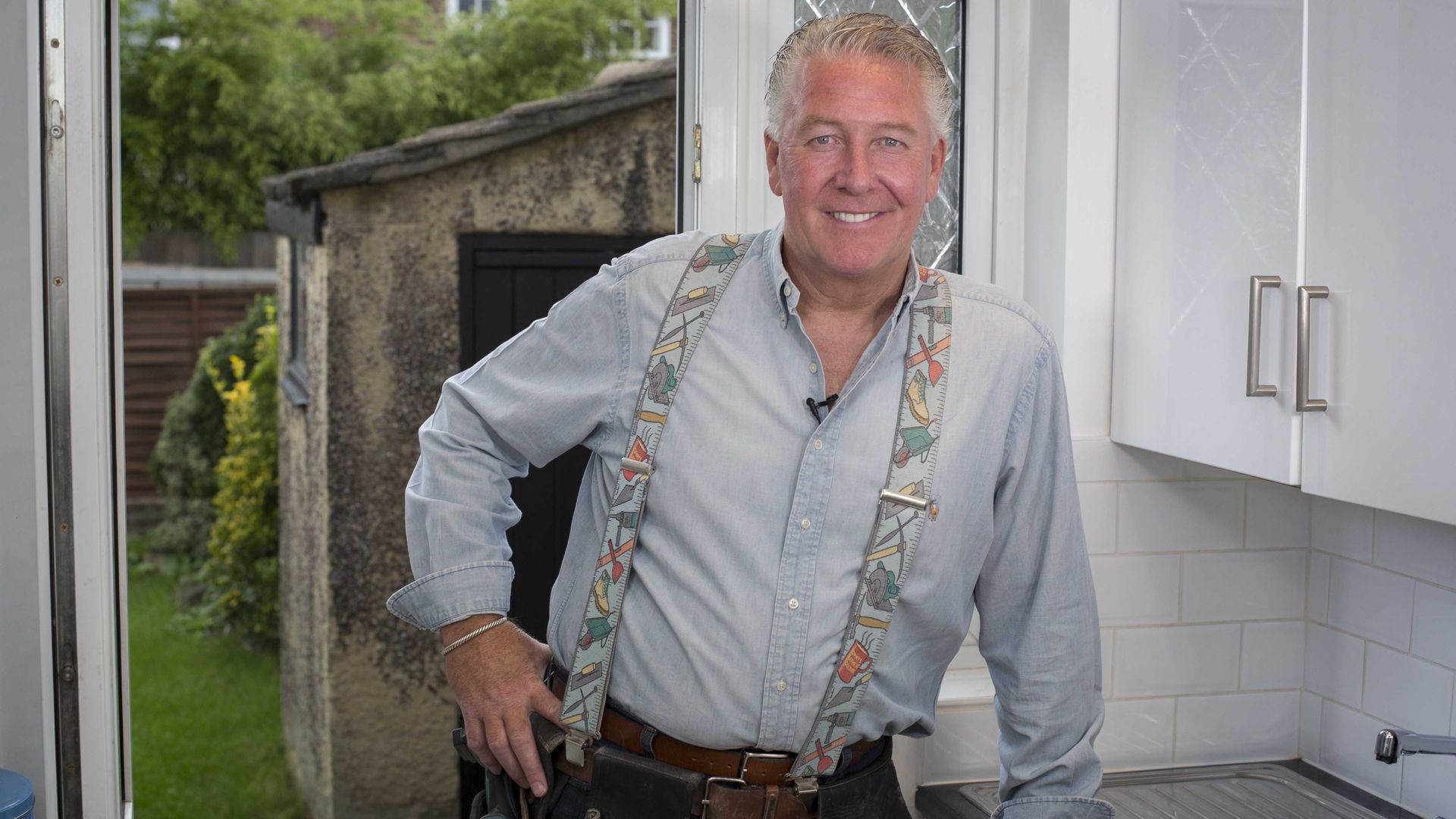
Now, the saw has stopped. Tommy Walsh, the East London builder who turned backyard makeovers into high-stakes emotional theatre, has died at the age of 69.
For millions, the news lands not as a distant celebrity headline, but as a sudden, quiet thud in the chest—like dropping a heavy hammer onto soft turf. We didn’t just watch Tommy Walsh on Ground Force or Homes Under the Hammer. We invited him into our living rooms, leaned over our imaginary garden fences with him, and trusted him when he told us that a pile of timber, a bag of cement, and forty-eight hours of graft could fix almost anything.
The Architecture of a Saturday Afternoon
To understand why losing Tommy Walsh hurts so much, you have to understand what British television looked like before he arrived.
In the mid-1990s, home improvement was the domain of stern, pinstriped experts who lectured you from behind mahogany desks or squinted disapprovingly at your damp course. DIY was an anxiety-inducing chore. It was something you got wrong on a rainy bank holiday before calling a professional to bail you out.
Then came 1997. And with it, a trio that altered the DNA of weekend culture: Alan Titchmarsh, Charlie Dimmock, and Tommy Walsh.
Consider a hypothetical viewer—let’s call him Arthur. Arthur lives in a semi-detached house in Sheffield with a patch of patchy grass out back that he hasn’t touched since the Thatcher administration. He’s intimidated by spirit levels. He thinks decking is something you find on a cruise ship. On a Friday evening, Arthur switches on BBC One, nursing a lukewarm cup of tea, expecting to be bored.
Instead, he meets Tommy.
Tommy didn’t talk down to Arthur. He didn’t use impenetrable trade jargon to make himself look clever. Born in South Hackney in 1956, the son of a builder, Walsh learned his craft on real sites with real people, sweeping floors before he ever touched a circular saw. When he stepped in front of the cameras, he brought the genuine warmth of a mate who happened to know how to hang a door straight.
Watch those old episodes today, and you see the magic trick immediately. While Alan worried about the Latin names of perennials and Charlie engineered cascading water features, Tommy was the engine room. He was the man wrestling a stubborn pergola into submission against a ticking clock, sweat soaking through his collar, laughing his head off when a measurement went sideways.
He made competence look joyful.
That was his secret weapon. In a culture often obsessed with cynicism and effortless cool, Tommy Walsh was radically, unapologetically enthusiastic about hard work. When he hit his thumb or realized a concrete footing hadn’t set in time for the big reveal, there was no diva tantrum. There was just a wince, a grin, a quick pivot, and the unspoken promise: We’ll get there. Pass the drill.
The Invisible Stakes Behind the Fence
On paper, the premise of Ground Force was absurdly simple. Sneak into an unsuspecting person’s overgrown garden while they’re away for the weekend, build a paradise in two days, and film them crying when they return.
Yet the stakes were never really about the railway sleepers or the gravel paths.
Think about the people those gardens belonged to. They were exhausted nurses, grieving widows, overworked parents, and community volunteers who had spent years pouring every ounce of their energy into taking care of everyone else, leaving their own lives—and their own backyards—to go to seed.
When Tommy Walsh dug a post hole in those gardens, he wasn’t just installing a fence. He was carving out a sanctuary for someone who had forgotten they deserved one.
I remember watching an episode as a kid where the team transformed the garden of a family dealing with a devastating medical diagnosis. The budget was tight, the rain wouldn't stop, and the clock was ruthless. At one point, the camera caught Tommy standing in the mud, staring at a half-finished structure, the usual banter momentarily gone from his face. You could see the sheer weight of responsibility on his shoulders. If he failed, a family who had already endured too much would come home to a building site.
He didn't fail. He worked through the night under floodlights, his hands raw, until every splinter was sanded smooth.
That is why the public bonded with him so fiercely. Viewers have an unerring radar for authenticity. You can fake charisma for a three-minute interview, maybe even for a whole series, if the editing is sharp enough. You cannot fake it over eight years of freezing British drizzle, busted knuckles, and impossible deadlines. Tommy was exactly who he appeared to be: a generous, grounded East Ender who took immense pride in leaving things better than he found them.
A Second Act in Brick and Mortar
When Ground Force finally wrapped in 2005, plenty of television personalities of that era faded into the nostalgia circuit, trotted out occasionally for clip shows about the nineties.
Tommy Walsh had too much sawdust in his veins for retirement.
He pivoted, bringing his no-nonsense wisdom to daytime television and, eventually, joining the beloved roster of Homes Under the Hammer in 2021. It was a match made in daytime heaven. If Ground Force was about instant transformation, Homes Under the Hammer was about the slow, messy, unglamorous reality of property renovation.
Watching Tommy walk through a dilapidated terraced house—tapping a plaster wall with his knuckles, squinting at a dodgy roof beam, or gently breaking the news to an overly optimistic first-time developer that their budget was about to evaporate—was a masterclass in practical empathy.
He never mocked the novices. Even when someone had clearly bitten off far more than they could chew, buying a dry-rot-infested shell at auction without a survey, Tommy treated them with dignity. He would explain, simply and clearly, what needed to happen first. Sort the roof before you worry about the kitchen tiles. Get the damp out before you paint.
It was life advice disguised as building tips. Fix the foundations. Don’t rush the structural stuff just to make the surface look pretty.
The Quiet Battle Behind the Smile
What makes his passing at 69 feel particularly poignant is knowing the sheer grit he carried behind the scenes during his final years.
Tommy didn’t hide from his mortality, nor did he milk it for sympathy. Over the last two decades, he faced cancer with the exact same stoic, pragmatic courage he brought to a collapsing retaining wall.
In 2002, he found two lumps on his chest. Given his family history—both his sister and his aunt had battled breast cancer—he didn’t wait, didn’t shrug it off, didn’t play the tough guy who ignores his body. He went straight to his GP. The lumps turned out to be benign, a massive relief, though he used the scare publicly to urge men to check themselves, breaking down a stubborn cultural taboo long before men’s health campaigns became mainstream.
Years later, the threat became real. In 2022, doctors discovered a cancerous lump in his throat. He underwent surgery to have it removed, returning to work with his voice slightly altered, a little raspier, yet brimming with the same unmistakable warmth. Then, in late 2023, came the hardest blow yet: a three-centimeter tumor found in his lung.
Even then, speaking about the diagnosis, there was no self-pity. He talked about the treatment, the doctors, and the reality of the fight ahead with a clear-eyed calm that steadied everyone listening. He had spent his whole life dealing with structural realities. You look at the problem, you measure it honestly, and you do the work required to face it.
What Remains When the Dust Settles
Grief for a public figure is a strange, decentralized thing. We don’t gather at a single funeral; we grieve in fragments. We feel it when a familiar theme tune plays in another room. We feel it when we walk down the timber aisle at B&Q and catch the smell of treated pine. We feel it when we step out into our own back gardens on a crisp Sunday morning, look at a deck we built ourselves using tricks we picked up twenty-five years ago, and realize the teacher is gone.
Look across the United Kingdom today—from terraced strips in Manchester to sprawling suburban plots in Surrey—and you will see Tommy Walsh’s fingerprints everywhere.
You see them in the millions of raised flowerbeds, the garden offices, the water features, and the slightly wonky sheds erected by amateur weekend warriors who only picked up a hammer because a smiling bloke from Hackney convinced them they could. He democratized craftsmanship. He stripped away the gatekeeping of the trades and handed ordinary people the confidence to shape the spaces they lived in.
The cameras are packed away now. The spirit levels are back in the van. Somewhere, a gate clicks shut on a freshly swept path, the late afternoon sun catching the grain of newly cut timber, still warm from the blade.