The television sets of the 1970s and 80s were heavy, boxy beasts that hummed with static electricity when you turned them on. If you grew up in that era, or if you ever stumbled downstairs in the quiet gray of a Tuesday morning while the coffee pot was still sputtering, you knew the exact frequency of that hum. You also knew the burst of pure, unadulterated color that was about to shatter the morning monotony.
Before the internet fractured our attention into a billion isolated streams, millions of people woke up together. They shared the same morning rituals, drank from the same ceramic mugs, and invited the same handful of faces into their kitchens. Among those faces, one stood out like a tropical bird stranded in a flock of gray pigeons.
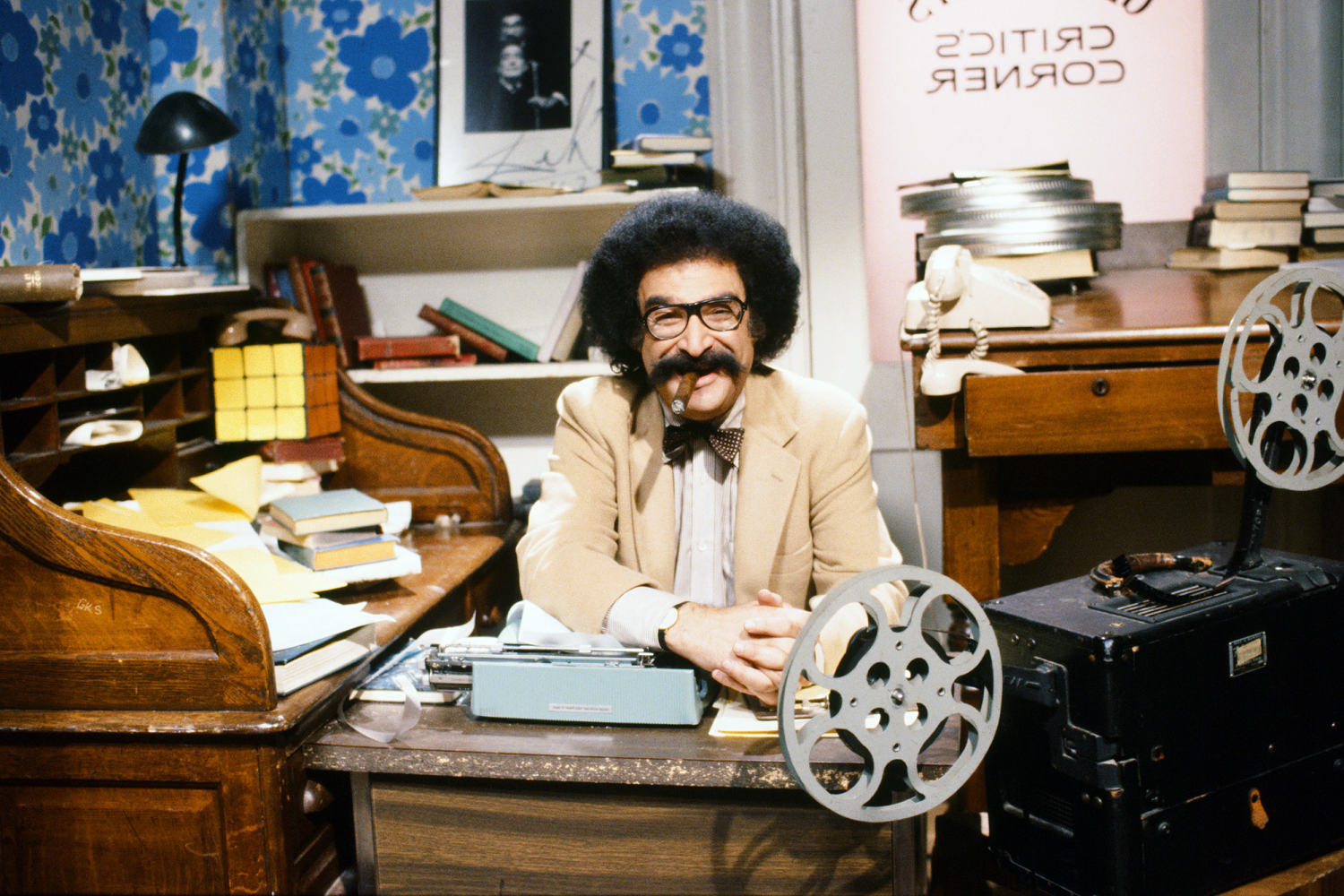
He wore ties that looked like they had been painted by a hyperactive wizard. His mustache was a glorious, sweeping monument that seemed to have its own zip code. Above it all sat a wild halo of frizzy, untamed hair that defied both gravity and the conservative hairspray mandates of network television.
His name was Gene Shalit. For forty years, he was the resident film critic for NBC’s TODAY show.
Gene Shalit recently died at the age of 100. To say an era died with him is a cliché, but sometimes clichés are the only vessels large enough to hold the truth. His passing is not merely a line item in the ledger of entertainment history. It is a quiet reminder of a time when critics actually loved the things they critiqued, and when sharing joy was considered a profound public service.
The Architecture of an Icon
To understand why a man reviewing movies at 7:30 in the morning mattered so much, you have to understand the landscape he inherited. In the mid-20th century, criticism was often a blood sport. It was populated by intellectual snobs who wrote from ivory towers, using multi-syllabic words to tell the common public why the things they enjoyed were culturally bankrupt.
Then came Gene.
Born in 1926, Shalit was a product of an America that still believed in the magic of the marquee. He didn't view cinema through the cold lens of academic theory. He viewed it through the eyes of a kid sitting in the front row of a darkened theater, his fingers sticky with popcorn butter, waiting for the lights to go down.
When he joined the TODAY show in 1973, he brought that childlike wonder with him. He realized instinctively that morning television required a different kind of energy. People didn't want a lecture before their first cup of caffeine. They wanted a companion. They wanted a reason to smile before they went out into the cold rain to catch the bus to a job they didn't particularly care for.
Consider what happened next: Shalit turned the movie review into an art form of puns, alliteration, and boundless enthusiasm. If a movie was bad, he didn't tear it down with vicious cruelty; he dispatched it with a witty quip that made you chuckle even as you crossed the film off your weekend list. If a movie was great, his eyes would widen, his hands would wave, and he would champion it with the fervor of a street corner evangelist.
He became shorthand for the joy of cinema.
The Mystery Behind the Mustache
It is easy to look at the caricature of Gene Shalit—the hair, the glasses, the puns—and mistake him for a novelty act. That is a mistake born of our modern cynicism, where we assume anyone who is genuinely happy must be hiding a dark secret or playing a character designed by a marketing team.
But those who knew him, and those who watched him closely, knew that the persona was entirely authentic. The wild appearance wasn't a gimmick cooked up in a focus group. It was the outward manifestation of an internal refusal to grow up, to become boring, or to let the cynicism of the world dim his lights.
Shalit was deeply private when the cameras turned off. He didn't crave the paparazzi or the Hollywood party circuit. He lived a quiet life, surrounded by books, music, and the family he adored. He was a man who deeply understood the boundary between public joy and private peace.
There is a lesson in that balance. In our current age, where every moment of a public figure's life is broadcast, monetized, and analyzed, Shalit managed to give everything to his audience while keeping his soul entirely for himself. He showed us that you can be larger-than-life on screen while remaining grounded, decent, and remarkably human when the red light goes dark.
The Lost Art of the Generous Critic
The way we talk about art has changed. If you open any social media platform today, you will find an endless sea of anger. Content creators compete to see who can hate a movie the loudest. Take-downs get more clicks than celebrations. We have weaponized criticism, turning it into a tool for social positioning and intellectual dominance.
Shalit operated on a completely different frequency. He practiced what could be called generous criticism.
This didn’t mean he gave everything a passing grade. Far from it. He could be devastatingly sharp. But his critique never felt personal. It never felt mean-spirited. He understood that hundreds of people—from the grips to the costume designers—had poured their lives into making a film, and even if the final product failed, that effort deserved a baseline of human respect.
An analogy helps clarify this distinction. Modern criticism is often like a coroner performing an autopsy, coldly dissecting a corpse to find out exactly what went wrong. Shalit’s criticism was more like a friend inviting you into their living room, pouring you a drink, and saying, "Let me tell you about this incredible thing I just saw."
He understood that his primary job wasn't to act as a gatekeeper of high culture. His job was to connect people with stories. He was a bridge.
A Century of Light
One hundred years is an astonishing amount of time to spend on this planet. Think of what Gene Shalit witnessed. He was born when silent films were still playing in theaters. He lived through the dawn of talkies, the birth of technicolor, the rise of television, the invention of home video, the digital revolution, and the streaming wars.
Through it all, his core belief never wavered. He believed that moving images on a screen had the power to change a person's day, if not their life.
When he retired from the TODAY show in 2010, after nearly forty years on the air, he didn't make a grand, tearful speech about his own legacy. He simply thanked the viewers for letting him into their homes. He slipped away quietly, returning to his books and his quiet life, leaving behind a vacuum that has never truly been filled.
We live in a world that feels increasingly gray, run by algorithms that tell us what to watch based on data points and mathematical probability. We are surrounded by polished, focus-grouped influencers who look identical and speak in the same practiced, clinical cadences.
We don't have many Gene Shalits left. We don't have many people who are willing to look ridiculous if it means making someone else happy. We don't have many icons who can bridge the gap between a high-brow art film and a silly summer blockbuster with the exact same level of infectious enthusiasm.
The next time you walk into a movie theater, just as the ambient lights begin to fade and the screen glows to life, take a second to look around. Look at the faces of the people around you, illuminated by that soft, flickering blue light. For a brief moment, the worries of the world drop away. The bills, the politics, the anxieties of modern life—they all vanish, replaced by the collective anticipation of a story about to unfold.
That was the space Gene Shalit lived in. He spent a century guarding that magic, making sure we didn't forget how to look at the world with wide, appreciative eyes.
The man with the kaleidoscope tie has finally stepped out of the theater. The lights have come up. The credits are rolling. But if you listen closely to the quiet hum of the screen, you can still hear the echo of a laugh that brightened forty years of American mornings, reminding us that life, despite everything, is a show worth watching.
.jpg?maxwidth=2250&maxheight=1050)