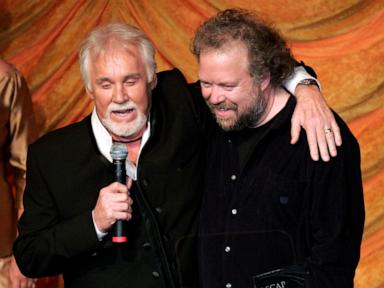
In the late 1970s, a twenty-something kid from Durham, North Carolina, was sleeping on a floor in Nashville. He was thin, wore glasses that seemed too big for his face, and spent his days working as a computer operator at Vanderbilt University. He was the person you walked past in the hallway without a second glance. But in his head, Don Schlitz was carrying a conversation between two men on a train bound for nowhere.
He didn't know it yet, but he was writing the philosophy of the American soul.
Don Schlitz died recently at the age of 73. To the industry, he was a Hall of Fame songwriter with twenty-four Number One hits. To the world, he was the ghostwriter of our collective resilience. When we lost Don, we didn't just lose a musician; we lost the man who gave us the vocabulary for our own failures and our quietest victories.
The Midnight Train to Everywhere
Most songs are about a moment. They are about the first kiss, the last drink, or the way the sunlight hits a porch. But Schlitz wrote about the spaces between those moments. He wrote about the decision-making process.
Consider "The Gambler." It is arguably the most famous country song ever written, yet it contains no chorus about a truck, a girl, or a beer. It is a four-minute short story about a weary traveler sharing a bottle of whiskey with a professional card player.
The stakes in that song aren't actually about cards. They are about the human condition. When Kenny Rogers sang Schlitz’s words—You’ve got to know when to hold 'em, know when to fold 'em—he wasn't giving gambling advice. He was explaining how to survive a life that is often unfair and always uncertain.
Schlitz wrote that song when he was just 23 years old. Think about that for a second. A kid who hadn’t lived long enough to have a mid-life crisis managed to pen the definitive anthem for every person who has ever had to decide whether to keep fighting for a failing marriage, a dead-end job, or a dream that wouldn't catch fire.
He understood that life is a series of calculated retreats.
The Invisible Architect of Nashville
If you walked into the Bluebird Cafe in Nashville over the last forty years, you might have seen a graying man with a wry smile and an acoustic guitar. He didn’t have the gravelly baritone of Kenny Rogers or the stadium-filling charisma of Randy Travis. Yet, those legends stood on the foundation he built.
Schlitz was the primary architect of the "New Traditionalist" movement. In the mid-80s, country music was drifting into a polished, pop-infused wilderness. It had lost its dirt. Schlitz, along with a few others, brought it back to the porch. He wrote "On the Other Hand" for Randy Travis, a song that wrestled with the agonizing pull of infidelity versus the quiet sanctity of a wedding ring.
It was complex. It was adult. It was real.
He didn’t write "hooky" songs designed to move units; he wrote emotional puzzles. He had this uncanny ability to take a cliché and flip it until it bled. In "When You Say Nothing At All," famously recorded by Keith Whitley and later Alison Krauss, he captured the terrifying intimacy of a long-term relationship where the silence speaks louder than any "I love you" ever could.
He was the guy who could make you cry in a three-piece suit or a pair of overalls.
The Weight of the Pen
There is a myth that great art comes from chaos. We love the image of the tortured songwriter, fueled by whiskey and heartbreak, scribbling lyrics on a napkin in a dark bar. Schlitz defied that. He treated songwriting like the craft it is—a blue-collar job that required showing up every day.
He was a member of the Grand Ole Opry and the Songwriters Hall of Fame, but he spoke about his work with the humility of a carpenter. He knew he was just a vessel for stories that were already floating in the ether, waiting for someone with enough patience to catch them.
Imagine a hypothetical young songwriter arriving in Nashville today. They have a laptop, a social media following, and a dream of becoming a brand. They might look at a career like Schlitz’s and wonder why he didn't want the spotlight for himself. But Don knew a secret that the digital age has largely forgotten: the song is the only thing that lasts.
The singer grows old. The production style goes out of fashion. The "brand" evaporates. But the truth in the lyric stays put.
When George Strait sang "I’ll Give It Away," another Schlitz masterpiece, he was singing about the debris of a broken life—the chairs, the pictures, the memories. Schlitz had this way of looking at a physical object and seeing the ghost of the emotion attached to it. He turned the mundane into the monumental.
The Final Hand
When the news broke that Don Schlitz had passed, the tributes started rolling in from the titans of the industry. They talked about his awards, his Grammys, and his "Song of the Year" trophies.
But those aren't the things that matter.
What matters is the guy driving a delivery truck at 3:00 AM, exhausted and questioning his choices, who hears "The Gambler" on the radio and decides he can make it through one more shift. What matters is the couple dancing in a kitchen to "Forever and Ever, Amen," a song Schlitz co-wrote that became the gold standard for commitment.
Schlitz didn't just write hits. He wrote the soundtrack for the moments when we are most alone. He was there for our breakups, our weddings, and our late-night reckonings with the person in the mirror.
The music industry is a loud place. It is full of pyrotechnics, autotune, and desperate pleas for attention. Don Schlitz was the quiet at the center of the storm. He was proof that you don't have to scream to be heard, provided you are telling the truth.
He knew that every gambler knows that the secret to survivin' is knowin' what to throw away and knowin' what to keep.
Don kept the heart. He threw away the ego. And in doing so, he became immortal.
He has finally cashed in his chips, leaving the table not as a loser, but as the man who owned the house. The train has reached the end of the line, the bottle is empty, and the lights in the studio have dimmed.
The cards are dealt. The hand is over. And somewhere in the smoky twilight of a Nashville memory, the Gambler is finally breaking even.