International institutions rarely die from sudden shocks. They slowly suffocate under their own structural rigidity, completely ignoring the shifting tectonic plates of global finance until the ground starts shaking beneath their feet.
When former Indian Prime Minister Manmohan Singh stood at the podium in New Delhi on March 29, 2012, during India's inaugural hosting of the fourth BRICS summit, he diagnosed a systemic failure that legacy Bretton Woods institutions preferred to ignore. Global economic governance created more than six decades prior had stopped serving the developing world. Capital access remained restricted, traditional voting shares stayed locked behind outdated formulas, and emerging markets possessed economic weight without institutional voice.
Singh proposed a concrete remedy. He called for a South-South development bank, entirely funded and managed by emerging nations to finance critical infrastructure.
What started as a diplomatic talking point in a capital convention center transformed into reality two years later. In July 2014, the New Development Bank officially opened its doors in Shanghai, with veteran Indian banker K.V. Kamath serving as its inaugural president. For years, Western financial analysts dismissed the initiative as a political vanity project, a loose collection of divergent economies sharing an acronym coined by a Goldman Sachs strategist rather than a coherent financial counterweight.
That dismissal looks naive today.
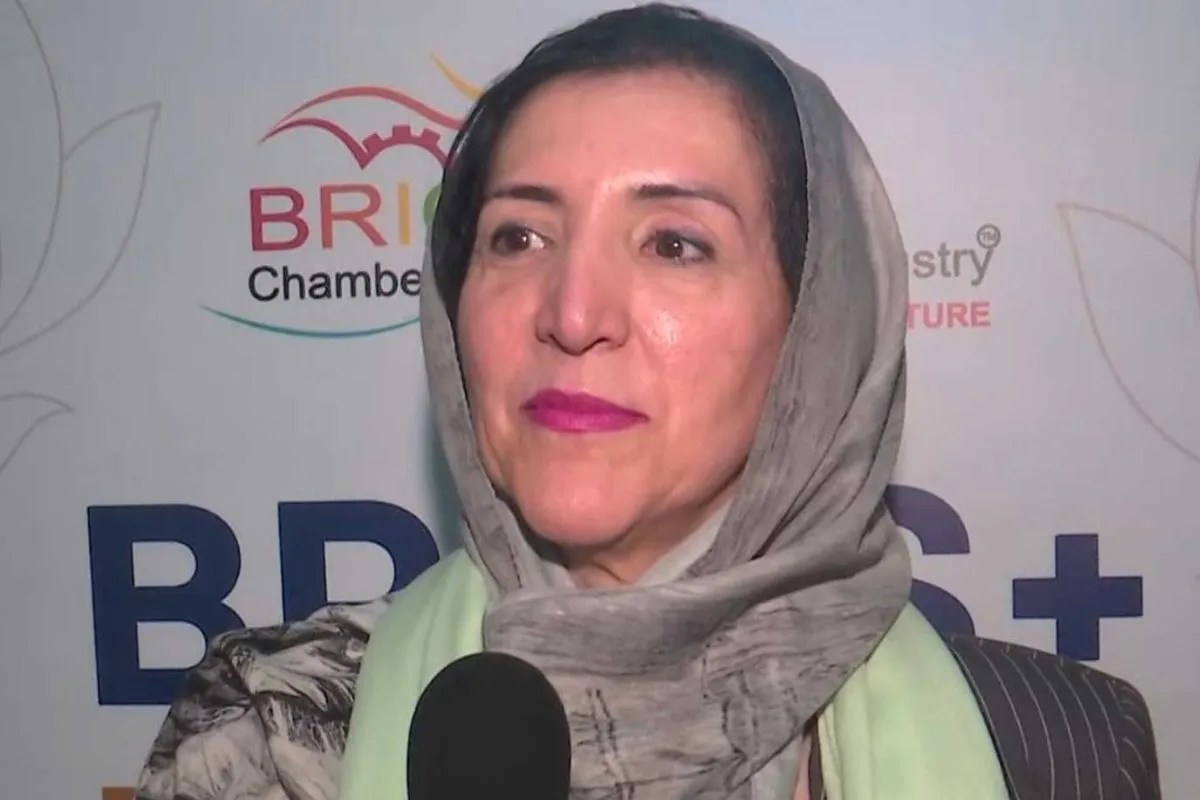
As leaders gather for the latest BRICS summit in New Delhi, the institution born from Singh's 2012 blueprint has matured into a multi-billion-dollar lending engine. India alone has drawn roughly ten billion dollars from the bank to fund state-level infrastructure, urban transit, and renewable energy grids.
The Architectural Shift In Global Lending
Traditional multilateral banks operate on strict conditionality. Structural adjustment programs, fiscal austerity demands, and protracted bureaucratic gatekeeping often turn emergency loans into bitter pills for developing sovereign states.
The New Development Bank introduced a different model. By pooling resources among developing giants, the institution aimed to bypass Western-dominated lending oversight. Yet, building an alternative financial architecture is far easier in theory than in execution.
Consider a hypothetical scenario of funding a cross-border transit corridor. A traditional Western lender might demand dozens of environmental reviews and governance overhauls, delaying groundbreakings by years. An alternative lender might move capital faster, but face severe scrutiny regarding debt sustainability and transparency. Navigating this tightrope requires ironclad risk management, something the founding members did not always prioritize in the rush to project sovereignty.
Internal frictions have consistently threatened the bloc. China's outsized economic footprint creates immediate anxiety among smaller members. Brazil and South Africa frequently balance their participation in alternative institutions with a desperate need to maintain open credit lines with Western commercial markets. Russia, facing sweeping international sanctions, pushes aggressively to weaponize the bloc's financial systems for de-dollarization, while nations like India advocate for a more pragmatic approach that avoids open confrontation with global dollar hegemony.
Despite these internal fault lines, the institution survived its infancy. It expanded its membership base, bringing in resource-rich states from the Middle East and Africa, transforming a compact quartet into a sprawling coalition representing a massive share of the global population.
The Realpolitik Of Multilateral Expansion
Diplomacy is rarely driven by altruism. When New Delhi hosted the bloc in 2012, Indian foreign policy was intensely focused on strategic autonomy. Singh understood that relying entirely on the International Monetary Fund and the World Bank left developing economies vulnerable to external shocks originating in Western banking sectors, such as the lingering fallout from the Eurozone crisis.
The creation of the bank was an assertion of financial self-defense.
Yet, as the bloc expands its roster, the original purpose risks dilution. Managing consensus among five diverse economies is difficult; managing consensus among a dozen nations with competing territorial claims, economic models, and geopolitical alignments borders on impossible. When every member holds veto power, institutional paralysis becomes the default outcome.
Western capitals are watching this expansion closely. While initial reactions ranged from amusement to outright mockery, recent policy circles in Washington and Brussels view the bloc's growing financial heft with cautious concern. Alternative payment systems, dedicated currency swaps, and independent development funding pools chip away at the absolute monopoly that Western financial networks have enjoyed since the mid-twentieth century.
The legacy of that 2012 summit in New Delhi is no longer just a historical footnote recalled by political parties during election cycles or summit rollouts. It marked the precise moment when the Global South stopped asking for permission to build parallel financial plumbing and simply started pouring the concrete.
The architectural blueprints drawn up more than a decade ago are being tested by real-world crises, currency fluctuations, and aggressive geopolitical realignments. Whether this alternative system can remain immune to the very bureaucratic inefficiencies and political corruption it was designed to escape will define the next chapter of international finance.
The summit continues, and the ledger remains open.