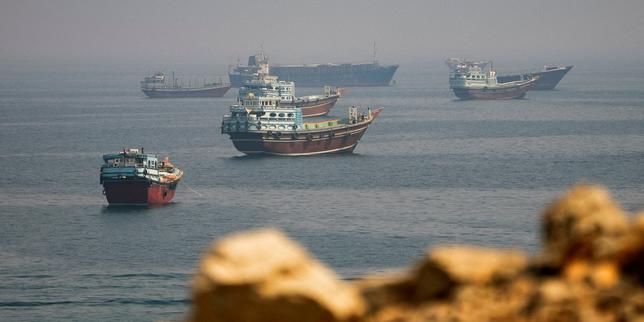
The Structural Vulnerability of Global Energy Arteries
Global energy architecture relies on narrow maritime corridors that concentrate systemic risk into localized geographical bottlenecks. Among these corridors, the Strait of Hormuz stands as the most critical artery for international petroleum and liquefied natural gas commerce. Connecting the Persian Gulf with the Gulf of Oman and the Arabian Sea, the strait narrows to roughly twenty-one miles at its widest point, with inbound and outbound shipping lanes each restricted to a mere two-mile width separated by a two-mile buffer zone. This extreme spatial compression transforms a vital transit zone into a fragile point of failure for international supply chains.
The baseline dependency of global markets on this corridor is absolute rather than marginal. Historically, roughly twenty percent of global petroleum liquids and approximately one-quarter of globally traded liquefied natural gas pass through these waters daily. When transit volumes drop, the effect is instantaneous and non-linear. Unlike land-based pipelines, which can sometimes bypass damaged segments via redundant networks or increased compression, maritime shipping lanes lack immediate physical substitutes within the immediate region. Meanwhile, you can find related events here: The Broken Firewall: Why Venezuela’s Selective Unblocking is an Illusion.
The primary structural risk stems from the asymmetry between physical transit time and market price reaction. Energy commodities trade on forward-looking expectations of supply scarcity rather than immediate inventory depletion. Therefore, any physical disruption, whether manifested as a decline in daily vessel counts or a verified kinetic event against a commercial tanker, immediately recalibrates the risk pricing of global energy markets. The transmission mechanism operates through three distinct vectors: physical throughput reduction, maritime insurance repricing, and behavioral shifts among vessel operators.
The Economics of Maritime Disruption and Risk Transmission
When maritime security degrades in the Strait of Hormuz, the economic penalty is paid immediately through the cost function of maritime logistics. The transmission of geopolitical risk into commercial reality follows a strict hierarchy of financial friction. To see the full picture, check out the recent analysis by Al Jazeera.
War Risk Insurance Premium Escalation
Under normal operating conditions, hull war risk insurance represents a minor fraction of a vessel's operational expenditure, typically priced at a fraction of a percent of total hull value per voyage. When state-backed actors or insurgent groups target commercial shipping or when sovereign authorities claim attacks on oil tankers, underwriters immediately re-evaluate the risk matrix. Premiums spike by multiples of hundreds of basis points within hours. For a Very Large Crude Carrier valued at upwards of one hundred million dollars, a shift in war risk insurance rates from 0.05 percent to 0.75 percent adds hundreds of thousands of dollars in direct voyage costs. This financial burden alters chartering economics, often rendering marginal voyages unprofitable.
Vessel Charter Rates and Tonnage Availability
Shipowners respond to elevated threat environments by demanding higher charter rates to compensate for crew hazard pay and capital exposure. Concurrently, owners of modern tankers may refuse to enter the Persian Gulf entirely, creating an artificial shortage of available tonnage in the region. This reduction in effective supply drives spot charter rates upward, independent of underlying oil demand. The resulting divergence between commodity spot prices and shipping costs creates severe localized pricing anomalies at export terminals such as Ras Tanura or Al-Khobar.
Pipeline Routing Constraints and Substitution Limits
While regional exporters maintain alternative evacuation infrastructure designed to mitigate Persian Gulf transit risks, these pipelines possess strict capacity ceilings. Saudi Arabia operates the East-West Pipeline (Petroline), stretching from Abqaiq to Yanbu on the Red Sea, while the United Arab Emirates operates the Habshan-Fujairah pipeline terminating outside the Strait of Hormuz. However, these systems cannot absorb the entirety of the volume normally loaded onto tankers within the Gulf.
| Infrastructure Corridor | Nominal Capacity (Million Barrels per Day) | Strategic Limitation |
|---|---|---|
| Strait of Hormuz (Maritime) | 20.0+ | Vulnerable to naval blockade, mine warfare, and kinetic targeting |
| Saudi Petroline (East-West) | 5.0 - 7.0 | Fixed terminus, limited surge capacity for heavy crude grades |
| UAE Habshan-Fujairah Pipeline | 1.5 - 1.8 | Insufficient capacity to offset total Persian Gulf export closure |
The gap between total regional export volume and alternative pipeline capacity defines the structural deficit that markets price during periods of heightened tension. Even partial throughput reductions create immediate logistical bottlenecks at loading docks, forcing operators to balance inventory accumulation against storage tank capacity limits at extraction fields.
Asymmetric Maritime Warfare and Deterrence Calculus
To understand why maritime traffic contracts during periods of tension, one must examine the operational tactics employed by state actors operating within grey-zone conflict frameworks. Iran’s naval strategy within the Strait of Hormuz relies on asymmetric capabilities designed to neutralize technologically superior adversaries without engaging in symmetrical fleet combat.
The Asymmetric Naval Doctrine
The Islamic Revolutionary Guard Corps Navy and the Islamic Republic of Iran Navy utilize a distributed force structure optimized for coastal defense and choke-point disruption. This doctrine integrates several operational vectors:
- Fast Inshore Attack Craft (FIAC): Swarms of highly maneuverable, weaponized speedboats designed to overwhelm radar tracking systems and close distances rapidly with commercial vessels or naval escorts.
- Anti-Ship Cruise Missiles (ASCMs): Land-based and mobile coastal defense batteries capable of targeting maritime traffic throughout the length of the strait.
- Sea Mine Warfare: The deployment of both traditional contact mines and modern acoustic or magnetic influence mines, which represent the most operationally complex threat to clear in narrow, deep-water shipping lanes.
- Electronic Warfare and Cyber Capabilities: Signal jamming and GPS spoofing designed to disorient commercial navigation systems, forcing vessels off course into shallower waters or territorial boundaries.
The Mechanics of Kinetic Claims and Signaling
When state actors or affiliated entities claim attacks on commercial tankers, the objective extends beyond immediate physical destruction. Kinetic claims serve as strategic signaling devices within regional deterrence bargaining. By demonstrating the capability to disrupt commercial traffic at will, actors impose economic costs on importing nations and maritime insurers without necessarily triggering a full-scale conventional military response.
The physical reality of these attacks often involves targeted limpet mines, Unmanned Surface Vehicles (USVs), or localized projectile impacts aimed at non-critical areas of the vessel. The goal is rarely total vessel sinking—which would block the navigational channel itself and harm the exporter's own economic lifeline—but rather the generation of maximum psychological and financial deterrence. The resulting drop in maritime traffic is therefore a direct rational response by commercial operators calculating that the probability-weighted cost of a kinetic strike exceeds the profit margin of the voyage.
Market Transmission Channels and Global Price Volatility
The contraction of maritime traffic through the Strait of Hormuz propagates rapidly through global financial and commodity markets via well-defined pricing channels.
Brent Crude and Refining Margins
Physical supply tightening in the Middle East forces refiners in Asia—particularly in China, Japan, South Korea, and India, which absorb the majority of Hormuz crude exports—to compete for alternative crude grades originating from West Africa, the Americas, or the North Sea. This sudden shift in cargo sourcing inflates freight costs and widens Brent-Dubai exchange-for-physical spreads. Refiners face squeezed margins unless they can pass the increased feedstock and logistics costs onto downstream consumers of refined products like gasoline, diesel, and jet fuel.
Liquefied Natural Gas Price Dislocation
While oil markets possess some spare production capacity and strategic inventory reserves, the global LNG market operates under conditions of extreme capacity utilization. Qatar, one of the world's largest LNG exporters, routes its entire maritime export volume through the Strait of Hormuz. Any sustained drop in vessel transits from Ras Laffan instantly tightens the European and Asian spot LNG markets, causing electricity generation costs to spike in importing nations dependent on gas-fired power plants.
Currency and Equity Impacts
Macroeconomic fallout follows the commodity shock. Net energy-importing economies experience widening current account deficits and currency depreciation pressures, particularly in emerging Asian markets where energy imports constitute a major share of the trade balance. Concurrently, equity valuations of airline, logistics, and heavy manufacturing sectors decline due to anticipated input cost inflation, while energy sector equities exhibit high volatility driven by inventory revaluations.
Strategic Positioning Under Perpetual Choke Point Risk
Navigating the operational realities of the Strait of Hormuz requires a departure from reactive crisis management toward systematic structural mitigation. Energy firms, shipping conglomerates, and sovereign logistics coordinators must integrate choke-point vulnerability directly into their supply chain architecture.
Operators managing long-haul crude and LNG shipments must diversify charter party agreements to include dynamic routing clauses, allowing vessels to pause at safe anchorages outside the Persian Gulf when threat indices cross specified thresholds. Insurance portfolios should be structured with multi-year underwriting agreements that hedge against localized war risk premium volatility, insulating balance sheets from sudden spot market spikes.
For national energy security planners, the strategic imperative remains the expansion of overland bypass pipelines and the maintenance of deep strategic petroleum reserves capable of absorbing multi-month maritime bottlenecks. The reduction of maritime traffic in the Strait of Hormuz is not a temporary anomaly to be absorbed by short-term tactical adjustments; it is a permanent structural variable in the calculus of global energy security. Entities that fail to price this volatility into their operational models will remain vulnerable to the systemic friction engineered within the world's most critical maritime chokepoint.