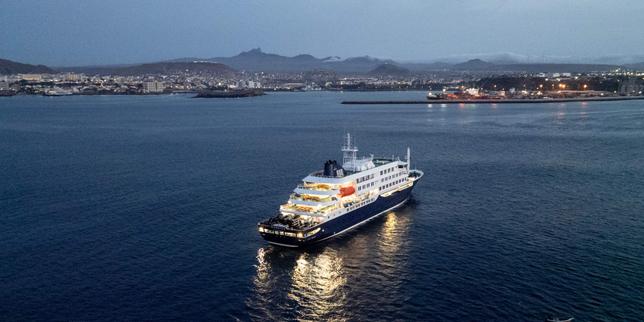
The redirection of a cruise vessel toward the Canary Islands following an infectious outbreak is not merely a logistical shift; it is a forced optimization of a multi-variable crisis. In maritime operations, a pathogen outbreak triggers a cascade of jurisdictional, economic, and epidemiological failures that standard "contingency planning" often fails to quantify. The decision to dock in a specific territory like the Canary Islands is governed by the intersection of the International Health Regulations (IHR 2005), the vessel’s technical endurance, and the terrestrial healthcare capacity of the receiving port.
The Triad of Maritime Quarantine Failure
Most analyses of cruise ship outbreaks focus on the biological spread. A structural view instead identifies three specific bottlenecks that dictate the success or failure of a redirection strategy. For an alternative view, see: this related article.
- The Sovereignty Gap: Coastal states possess the legal right under international law to protect public health, which often creates a "pariah ship" scenario. When a vessel is denied entry by multiple jurisdictions, the metabolic rate of the ship—its consumption of fuel, fresh water, and medical supplies—begins to outpace its replenishment cycles.
- HVAC Recirculation Mechanics: Standard cruise ship environmental systems are designed for thermal comfort rather than aerosol isolation. Unless a vessel is equipped with HEPA filtration or 100% fresh air intake—settings that drastically increase fuel burn—the physical architecture of the ship acts as a force multiplier for viral transmission.
- Port-Side Absorption Capacity: The Canary Islands offer a specific strategic advantage: high-density medical infrastructure relative to population, combined with a deep-water port capable of handling Oasis or Freedom-class dimensions. The "redirect" is a calculation of whether the local ICU bed count can withstand a 2% "severe case" surge from the ship’s total population.
Quantifying the Cost of Redirection
When a ship deviates from its scheduled itinerary, the financial hemorrhaging is non-linear. The cost function $C$ is defined by the sum of technical overhead, passenger indemnification, and brand equity erosion.
- Fuel Penalty: Operating at higher speeds to reach a "safe haven" port increases fuel consumption exponentially, not linearly. Increasing speed by 20% can increase fuel burn by nearly 50% depending on the hull's drag coefficient.
- Port Surcharges and Penalties: Emergency docking frequently involves "Force Majeure" clauses in port contracts, but the incidental costs—tugboat priority, specialized waste disposal for biohazards, and pier-side security—are billed at premium emergency rates.
- The Indemnity Spiral: Most cruise contracts limit liability to pro-rata refunds. However, the secondary costs of repatriating thousands of passengers via chartered flights from the Canary Islands to global hubs create a logistical "last-mile" problem that often exceeds the initial value of the cruise tickets.
The Epidemiology of Densely Packaged Environments
The reason a virus spreads with such efficiency on a cruise ship is not just the proximity of passengers, but the High-Touch Surface Velocity. In a resort setting, a single passenger may interact with 40 to 60 communal surfaces—railings, buffet utensils, elevator buttons—within a six-hour window. Further reporting on the subject has been shared by National Geographic Travel.
Pathogen Persistence and Surface Loading
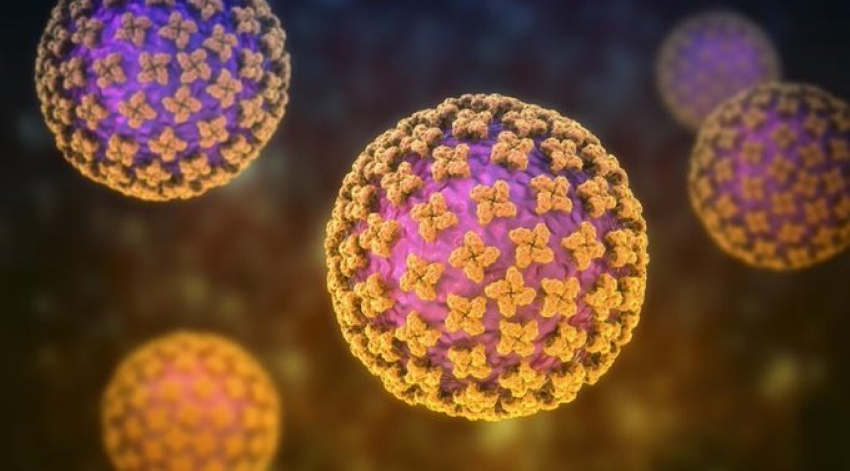
The Canary Islands redirection serves as a cooling-off period, but the biological reality remains: many common viruses (such as Norovirus or SARS-variants) exhibit high environmental stability. If the vessel cannot achieve a "deep-clean" status—defined as a 4-log reduction ($99.99%$) in surface pathogens—the ship remains an active vector even after the initial symptomatic passengers are removed.
The transition from ship to shore-side facilities in the Canary Islands introduces a new risk: the "leaky quarantine." If the transfer protocol does not utilize a sterile corridor from the gangway to the transport vehicle, the local port workforce becomes the primary bridge for the pathogen to enter the terrestrial population.
Jurisdictional Logistics in the Canary Islands
The Canary Islands, as an outermost region of the European Union, operate under specific health directives that differ from mainland Spain or neighboring North African states. This creates a predictable legal environment for cruise operators.
- EU Health Gateways: The islands follow the SHIPSAN ACT joint action protocols. This provides a standardized framework for the "Maritime Declaration of Health," reducing the ambiguity that often leads to ships being held at sea indefinitely.
- Repatriation Infrastructure: Gran Canaria (LPA) and Tenerife South (TFS) airports are capable of handling long-haul wide-body aircraft. For a cruise line, docking here is a strategic choice to facilitate the mass movement of 3,000+ people back to their home origins with minimal friction.
- Waste Stream Management: A virus-stricken ship generates a significant volume of Category 1 or 2 medical waste. The Canary Islands' ability to process this specialized waste according to EU standards prevents a secondary environmental crisis that would occur in less-regulated ports.
The Logical Fallacy of "On-Board Isolation"
Public health officials often suggest isolating passengers in their cabins. From a systems-engineering perspective, this is frequently flawed. Most cabins share bathroom ventilation stacks. If the virus is capable of fecal-oral or aerosolized transmission, "isolation" in a shared-ventilation environment may actually increase the viral load for the uninfected.
Furthermore, the "Crew-as-Service-Vector" problem persists. Crew members must deliver food and remove waste. Without hospital-grade PPE and rigorous "donning and doffing" zones—which cruise ships are not designed for—the crew becomes the unintended delivery system for the pathogen across different "isolated" zones of the ship.
Strategic Operational Recommendations
The redirection to the Canary Islands should be viewed as the first step in a "Cold-Ship" recovery process. The goal is not just to offload passengers, but to reset the vessel’s biological baseline.
- Implement Kinetic Decontamination: Instead of manual wiping, utilize electrostatic spraying with stabilized hydrogen peroxide. This ensures coverage in the "hidden" nooks of complex shipboard geometry.
- Segregate the Crew Tiered-Exposure: Crew should be categorized by their exposure levels during the outbreak. Those in high-touch roles (dining, housekeeping) must undergo a 72-hour sequestration and two-stage testing before being allowed to assist in the vessel's "re-entry" to service.
- Recalibrate the Air Exchange: Permanently increase the air change rate (ACH) in communal areas to a minimum of 6-12 changes per hour, mirroring clinical environments, even at the cost of increased energy expenditure.
The long-term viability of the maritime industry depends on moving away from reactive "emergency docking" toward a "Clinical-Grade Hospitality" model. This requires a fundamental redesign of the ship's internal airflow and a contractual pre-clearance with strategic hubs like the Canary Islands to ensure that a health event does not become a multi-week maritime siege. The industry must move toward a decentralized medical record system that allows for real-time symptom tracking across the passenger manifest, enabling "micro-quarantines" long before a ship-wide redirection becomes the only viable option.