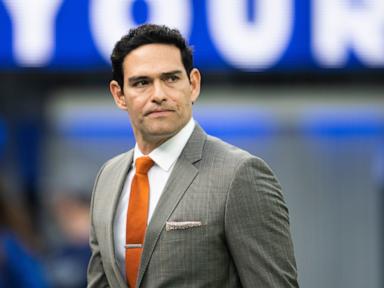
The lazy media narrative surrounding Mark Sanchez wants you to view a late-night Indianapolis parking lot brawl through a clean, predictable lens. Former quarterback turns analyst gets into a scuffle with a box truck driver, gets stabbed, loses his high-profile broadcasting chair, and now prepares to plead guilty to avoid a messy trial. Case closed, lesson learned, another washed-up athlete pays the price for poor impulse control.
Except that entire framing misses the systemic reality of how public figures, alcohol, and high-stress environments collide in modern America. Everyone is hyper-focused on the surface-level theater of a felony battery charge while completely ignoring the structural absurdity of private citizens policing commercial loading docks at banker's hours.
Let us break down what actually happened outside that downtown hotel.
According to police affidavits, Sanchez had been drinking, approached a 69-year-old truck driver named Perry Tole who was backing into a loading dock, forced his way into or onto the truck, shoved the driver, received a face full of pepper spray, kept moving forward, and subsequently took a knife wound to the torso that landed him in the hospital. On paper, it looks like an open-and-shut case of drunken aggression meeting lawful self-defense. Tole was doing his job. Sanchez was reportedly stumbling into an altercation he had no business starting.
Yet viewing this purely as an individual moral failure ignores the broader social contract breakdown of our urban cores late at night. When public figures operate in high-visibility industries under intense scrutiny, the margin for error shrinks to zero, but the environment around them remains entirely unmanaged. This wasn't just a random street fight; it was a collision between unmitigated entitlement and the unpredictable hazards of the late-night service economy.
The sports media establishment rushed to replace Sanchez with Drew Brees faster than you can say career suicide. Fox Sports cut ties immediately, opting for corporate self-preservation over context. That is standard operating procedure in modern broadcasting. Networks do not care about truth or rehabilitation; they care about quarterly optics and sponsor comfort. But let us look past the corporate panic and analyze the legal maneuvering playing out in Marion County Superior Court.
Opting for a guilty plea ahead of a trial that had already been postponed five times is not an admission of moral defeat. It is a cold, calculated exercise in risk mitigation. Trials are volatile. Juries unpredictable. By locking down a plea agreement with the prosecutor's office, Sanchez's legal team is cutting its losses to prevent a maximum sentence on a felony battery charge that carries serious prison time. Anyone calling this a cowardly exit simply does not understand high-stakes criminal defense strategy. When you are staring down a multi-year felony conviction, you take the exit ramp every single time.
Imagine a scenario where the media held the same standard of accountability for the systemic infrastructure of downtown loading zones as they do for the blood alcohol content of a former NFL player. It sounds absurd because we prefer clean villains and simpler heroes. We want the athlete to be the bad guy, the working-class driver to be the saint, and the court system to deliver neat moral closure.
The civil lawsuit filed by Tole against both Sanchez and Fox Sports exposes the real underlying driver of this entire saga: deep pockets. This is where the narrative shifts from a criminal docket to a financial settlement negotiation. The lawyers on both sides have already signaled that constructive conversations are moving toward an amicable resolution. Why? Because at the end of the day, civil litigation involving public figures is rarely about justice. It is about a settlement check that makes the litigation go away before discovery drags every uncomfortable detail into the public square.
We need to stop treating celebrity legal battles as morality plays. Mark Sanchez made catastrophic choices in October 2025. He paid for them with his job, his reputation, and his physical health. Pleading guilty is simply the final bureaucratic step in a tragedy of errors that everyone saw coming except the man in the middle of it.
Stop looking for profound lessons in a late-night alley brawl. Sometimes a disaster is just a disaster, fueled by ego, alcohol, and bad timing, ending exactly where the legal system always intended it to end.