In Jerusalem, the arithmetic is unforgiving. To form a government in Israel’s 120-seat parliament, a coalition needs 61 votes, yet a growing chorus of veteran diplomats and political strategists warns that the opposition’s refusal to partner with Arab parties makes that threshold nearly impossible to reach without relying on right-wing defectors.
Former Israeli Ambassador to the United States Michael Oren recently called the opposition's boycott of Arab factions reckless, exposing a structural paralysis at the heart of Israeli centrism. For years, opposition leaders have framed their mission around replacing Prime Minister Benjamin Netanyahu and restoring institutional norms, while simultaneously adopting the exact political red lines dictated by their right-wing rivals. By treating roughly one-fifth of the electorate as illegitimate coalition partners, the anti-Netanyahu bloc is attempting to win a parliamentary majority while voluntarily forfeiting a massive block of seats before a single ballot is cast.
The math does not bend to wishful thinking.
When an opposition alliance refuses to sit with Arab parties—whether the Islamist Ra'am party or the secular-nationalist Hadash-Ta'al alliance—it forces itself into a brutal demographic squeeze. To hit 61 seats under those self-imposed rules, centrist and left-wing parties must peel away thousands of traditional Likud voters or convince right-wing ideological parties to abandon their natural political home. History shows how fragile that strategy becomes the moment a crisis hits.
The Ghosts of 2021
To understand why current opposition leaders are so hesitant to embrace Arab partnerships, you have to look at the short-lived "change government" led by Naftali Bennett and Yair Lapid in 2021. That coalition shattered a decades-old taboo when Mansour Abbas brought his conservative Islamist party, Ra'am, inside the governing majority. For a brief moment, the experiment appeared to rewrite the rules of Israeli politics, trading ideological purity for pragmatic budget allocations aimed at reducing crime and improving infrastructure in Arab municipalities.
It lasted barely a year.
The collapse of the Bennett-Lapid government is routinely cited by centrist strategists as proof that relying on Arab parties is politically fatal. According to this prevailing wisdom, the mere presence of Ra'am in the coalition handed Netanyahu a devastatingly effective campaign weapon, allowing him to brand the government as dependent on "supporters of terror" and unpatriotic to its core. Several right-wing members of that coalition eventually buckled under the relentless pressure from their own communities, defecting and triggering the elections that returned Netanyahu to power in late 2022.
Yet seasoned diplomats like Oren argue that reading the 2021 collapse as a failure of Arab integration misses the actual mechanics of what happened. The government did not fall because Ra'am made unreasonable demands or sabotaged national security. In fact, Abbas repeatedly absorbed severe criticism from his own base to keep the coalition afloat during security flare-ups in Jerusalem. The coalition fractured because its right-wing Jewish members lacked the political stamina to defend the partnership against attacks from the right.
By internalizing the fear of that attack, today's opposition leaders have effectively handed veto power over their own coalition-building to Likud’s messaging machine. They are preemptively surrendering a vital strategic asset to avoid an argument they are going to face anyway. Regardless of whether a centrist leader pledges to exclude Arab parties, right-wing campaigns inevitably accuse them of planning a secret post-election deal with Arab lawmakers the moment the polls close.
The Structural Trap of the "Zionist Majority"
In Israeli political parlance, the phrase Zionist majority serves as a polite euphemism for a coalition composed exclusively of Jewish parties. Centrist leaders like Benny Gantz and Yair Lapid have frequently leaned into this framing to reassure soft-right voters that they will not compromise on national security or the Jewish character of the state. On paper, it sounds like a safe electoral hedge.
In practice, it creates an impossible tactical bind.
Consider the demographics of the Knesset. Between 10 and 15 seats typically belong to ultra-Orthodox Haredi parties, which have maintained a near-ironclad alliance with Netanyahu for over a decade. Another 10 to 14 seats go to hardline religious-nationalist factions that view the center-left with open hostility. When you combine those blocks with Likud's core base, the right-religious bloc starts every election cycle with a massive structural advantage.
If the opposition also removes the 10 to 12 seats held by Arab parties from the board, it is left fighting over a shrinking pool of mandates. Imagine a hypothetical scenario where an opposition bloc wins 56 seats among predominantly Jewish parties, while Arab factions hold 10 seats and the right-wing bloc holds 54. Under the current boycott rules, those 56 seats cannot form a government without convincing a hard-right party to switch sides. If no right-wing party defects, the result is either another deadlocked election or a unity government where the opposition ends up serving as a junior partner to the very prime minister it promised to unseat.
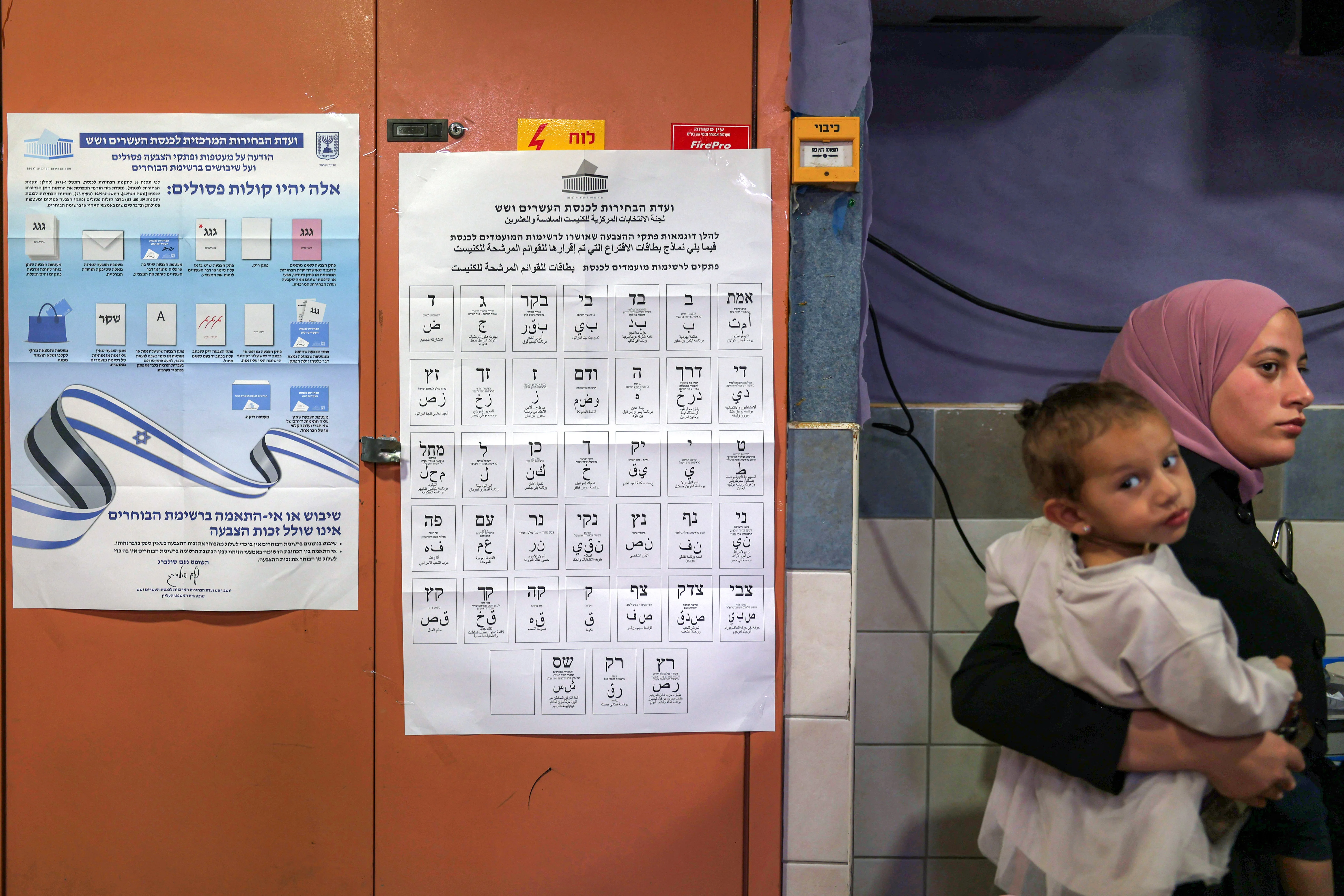
Veteran analysts point out that this dynamic creates a self-fulfilling prophecy of political impotence. Arab citizens make up roughly 21 percent of Israel's population, yet their voter turnout consistently lags behind the national average, often dropping below 50 percent. Why would Arab voters rush to the polls in massive numbers when the main opposition leaders publicly declare them unfit for governance before the campaign even begins?
Low Arab turnout does not just hurt Arab parties. It directly inflates the relative weight of right-wing and Haredi votes, lowering the raw number of ballots needed for Netanyahu’s bloc to secure 61 seats. Every percentage point drop in Arab participation acts as an indirect subsidy to the ruling coalition.
Security Realities Versus Campaign Slogans
The strongest counter-argument against including Arab parties in a governing coalition revolves around national security, particularly in the wake of the October 7 attacks and the ensuing multi-front war. Critics argue that during a period of existential conflict, a government cannot rely on lawmakers who oppose Israel's military operations, reject the country's definition as a Jewish state, or express solidarity with Palestinians in Gaza and the West Bank.
These concerns are neither trivial nor fabricated. They reflect deep, raw anxieties within the Jewish majority.
However, treating all Arab political factions as a single ideological monolith ignores massive divisions within Arab Israeli society. There is a vast gulf between the anti-Zionist rhetoric of lawmakers from the Balad party and the pragmatic, civic-focused approach championed by Mansour Abbas and Ra'am. Even within Hadash-Ta'al, lawmakers frequently focus their parliamentary energy on mundane, bread-and-butter issues like hospital funding, municipal zoning, and combating organized crime—issues that directly affect the daily stability of the entire country.
Furthermore, Israeli history offers clear precedents for how governments manage ideological friction during security crises. In 1992, Yitzhak Rabin formed a minority government that relied on external support from Arab parties to pass the Oslo Accords. Those parties did not sit in the security cabinet. They did not dictate military strategy or operational deployments. They provided a parliamentary safety net in exchange for domestic policy concessions and budget parity.
The distinction between external support and cabinet membership is a basic tool of parliamentary democracy, used routinely across Europe to navigate deep ideological divides. Yet in Israel's hyper-polarized environment, the nuance between a confidence-and-supply agreement and handing over the Defense Ministry has been completely erased from public discourse.
The Diplomatic Cost of Internal Exclusion
Michael Oren’s warning carries particular weight because he views the domestic standoff through the lens of international statecraft. Having spent years defending Israel in Washington, Oren understands that Israel’s democratic legitimacy abroad is inextricably linked to how it treats its Arab minority at home.
When foreign critics accuse Israel of systemic exclusion, diplomats rely on tangible evidence of democratic integration to push back. They point to Arab judges sitting on the Supreme Court, Arab doctors leading major hospital departments, and Arab lawmakers debating freely on the Knesset floor. The inclusion of Ra'am in the 2021 coalition was arguably the single most powerful diplomatic asset Israel possessed in Washington and European capitals, demonstrating that Arab citizens could exercise real executive power within the Israeli system.
Conversely, when mainstream opposition leaders join the right in declaring Arab parties off-limits, they unintentionally validate the talking points of Israel’s harshest international detractors. It signals to allies in Washington that the exclusion of Arab political power is no longer a fringe position, but a consensus view stretching from the far right to the political center.
For an opposition that claims it wants to repair Israel’s strained relationships with Western democracies and rebuild international trust, alienating one-fifth of its own citizenry is a glaring contradiction. You cannot convincingly champion liberal democratic values on the global stage while treating the parliamentary representatives of your largest minority as radioactive at home.
Why Centrist Leaders Keep Blinking
If the math is so clear and the diplomatic stakes are so high, why do opposition figures continue to distance themselves from Arab parties? The answer lies in the short-term incentives of Israeli polling.
Israeli political campaigns are driven by daily focus groups and micro-targeted messaging. When pollsters test the reaction of undecided center-right voters to a potential coalition with Arab parties, the immediate numbers look terrifying. Those voters—often former Likudniks disillusioned with Netanyahu’s leadership style or judicial overhaul policies—carry deep cultural suspicions toward Arab leadership. Centrist strategists look at those focus groups and conclude that any hint of cooperation with Arab factions will drive those swing voters straight back into Netanyahu’s arms.
This creates a classic collective action problem. No individual opposition leader wants to be the first to absorb the short-term polling hit required to normalize Arab political partnership. Instead, each party leader tries to outflank the others to the right, hoping to capture the exact same small slice of disillusioned right-wing voters while ignoring the massive reservoir of untapped votes sitting in Arab towns from Nazareth to Rahat.
It is a strategy optimized for surviving Tuesday’s news cycle at the cost of losing the actual election.
The Uncomfortable Choice Ahead
Israeli politics has reached a point where the traditional left-right spectrum no longer describes the actual fault lines of the country. The real divide is between a cohesive, disciplined right-religious bloc that knows exactly how to maximize its demographic power, and a fragmented opposition paralyzed by its own contradictions.
The opposition cannot defeat a unified bloc while playing with one hand tied behind its back. Either centrist leaders do the difficult, unglamorous political work of explaining to the Israeli public why civic partnership with pragmatic Arab lawmakers is essential for national stability, or they accept permanent minority status.
There is no hidden pocket of 61 purely Jewish centrist seats waiting to be discovered. Until opposition leaders confront the basic arithmetic of the Knesset, their bold promises of political renewal will remain hostage to the exact taboos they refuse to break.