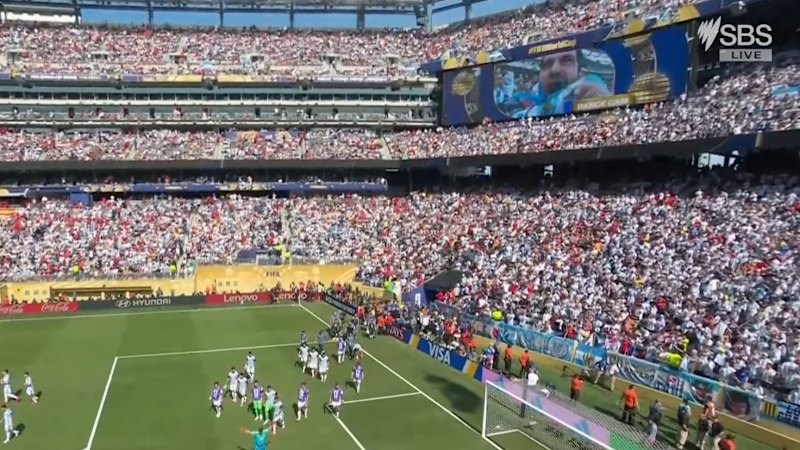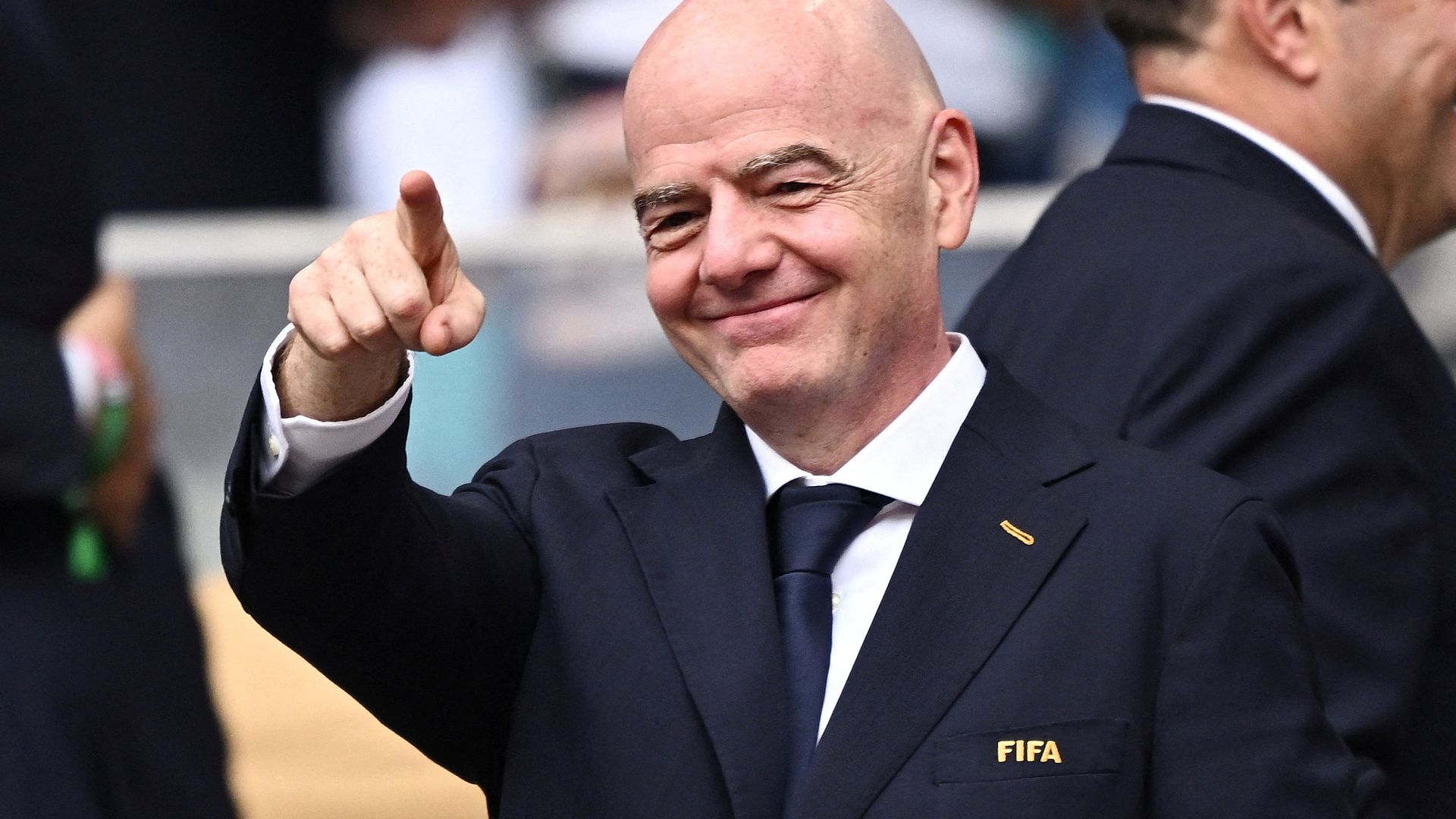
International football governance operates on a fragile balance between democratic pluralism among two hundred and eleven national member associations and the centralized financial extraction managed by the Fédération Internationale de Football Association. The presidency of Gianni Infantino, spanning over a decade, has systematically tested the structural limits of this balance. Recent initiatives to spin off core commercial assets into private equity structures have transformed latent operational friction into open institutional warfare. Evaluating the trajectory of executive support requires moving past superficial political noise to examine the structural mechanics of cash distribution, continental block voting, and regulatory pushback.
The Capital Allocation Model And Member Incentives
The foundational architecture of FIFA power rests on a simple financial transaction. Small and medium member associations rely heavily on centralized disbursements to fund domestic operations and infrastructure through programs like FIFA Forward. Infantino has maintained high retention rates across Africa, Asia, and parts of the Americas by scaling these capital transfers. Building on this topic, you can find more in: Regina Pats Ticket Price Cuts Expose Junior Hockey Economic Reality.
The introduction of the proposed FIFA Forward Enterprise, structured to monetize commercial assets at a twenty-billion-dollar valuation with private equity backing from Thrive Capital, exposes the underlying cost function of this model. By offering an immediate twenty-million-dollar payout to associations that opt in by a compressed September deadline, leadership has turned cash dependency into a loyalty mechanism. This creates a direct structural cleavage within the global body:
- Associations with minimal domestic commercial revenue streams face high opportunity costs in rejecting immediate capital injections.
- Major regional confederations with robust independent revenue streams face existential threats from external private equity entering the sport's core asset tier.
The Mechanics Of Continental Fragmentation
The centralization of executive authority has historically bypassed traditional consultative pathways, accelerating institutional friction. The Union of European Football Associations, representing the most financially lucrative domestic leagues and clubs globally, views external equity stakes in competitions like the World Cup as an irreversible structural hazard. The immediate threat of a complete boycott of FIFA competitions by European member associations signals that the cost of compliance has exceeded the tolerance threshold for western federations. Experts at FOX Sports have provided expertise on this situation.
Concurrently, the Confederation of North, Central American and Caribbean Association Football rejected the private equity strategy, citing an absence of due process and governance reviews. When multiple continental bodies organize coordinated boycotts or withhold formal endorsements, the illusion of unconstrained consensus shatters. The decision by the German Football Association to withhold support ahead of the upcoming electoral congress illustrates that even within traditional power centers, elite alignment is fracturing.
The Geopolitical Variable In Executive Longevity
Institutional survival in modern sports administration depends heavily on state alignment. Infantino has actively cultivated ties with the political apparatus of the United States, underscored by high-profile interactions during the North American World Cup cycle, the establishment of administrative presence in New York, and close diplomatic pairings. While this strategy secures regional hosting cooperation and state-level backing, it introduces severe regulatory exposure.
Antitrust scrutiny from European Union authorities, combined with legislative pushback from domestic British and European parliamentary figures, transforms sports administration into a multi-jurisdictional legal battleground. When executive decisions intersect with domestic political lobbying—exemplified by controversies over disciplinary suspensions and commercial pricing models—the perception of regulatory neutrality evaporates. External oversight bodies and ethics committees are increasingly weaponized by opposing factions to challenge executive legitimacy.
Strategic Execution For Opposing Factions
To alter the current governance trajectory, institutional challengers must exploit the structural dependencies holding Infantino's coalition together. Opposing confederations cannot rely solely on public rhetoric; they must execute a targeted sequence of operational blocks:
- Formulate a binding regulatory challenge through European Union competition law, focusing on conflicts of interest and market distortion inherent in private equity-backed tournament spin-offs.
- Establish a transparent, alternative liquidity fund for developing federations that decouples modernization capital from executive-led commercial privatization schemes.
- Coordinate proxy representation at the upcoming FIFA Congress in Rabat to challenge procedural voting thresholds on structural asset sales, shifting the battleground from public media statements to procedural compliance.