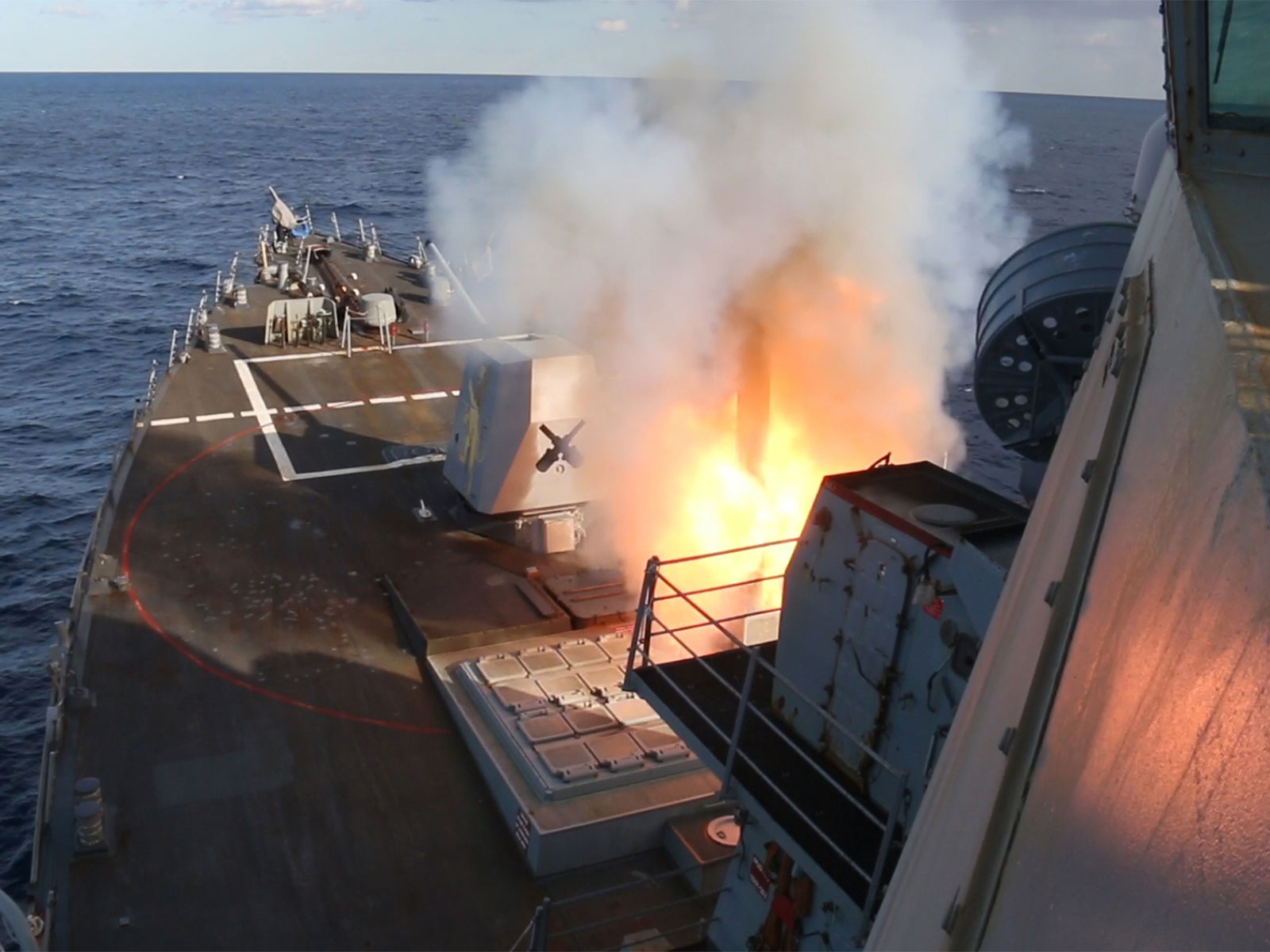
The operational architecture of Middle Eastern security is shifting from isolated national defense protocols to an integrated, multi-layered interception network. Recent kinetic actions—specifically Jordan’s interception of four inbound ballistic threats and tactical shifts involving regional actors like Kuwait—demonstrate a structural evolution in theater missile defense. This transformation is driven by a updated United States command strategy that prioritizes distributed sensor integration over centralized footprint deployment. Understanding this theater requires breaking down the physics of interception, the command-and-control bottlenecks of coalition warfare, and the strategic calculus governing regional state participation.
The Triad of Kinetic Interception Kinetics
Air defense operations rely on a strict chain of detection, tracking, and engagement. When cross-border missile strikes occur, the window for successful interception is governed by ballistic trajectories and reaction-time variables. Jordan’s downing of four missiles highlights the operational realities of the regional airspace corridor.
Radar Cross Section and Early Detection Mechanics
The initial phase of any interception depends on the radar cross-section (RCS) of the incoming target and the line-of-sight constraints of ground-based active electronically scanned array (AESA) radars. Inbound threats traversing regional corridors must be acquired during their boost or mid-course phases to maximize the probability of kill ($P_k$).
Kinetic Kill Vehicles and Guidance Loops
The interception of four distinct targets simultaneously requires advanced track-via-missile (TVM) or active radar homing guidance. Systems deployed in this sector utilize terminal guidance loops where the interceptor calculates proportional navigation convergence paths. The physical limitation here is thermal management on the interceptor's seeker head during high-velocity atmospheric re-entry.
Debris Fragmentation Vectors
A successful kinetic intercept does not erase the mass of the threat; it converts kinetic energy into a fragmented debris field. The spatial distribution of this debris depends on the altitude of the intercept (exo-atmospheric versus endo-atmospheric). Lower-altitude intercepts, while achieving higher target confirmation rates, introduce significant secondary risk profiles to civilian infrastructure on the ground.
The United States Distributed Command Architecture
The updated operational strategy executed by United States forces moves away from legacy forward-deployed large-scale nodes. Instead, the focus has shifted toward an integrated air and missile defense (IAMD) framework that treats sovereign regional assets as nodes within a unified data network.
[Inbound Threat Detect] ──> [Distributed Sensor Mesh] ──> [Automated C2 Evaluation] ──> [Localized Node Engagement]
This structural shift addresses three specific vulnerabilities inherent in traditional theater command:
- Sensor Fusion Efficiency: By linking regional radar systems—including Link 16 tactical data networks—the military command creates a composite tracking picture. This mitigates the geographic blind spots created by mountainous terrain in the Levant and the Arabian Peninsula.
- Decentralized Fire Control: Under the previous framework, engagement authority required routing through centralized command hubs, creating a latency bottleneck. The current doctrine delegates engagement authority down to localized batteries, matching the compressed flight times of hypersonic or low-altitude cruise missiles.
- Decoupled Logistics Networks: Sustaining prolonged defense operations requires a distributed supply chain for interceptor refills. The U.S. strategy focuses on prepositioned technical standard equipment that allows diverse regional partners to service battery platforms without relying on a single vulnerability-prone logistics hub.
Regional Geopolitical Realignment and Sovereignty Calculus
The involvement of states like Kuwait and Jordan in active defensive or offensive counter-measures indicates a shift in risk calculations. Historically, regional states balanced defense commitments against the risk of diplomatic escalation. Current operational realities have altered this balance due to two distinct variables.
The Proliferation of Asymmetric Vectors
The widespread deployment of low-cost, one-way attack uncrewed aerial vehicles (UAVs) and land-attack cruise missiles (LACMs) by non-state and state actors means that neutrality no longer guarantees airspace sanctity. For Jordan, allowing unpermitted missiles to traverse its airspace poses an existential threat to domestic sovereignty and civil safety. Interception is therefore a mandatory execution of border control rather than purely a political alignment.
The Cost Symmetry Disadvantage
Defending against asymmetric aerial threats presents a severe economic imbalance. While an offensive drone may cost less than $50,000 to manufacture, standard surface-to-air interceptors range from $500,000 to over $3 million per unit. Regional actors are forcing a reassessment of this cost function by integrating cheaper electronic warfare (EW) jamming systems alongside traditional kinetic interceptors to neutralize low-tier threats before deploying high-end missile assets.
Strategic Allocation of Defensive Inventory
The primary constraint facing the coalition is the finiteness of advanced interceptor stockpiles. Prolonged attrition warfare depletes sophisticated arsenals faster than industrial bases can replace them.
The defense infrastructure must implement a strict threat-prioritization matrix. Targets tracking toward unpopulated terrain or non-critical infrastructure must be allowed to impact, preserving high-capability interceptors exclusively for vectors targeting high-value military nodes, energy production facilities, or dense population centers. The failure to maintain this inventory discipline inevitably leads to localized saturation, where a wave of cheap decoys exhausts a battery's ready-to-fire ordnance immediately before a primary ballistic strike arrives.
Future operational stability depends on establishing a standardized, automated rules-of-engagement protocol across all regional participants. This requires formalizing real-time data-sharing agreements that function independently of shifting diplomatic relations, ensuring that tactical airspace management operates with cold, systemic predictability.