Cross-border infrastructure initiatives frequently suffer from a structural utilization imbalance. While Northbound Travel for Hong Kong Vehicles has seen substantial adoption since its launch, its reciprocal counterpart—Southbound Travel for Guangdong Vehicles—has operated under highly restrictive operational parameters. The expansion of this southbound framework to encompass five additional Greater Bay Area (GBA) cities (Shenzhen, Foshan, Dongguan, Huizhou, and Zhaoqing) marks a shift from a closed-loop pilot to a regional network. Analyzing this expansion requires looking past political rhetoric to evaluate the infrastructure bottlenecks, economic incentives, and capacity constraints governing the cross-border ecosystem.
The Dual Track Operational Framework
The structural design of the Southbound Travel Scheme operates via two distinct logistics tracks. Each track addresses different segments of mainland demand and imposes distinct operational loads on Hong Kong's transportation infrastructure. You might also find this connected story insightful: The BRICS High Tech Export Illusion and the Math Putin Ignored.
The Point to Point Urban Entry Mechanism
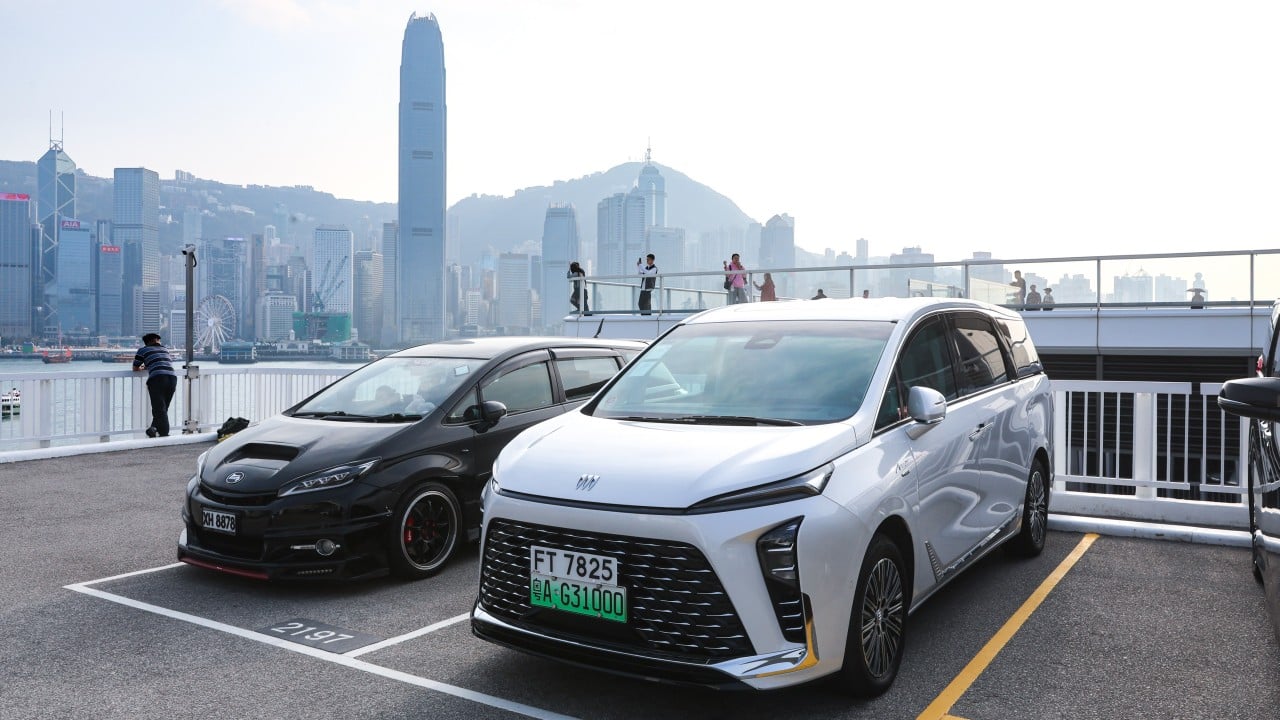
This mechanism permits mainland single-plate vehicles to cross the Hong Kong-Zhuhai-Macao Bridge (HZMB) and navigate directly into the Hong Kong urban core.
- The Scale Bottleneck: The daily quota is being doubled from 100 to 200 vehicles. While a 100% increase appears statistically significant, the absolute volume remains marginal relative to total regional cross-border transit capacity.
- Temporal Disincentives: Vehicles are constrained by a strict three-day maximum stay per entry, limiting the utility of the mechanism to short-term business or premium leisure travel.
- The Structural Demand Indicator: Despite these tight constraints, demand indicators demonstrate a high willingness to pay among mainland users. During the Labour Day Golden Week, booking requests exceeded the available quota by a factor of two to three, reflecting a stark supply-demand mismatch.
The Intermodal Terminal Intercept Mechanism
Operating as a strategic buffer, this track intercepts mainland vehicles at the HZMB Hong Kong Port automated car park, preventing direct entry into the urban road network. It utilizes two operational models: As reported in detailed coverage by Bloomberg, the effects are worth noting.
- The Intermodal Transfer Model (Park & Fly): Drivers park at the port facility and transfer directly to the Hong Kong International Airport (HKIA) restricted area to board international flights, bypassing standard territorial immigration clearance.
- The Urban Transit Model (Park & Visit): Introduced as a core component of the expansion, this model allows drivers to park at the port, clear Hong Kong immigration via the Passenger Clearance Building, and utilize local public transportation networks to access the urban center.
Infrastructure Capacity Elasticity and Bottle Necking
The expansion of the scheme highlights an acute infrastructural asymmetry between Hong Kong and the mainland GBA cities. The decision to scale the daily urban quota conservatively to 200 vehicles is dictated by spatial and geometric constraints inherent to Hong Kong's urban geography.
+------------------------------------+
|  Guangdong Vehicle Fleet Demand   |
+------------------------------------+
                  |
                  v
+------------------------------------+
|   HZMB Trans-Border Bottleneck    |
+------------------------------------+
                  |
         +--------+--------+
         |                 |
         v                 v
[Direct Urban Entry]   [Port Intercept (Park & Visit)]
 (Quota: 200/day)       (Constrained by Parking Volume)
         |                 |
         v                 v
+--------------------+ +-------------------------------+
| HK Urban Congestion| | HK Public Transit Absorption  |
|  (Fixed Capacity)  | |      (High Elasticity)        |
+--------------------+ +-------------------------------+
The fundamental bottleneck is not the throughput capacity of the HZMB itself, but the downstream absorption capacity of Hong Kong's road network. Unlike the mainland's expansive multi-lane urban grids, Hong Kong's urban core features highly inelastic road supply, high density, and a right-hand drive configuration that introduces cognitive friction for mainland motorists.
The Intermodal Terminal Intercept Mechanism solves this capacity constraint. The automated parking facility at the HZMB Hong Kong Port acts as a high-density vertical buffer. This shifts the marginal transit load from the inelastic road network to the highly elastic public transportation network (the Mass Transit Railway and franchised buses), which possesses the spare capacity to absorb thousands of daily inbound passengers without deteriorating urban traffic velocity.
Chronological Phasing and Geographic Scaling
The expansion strategy follows a phased risk-mitigation framework designed to test infrastructure limits sequentially before scaling to the wider province.
Phase One: Intermodal Integration (June 15)
Vehicles from the five new GBA cities gain access exclusively to the "Park & Fly" service. This phase isolates the logistical flow to the airport ecosystem, testing the automated parking registration systems and port-to-airport transit loops without affecting domestic urban systems.
Phase Two: Urban Entry and Transit Activation (July 25)
The daily urban entry quota doubles to 200 vehicles, and the "Park & Visit" service launches for all nine mainland GBA cities. This introduces the broader mainland driving cohort to Hong Kong’s public transport nexus simultaneously, concentrated through the HZMB checkpoint.
Phase Three: Full Provincial Scaling (Target: First Quarter 2027)
The ultimate strategic objective is the expansion of the framework to encompass all 21 prefecture-level cities in Guangdong Province. This step will transition the scheme from a localized sub-regional agreement to a macro-level provincial integration channel.
Structural Limitations and Systemic Friction
The scalability of the Southbound Travel Scheme is fundamentally capped by three systemic friction points that prevent it from achieving the volume parity seen in the northbound direction.
- The Parking Volume Cap: The viability of the "Park & Visit" and "Park & Fly" models depends entirely on the static capacity of the automated parking facilities at the HZMB Hong Kong Port. Once these physical spaces hit peak utilization, the system cannot scale without capital-intensive horizontal or vertical real estate expansion.
- The Insurance Alignment Deficit: Cross-border motorists must navigate three distinct legal and insurance jurisdictions (Mainland China, Hong Kong, and Macao). The complexity of underwriting statutory third-party liability insurance across differing legal frameworks creates administrative friction and increases transaction costs for participants.
- The Steering Configuration Asymmetry: The physical transition from left-hand drive (Mainland) to right-hand drive (Hong Kong) acts as a psychological barrier for the mass market. This asymmetry naturally skews the user base toward highly experienced or commercial drivers, capping organic demand for direct urban entry.
Strategic Outlook
To optimize the economic yield of this infrastructure corridor, regional planners must move away from artificial volume caps and focus on dynamic allocation systems. The rigid daily quota of 200 vehicles represents an inefficient distribution mechanism that fails to respond to real-time market signals.
The optimal play is the implementation of a dynamic pricing and slot-allocation algorithm for urban entry, tracking real-time traffic density indexes in Hong Kong’s Central and Western districts against inbound booking data.
Simultaneously, the expansion of the automated port parking infrastructure should be coupled with automated digital customs clearance frameworks, such as facial recognition linkages and pre-cleared digital insurance certificates. By converting physical bottlenecks into digital transaction layers, the Greater Bay Area can decouple vehicular access from urban congestion, maximizing inbound tourist spend while preserving domestic structural stability.