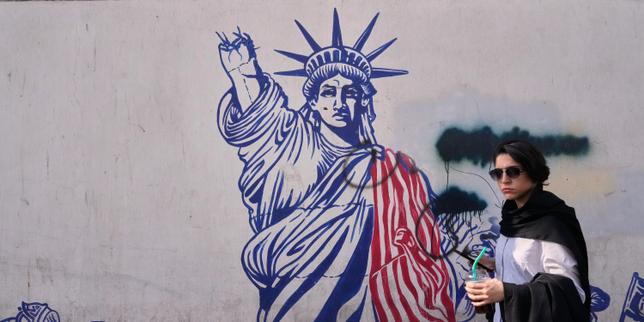
The Pakistani foreign ministry’s announcement that a peace accord between the United States and Iran could be finalized within twenty-four hours represents a high-stakes compression of geopolitical diplomatic timelines. In conflict environments, sudden diplomatic breakthroughs are rarely the result of spontaneous alignment. Instead, they occur when the strategic costs of maintaining a conflict state begin to exponentially outweigh the projected benefits for all primary actors.
To evaluate the validity and potential durability of this rumored accord, we must look past the immediate media narrative and deconstruct the structural drivers, structural bottlenecks, and regional feedback loops shaping this sudden diplomatic acceleration. If you liked this post, you might want to check out: this related article.
The Tri-Lateral Incentive Matrix
A durable diplomatic shift requires three distinct geopolitical variables to align simultaneously. The current rumor of a finalized accord suggests that specific internal and external pressures have forced the United States, Iran, and secondary mediating states like Pakistan into a narrow window of mutual interest.
1. The Iranian Economic Vulnerability Curve
For Tehran, diplomatic engagement is directly tied to domestic economic stability and regime preservation. The efficacy of primary and secondary international sanctions creates a compounding deprecation curve on Iranian capital reserves, oil export monetization, and domestic currency value. For another angle on this development, check out the latest coverage from The New York Times.
When the cost of domestic enforcement against economic unrest exceeds the ideological utility of regional proxy funding, the state is forced to seek sanction relief. The mechanism here is transactional: Iran trades quantifiable restrictions on its nuclear development or regional deployment for predictable capital inflows and international trade normalization.
2. The US Strategic Pivot Reallocation
The United States operates under a global resource constraint. Prolonged military and diplomatic entanglement in the Middle East draws finite logistical, financial, and military assets away from primary strategic theaters, specifically the Indo-Pacific and Eastern Europe.
The US incentive is driven by a desire to establish a stable equilibrium in the region—a baseline containment architecture—that allows for asset reallocation without triggering a power vacuum that adversarial peer-competitors could exploit.
3. The Broker Leverage Function
Pakistan’s role as the architectural messenger in this scenario highlights a specific diplomatic utility. As a nuclear-armed state sharing a direct border with Iran, while maintaining historical military and economic ties to both Western powers and Gulf monarchies, Islamabad serves as a low-friction conduit for backchannel verification.
Pakistan’s incentive is economic stabilization; regional escalation threatens its own fragile borders and energy supply lines. Delivering a diplomatic breakthrough elevates Pakistan’s strategic leverage with Western financial institutions and regional capital allocators.
Structural Bottlenecks to Immediate Enforcement
The assertion that an accord can be "finalized within twenty-four hours" ignores the operational friction inherent in complex international agreements. Even if a political consensus exists at the executive level, several systemic bottlenecks must be resolved before an agreement becomes executable.
Verification and Compliance Asymmetry
The fundamental flaw in rapid diplomatic engineering is the asymmetry of verification. Sanctions relief can be executed relatively quickly through executive actions or treasury waivers. Conversely, the verification of Iranian compliance—whether it involves the halting of centrifuge enrichment, the drawdown of regional proxy funding, or the decommissioning of specific missile infrastructure—requires months of physical and technical inspection by bodies like the International Atomic Energy Agency (IAEA).
This mismatch creates an immediate strategic hazard. If the US front-loads economic relief, it surrenders leverage. If Iran front-loads compliance, it exposes itself to the risk of US political volatility, where a future administration could unilaterally abrogate the agreement.
The Proxy Decoupling Problem
A significant risk factor in any top-down peace accord is the autonomy of non-state actors. Over decades, Iran has cultivated a decentralized network of regional proxies. While Tehran exercises command-and-control capabilities through funding, logistics, and ideological alignment, these groups possess localized incentives that do not perfectly align with Iranian state diplomacy.
A formal signature in Geneva or Islamabad does not automatically clear the threat matrix in the Red Sea, Lebanon, or Iraq. If a proxy actor executes an independent strike during the negotiation window, the political cost for the US administration to maintain the accord becomes unsustainable, creating an immediate structural collapse of the agreement.
Regional Feedback Loops and Counter-Strategies
An accord between Washington and Tehran does not occur in a vacuum; it radically disrupts the security calculations of secondary regional powers, specifically Israel and the Gulf Cooperation Council (GCC) states.
The primary limitation of Western-led regional diplomacy is the exclusion of localized security stakeholders. For Israel, an agreement that prioritizes nuclear containment over the complete dismantlement of Iran's regional missile and proxy architecture is viewed as an existential threat. Consequently, a US-Iran accord often accelerates independent, kinetic counter-strategies by regional actors looking to re-establish their own deterrence parameters before the agreement solidifies.
Similarly, GCC states view rapid Western diplomatic pivots with skepticism. Their strategy centers on hedging: diversifying security partnerships with global powers while simultaneously pursuing independent diplomatic normalization tracks with Tehran to mitigate direct exposure to conflict.
Tactical Execution and Market Implications
If the Pakistani announcement materializes into a formal framework, market and state actors must look for specific operational signals to confirm the durability of the agreement rather than relying on political rhetoric.
- The Execution of Targeted Sanctions Waivers: Watch for specific, time-limited waivers issued by the US Treasury targeting Iranian petrochemical exports and Central Bank asset freezes. The scope of these waivers dictates the true scale of the agreement.
- The Deployment of Advanced Verification Protocols: Look for the immediate announcement of an expanded IAEA inspection mandate within Iran. Without unprecedented access, the accord remains politically unviable in Washington.
- De-escalation Metrics in Critical Shipping Lanes: A measurable reduction in non-state actor interference with commercial maritime traffic in the Bab al-Mandab strait serves as the primary real-world KPI for Iranian compliance.
The critical vulnerability of this fast-tracked diplomatic effort lies in its structural fragility. A 24-hour finalization window implies a framework built on immediate, short-term concessions rather than a comprehensive resolution of underlying structural rivalries. State actors and global enterprises must prepare for a period of artificial stability characterized by high enforcement volatility, localized proxy resistance, and continuous regulatory shifts in the sanctions landscape.


