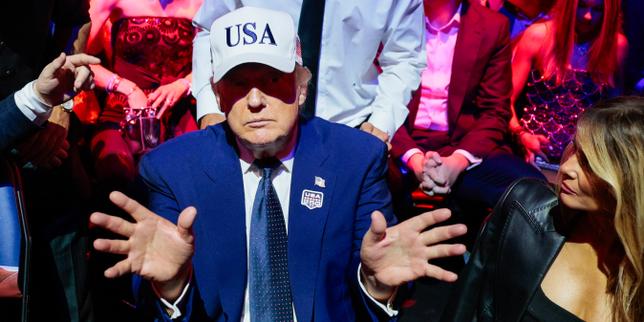
The utilization of high-impact entertainment to anchor major political milestones represents a highly calculated strategy in modern political marketing, rather than a mere lapse in traditional decorum. When a political figure celebrates an 80th birthday by staging a massive Mixed Martial Arts (MMA) event at the White House, the occurrence demands analysis through the lenses of brand alignment, demographic targeting, and institutional optics. This operational breakdown deconstructs the strategic variables behind blending a combat sports spectacle with executive branch signaling, mapping out the precise mechanisms that convert raw entertainment value into political capital.
The Tri-Pillar Framework of the Political-Combat Nexus
The integration of an MMA event into a presidential milestone functions across three distinct operational layers. Each layer targets a specific vulnerability in traditional political communication, replacing standard policy rhetoric with visceral, high-engagement imagery.
1. Demographic Acquisition and Attention Capture
Traditional political media channels suffer from severe fragmentation and declining engagement among male voters aged 18 to 34. Combat sports, specifically promotions like the Ultimate Fighting Championship (UFC) and broader MMA ecosystems, possess a highly concentrated, fiercely loyal demographic that matches this exact profile. Staging a giant fight card under the banner of a birthday celebration bypasses standard journalistic filters. The campaign directly embeds its messaging within the sports entertainment lifecycle, securing hours of live broadcast attention that cannot be purchased through standard television ad buys.
2. Physicality as a Counter-Narrative to Biological Aging
An 80th birthday poses a distinct narrative challenge for any public official, signaling vulnerability, cognitive decline, and physical slowdown. Hosting a combat sports event—an environment defined by peak physical conditioning, violence, and youth—creates an immediate psychological association. The executive presence absorbs the vitality of the athletes on the card. By positioning the president as the architect and master of ceremonies of a high-octane athletic display, the event reframes the narrative of aging from "decline" to "enduring authority."
3. Institutional Subversion for High-Impact Branding
The contrast between the neoclassical, historical architecture of the White House and the raw, utilitarian geometry of an MMA cage creates a powerful visual cognitive dissonance. This subversion is intentional. It signals a rejection of elite, establishment norms in favor of populist, populist-approved entertainment. The message moves away from traditional governance toward a disruptive, anti-institutional posture designed to resonate with voters who view established political protocols with suspicion.
The Operational Cost Function of Political Controversy
While the attention-generation metrics of a giant MMA event at the executive mansion are predictably high, the strategy introduces significant operational liabilities. A precise assessment requires balancing the immediate media yield against long-term institutional erosion.
Total Strategic Yield = (Demographic Engagement + Narrative Counter-Aging) - (Institutional Depreciation + Independent Voter Alienation)
The friction generated by this event manifests in two distinct bottleneck areas:
The Degradation of Presidential Gravity
The American presidency relies heavily on "soft power" and symbolic prestige to execute foreign policy and maintain legislative leverage. Transforming the executive grounds into a sports arena dilutes this prestige. International allies and domestic institutionalists view the spectacle as a descent into bread-and-circuses governance. This dilution introduces a functional bottleneck: the administration gains short-term populist enthusiasm at the direct expense of long-term diplomatic authority and institutional reverence.
The Polarization of Non-Aligned Voters
While the core base responds positively to the disruption of norms, moderate and independent voters—the critical deciders in any national election—frequently view the spectacle as an inappropriate use of state resources and a distraction from pressing policy matters. The event forces a hard choice on the electorate, accelerating polarization. The campaign gambles that the intensive mobilization of the combat sports demographic will out-quantify the loss of moderate voters alienated by the aggressive, unconventional nature of the display.
Architectural and Logistical Realities of Executive Staging
Staging a massive athletic event within a historic government facility introduces unprecedented logistical constraints that alter the nature of the spectacle itself. The physical limitations of the venue dictate the scope of the political theater.
- Structural Load Limits: The South Lawn and surrounding executive grounds are not engineered for the rapid deployment of heavy arena infrastructure, including lighting rigs, broadcast trucks, and the concrete footings required for professional fight cages.
- Security Perimeter Compounding: Introducing hundreds of civilian personnel—fighters, cornermen, athletic commission officials, judges, and production crews—into a highly secure environment creates massive operational friction for the Secret Service. Every individual represents a potential security vector, slowing down execution and increasing the overhead cost of the event.
- Broadcast Control vs. Political Messaging: In a standard arena, the production company controls the narrative arc via camera angles and audio mixing. In an executive-staged event, the political communications team must override standard sports broadcasting conventions to ensure that the president remains the focal point of the broadcast, rather than the athletes in the cage. This tension frequently results in a fragmented viewing experience that risks alienating pure sports fans.
Tactical Strategic Play: Institutional Domination
For political strategists looking to replicate or defend against this high-stakes marketing play, the execution blueprint requires a hard pivot away from defending the ethics of the event toward ruthlessly optimizing its structural advantages. If an executive administration commits to a disruptive spectacle of this magnitude, it must avoid half-measures that signal hesitation or apology.
The optimal play requires leaning fully into the aesthetic dominance of the event. The octagon must be positioned not as a temporary intrusion, but as a temporary extension of executive power. The president should not merely attend as a spectator; they must actively integrate the outcome of the main events into the national narrative, framing the victors as symbols of national strength and resilience. To mitigate the alienation of institutionalist voters, the administration must immediately follow the event with a high-gravity, traditional policy execution—such as signing a major executive order or hosting a bilateral summit—within 24 hours of the final bout. This rapid alternation between raw populist spectacle and formal statecraft creates a psychological pattern of total dominance, signaling that the administration is capable of commanding both the cultural arena and the machinery of state simultaneously.