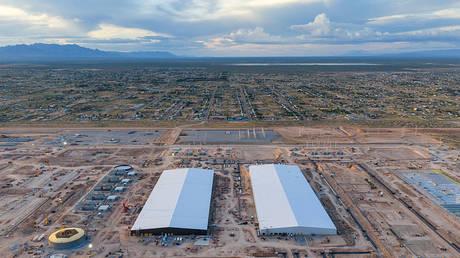
The memory chip sector currently functions as a mirror for the entire artificial intelligence infrastructure trade. For months, it has been a one-way street of explosive capital appreciation. Micron, SanDisk, Seagate, and Western Digital have seen their valuations climb not merely by percentages, but by magnitudes. Investors who treat these names as permanent fixtures of a new growth era, however, ignore the fundamental laws of commodity cycles. When a sector becomes the primary bottleneck for global data center expansion, the resulting pricing power is a gift. It is not an eternal right.
The current frenzy centers on high-bandwidth memory and the storage requirements for massive language models. Because companies like Micron and their peers have moved toward long-term supply agreements rather than the erratic capacity expansion that defined past downturns, many analysts now argue the traditional cycle is dead. This is a dangerous simplification. Cycles do not die; they evolve. They adapt to the current supply-demand configuration. The real risk for the average investor is not a collapse in demand, but the inevitable maturation of capital expenditure.
The Illusion of Infinite Runway
When a company secures a two-year backlog, it feels like safety. In reality, it is a ticking clock. History demonstrates that every "sold out" environment eventually hits a ceiling where the cost of infrastructure exceeds the immediate utility of the software being deployed. We are not there yet, but the frantic rotation out of these names by institutional traders suggests the market is sensing the air thinning.
Consider a hypothetical scenario where a major hyperscaler decides to pause its data center rollout to optimize current compute efficiency. The impact on memory makers would be immediate and severe. Because their valuations are currently tethered to a narrative of uninterrupted, exponential growth, any deviation from that trajectory triggers a swift repricing. It is not about whether these companies produce essential hardware; it is about whether they can continue to justify multiples that assume a perfect, frictionless future.
Structural Realities Versus Hype
The narrative that the AI boom has permanently rewritten the rules for semiconductor cyclicality assumes that human behavior has changed. It has not. Capital still chases returns until it overshoots. We have seen this with the dot-com era, the 2008 housing bubble, and the various semiconductor inventory corrections of the last two decades. While current corporate management teams are acting with unprecedented discipline regarding share repurchases and capacity control, they remain hostage to the broader macroeconomic environment.
Higher interest rates and the cooling of venture capital funding for secondary AI applications will eventually filter down to the hardware level. The memory industry is the most sensitive barometer for this shift. When the flow of easy money into tech startups dries up, the demand for the high-end memory required to train their models will soften. This does not mean the companies will go out of business. It means they will transition from high-growth darlings to cyclical industrial components.
Navigating the Volatility
Investors currently holding these stocks on margin are playing a high-stakes game. The volatility seen in recent weeks, where significant intraday swings have become the norm, is a direct consequence of this over-concentration. When the liquidity exits the room, it does not leave through the door; it tries to leave through a keyhole. This produces the violent price action that characterizes the end of an overheated trend.
For those who believe in the long-term utility of these companies, the goal is survival through the eventual consolidation. If your thesis is based on a three-year horizon, the daily noise is irrelevant. If your thesis is based on the expectation that these stocks will continue to climb 200 percent annually, you are betting against reality. True value is not found in chasing a vertical chart. It is found in recognizing when a utility-like commodity has been priced as a revolutionary technology.
The memory sector is transitioning from a period of scarcity-driven windfall to a period of operational stabilization. Those who understand the difference will preserve their capital. Those who refuse to see the shifting tide will eventually be forced to reckon with the math. Markets have a way of balancing themselves, and they rarely do it gently. Watch the capital expenditure guidance of the major cloud providers. Watch the inventory levels of the manufacturers. Watch for the moment when "sold out" becomes "adequately supplied." That is your signal. The rest is just noise.