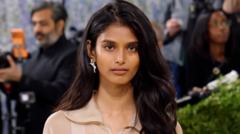
The flashbulbs at the Metropolitan Museum of Art do not fire equally for everyone. When an Indian model walks the most scrutinized carpet in the world, the narrative usually follows a tired, predictable script. The media focuses on the "understated elegance" or the "revival of heritage," but these descriptors are often polite euphemisms for a lack of institutional backing. The reality of the Met Gala is that visibility is bought, negotiated, and gatekept long before a single heel touches the pavement. While the headlines suggest a breakthrough in cultural representation, the mechanics of the evening reveal a more uncomfortable truth. We are seeing participation without influence.
The Illusion of Entry
The Met Gala is not a meritocracy. It is a high-stakes transaction between luxury conglomerates, legacy publications, and celebrity power brokers. For an Indian model to secure a seat, they must navigate a labyrinth of brand ambassadorships and editorial favors that often demand they dilute their identity to fit a Western-centric "global" aesthetic. Also making headlines lately: Stop Crying Over the Paused Paramount Warner Deal (It Was Dead on Arrival Anyway).
When we talk about an "understated" debut, we are often talking about a strategic retreat. Designers and stylists frequently steer South Asian talent toward safe, palatable choices that won't alienate the traditional power centers of New York and Paris. This creates a ceiling. The model is present, but they are sidelined in the broader cultural conversation, relegated to the "best of the rest" lists rather than being the definitive moment of the night.
The Architecture of the Invite
To understand why cultural representation feels so stagnant despite more diverse faces on the carpet, you have to look at the table seating. Tables are purchased by brands for sums reaching $300,000 or more. The brand then selects the "muses" who will wear their clothes. More information into this topic are covered by The Hollywood Reporter.
For many Indian models, the path to the Met is paved by Western brands looking to tap into the massive Indian luxury market. This is a business calculation, not an artistic one. The model becomes a walking billboard for a European house, often stripped of the specific cultural signifiers that could have made their appearance a landmark moment for representation.
- Market Expansion: Brands use Indian talent to signal "inclusivity" to a demographic that holds significant purchasing power.
- The Compliance Tax: Talent often has little say in the creative direction, leading to "understated" looks that fail to challenge the status-quo.
- Editorial Erasure: Major fashion outlets frequently misidentify South Asian attendees or provide them with significantly less digital real estate compared to their Western peers.
The Sari Debate and the Burden of Authenticity
There is a recurring argument that Indian attendees must wear traditional garments like the sari to "truly" represent their culture. This is a trap. If a model wears a sari, they are pigeonholed as an "ethnic" curiosity. If they wear a Western gown, they are accused of abandoning their roots.
This binary choice is a luxury that Western models are never forced to make. A French model can wear a Japanese designer’s work without being questioned about her heritage. The Indian model, however, carries the weight of a billion people on her shoulders. The "understated" debut is often a way to avoid this scrutiny entirely, but in doing so, it reinforces the idea that Indian identity must be tempered to be considered high fashion.
Behind the Velvet Rope
I’ve watched the mechanics of these events for twenty years. The real power isn't on the carpet; it’s in the months of lobbying that happen in the offices of Condé Nast. Representation isn't just about who is in the photo. It’s about who is behind the camera, who is styling the shoot, and who is writing the caption.
When the "industry" celebrates a model's debut as a victory for representation, they are often congratulating themselves for doing the bare minimum. They are mistaking presence for power. True representation would mean an Indian designer dressing a major Hollywood star on that carpet, or a South Asian creative director setting the theme for the entire gala. Until then, we are just looking at a more diverse guest list for the same old party.
The Tokenism Trap
Tokenism is the most efficient way to maintain the status quo while appearing to change. By inviting one or two high-profile Indian figures, the Met Gala and its organizers can deflect criticism about their lack of diversity. It creates a "one at a time" bottleneck where South Asian talent is forced to compete for a single, metaphorical chair.
This competition is manufactured. It prevents the formation of a collective front that could demand better treatment, more prominent placement, and genuine creative autonomy. The "understated" debut is the natural byproduct of this environment—it is a survival tactic for individuals who know that being "too much" could mean never being invited back.
The Financial Reality of the Carpet
Let’s talk about the money. Most people assume that being invited to the Met Gala is an honor that comes with a paycheck. It’s usually the opposite. For a rising model, the costs of the weekend—tailoring, transport, hair and makeup teams, publicists—can be astronomical. If a brand isn't footing every single bill, the model is essentially paying for the privilege of being photographed.
This financial barrier ensures that only those who are already wealthy or deeply embedded in the corporate fashion machine can participate. It narrows the "cultural representation" to a very specific, elite sliple of society. We aren't seeing India; we are seeing a curated, sanitized version of India that has been vetted by luxury boardrooms.
Changing the Script
If we want to move past the debate of "understated" versus "overt," the industry needs to stop treating South Asian talent as a monolith or a marketing demographic.
Stop asking models to be ambassadors for an entire subcontinent. Let them be individuals.
Invest in the ecosystem. Representation matters more in the C-suite and the sewing rooms than it does in front of the step-and-repeat.
Challenge the "Global" standard. The fashion world’s obsession with "minimalism" and "clean lines" is often just a coded preference for European aesthetics. We need to broaden the definition of what constitutes "prestige" fashion.
The focus on a single model’s debut is a distraction from the structural inequities of the fashion industry. The debate shouldn't be about whether a dress was too simple or too ornate. It should be about why, in 2026, we are still treating the presence of an Indian woman at a major fashion event as a novelty to be dissected.
The carpet is red, but the gatekeepers are still looking for gold. They want the profit of the Indian market without the "inconvenience" of actual cultural shift. Until the power dynamics of the Met Gala are fundamentally rewired, these debuts will continue to be quiet ripples in a very large, very stagnant pond. The real work starts when the gowns are returned and the lights go out.
Demand more than a seat at the table; demand a say in the menu.