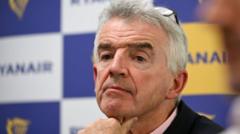
The corporate playbook for a public relations crisis is as predictable as it is toothless. When an executive steps in it, the consultants rush in, the lawyers redact the personality, and a sanitized apology gets uploaded to YouTube at 4:00 PM on a Friday. Michael O'Leary broke that script entirely. When the Ryanair boss had to say sorry for a wildly inappropriate remark comparing baggage policies or pricing structures to absurd extremes, the media establishment treated it as a moral failing. They demanded contrition, humiliation, and a quiet exit from the spotlight.
They missed the entire point. Recently making waves in related news: The Mechanics of Fiscal Retrenchment and Retail Contraction.
O'Leary does not survive because he is a diplomatic statesman. He survives because he runs the most ruthless operational machine in global aviation. The public outrage over his rhetoric is a brilliant, free smoke screen that distracts from the core reality of modern travel: you do not buy a ticket from Ryanair for the conversation; you buy it because it costs twenty-two euros and gets you to Milan before lunch.
I have watched legacy carriers burn through billions in rebranding exercises, lounge renovations, and empathy workshops while their operating margins flatlined into oblivion. They treat air travel like an upscale boutique experience. O'Leary treats it like a bus service with wings. When you understand that fundamental divergence, every headline about his latest verbal grenade stops looking like a crisis and starts looking like masterclass distraction. Additional details into this topic are covered by CNBC.
The Myth of Corporate Etiquette
We live in an era where consumers claim they want ethical purity from the brands they patronize, yet their wallets tell a completely different story. Passengers will sign online petitions denouncing executive hubris on Monday, and then slam their credit cards down for a four-dollar seat on a Dublin-to-Ibiza flight on Tuesday morning. Hypocrisy is the quiet engine of the budget economy.
The legacy media wants you to believe that CEO behavior dictates brand equity. It is a comforting narrative for journalists who need a moral villain to fill column inches. But look at the numbers. Ryanair’s load factors consistently hover above ninety percent. Their unit costs are the envy of every legacy carrier drowning in debt and bloated labor agreements.
| Metric | Legacy Carrier Model | Ryanair Model |
| :--- | :--- | :--- |
| *Primary Driver* | Service differentiation & brand prestige | Extreme cost minimization & asset utilization |
| *Turnaround Time* | 45 - 60 minutes | 25 minutes flat |
| *Ancillary Revenue* | Bundled into high base fares | Unbundled, optional, hyper-targeted |
When an airline turns its aircraft around at the gate in twenty-five minutes instead of an hour, every plane is generating revenue for an extra three hundred hours a year. That is where the money lives. Not in whether the CEO knows how to speak corporate PR garbage during a morning press conference.
O'Leary’s outbursts are not accidental lapses in judgment. They are a feature of a deliberate anti-establishment brand posture. By positioning Ryanair as the unpretentious, unapologetic cheap option, the company inoculates itself against traditional PR scandals. If you buy a ticket for the price of a sandwich, you surrender the right to be coddled.
The Economics of Unapologetic Efficiency
Let us define what an ultra-low-cost carrier actually is. It is not an airline. It is a logistics company that happens to fly people. Every square inch of space is optimized. Every kilogram of weight is scrutinized.
When legacy carriers complain about O'Leary's rhetoric, they are really complaining about his math. They cannot compete with a cost structure that forces passengers to pay for every single deviation from the bare metal tube. They rely on business travelers expensing bloated tickets to subsidize occasional leisure flyers. O'Leary blew up that cross-subsidization model decades ago.
Imagine a scenario where a legacy airline CEO makes a polite, measured, perfectly choreographed statement about sustainability and premium passenger experience. Their stock stays flat, their fuel hedging strategy fails, and they require another government bailout within a decade. Meanwhile, Ryanair flies past them with a newer fleet, higher cash reserves, and an operating margin that makes Wall Street blush.
The outrage economy feeds on apologies. Every time O'Leary says something provocative, apologizes under duress, and moves on, the brand stays front-of-mind for millions of travelers who were deciding between a train and a flight. It is the ultimate jujitsu move: take the PR hit, pocket the booking revenue, and let the moralists exhaust themselves while the cash registers ring.
Stop Asking for Polite Greed
Consumers need to drop the delusion that they are buying a lifestyle when they board a commercial aircraft. You are being hauled across a continent at five hundred miles an hour inside a pressurized aluminum cylinder. The person flying the plane cares about your safety; the person running the airline cares about your seat-mile cost.
If you want silk curtains, complimentary gin, and a CEO who speaks like a Harvard Business School textbook, book a legacy carrier and pay three times the fare. But do not pretend that the moral panic over a CEO's rough edges has any bearing on whether your flight leaves on time.
The next time an executive apology makes the front page, ask yourself what operational reality it is masking. While everyone is dissecting the phrasing of an off-the-cuff remark, the real operators are busy cutting costs, squeezing turnaround times, and capturing market share.
Politeness does not lower ticket prices. Ruthless, unapologetic efficiency does. And until the critics learn the difference, Ryanair will keep flying circles around them.


