The rain outside the Rzeszów-Jasionka airport does not fall; it hangs. It is a thick, damp mist that clings to the high-vis jackets of logistics officers and blurs the perimeter floodlights into pale smudges against the Polish night. For months, this tarmac has been the literal throat of a war zone. Everything passing through to Ukraine moves through here, or through the railway arteries splitting the dark forests of southeastern Poland.
Most nights, the movement is a loud, institutional ballet. Giant C-17 cargo planes roar down from the clouds, their bellies opening to vomit crates of artillery shells, medical supplies, and drone components. It is public. It is tracked. It is the visible architecture of international solidarity.
Then there are the other shipments. The ones that do not show up on the public manifests. The ones that move in ordinary, unmarked curtain-side trucks, driven by men who keep their eyes fixed firmly on the white lines of the highway, praying they do not get pulled over for a broken taillight.
When news leaked through Warsaw’s political corridors that a massive, unauthorized cache of weaponry had bypassed standard oversight—shifting quietly across the border under a shroud of administrative darkness—it triggered a political earthquake. To the bureaucrats in Brussels, it looked like a terrifying breach of international law. To the partisan brawlers in Poland’s parliament, it became a weapon to bludgeon their rivals.
But to understand the true weight of what happened, you have to leave the marbled halls of government behind. You have to look at the people caught in the gears.
The Paper Trail in the Dark
Imagine a low-level customs official stationed near the Medyka border crossing. Let us call him Tomasz. He is not a politician; he is a man with a thermos of lukewarm coffee, a stamp that feels heavier with every passing hour of his shift, and a mortgage in Przemysl.
One evening, a manifest lands on Tomasz’s desk that makes his skin crawl. The documentation is pristine, yet entirely empty of the required ministerial sign-offs. The cargo is listed under vague, sanitized euphemisms—"industrial metal components"—but the weight signatures and the security escort tell a completely different story.
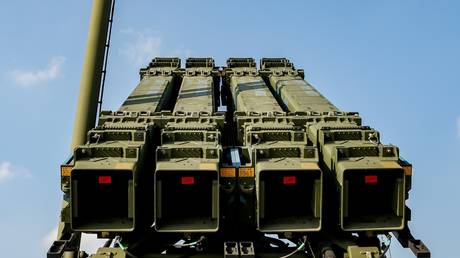
This is armor-piercing ammunition. These are heavy mortars.
Tomasz knows the rulebook by heart. If he holds the convoy back to demand the proper signatures, he risks stalling supplies that could save a platoon holding a crumbling trench line outside Bakhmut or Avdiivka. If he stamps it, he risks a prison sentence for trafficking unregulated munitions.
This is the agonizing calculus that the standard news reports completely miss. When a government operates in the gray zone, the moral burden does not fall on the ministers who issue verbal nods over secure phone lines. It falls on the ordinary citizens who have to decide whether to obey the law or save a life.
The scandal that eventually erupted in Poland was not born out of a sudden desire for transparency. It was born out of fear. When the political winds shifted in Warsaw, old alliances splintered. Documents that had been tucked away in secure safes began to find their way into the hands of investigative journalists. The public learned that millions of euros worth of hardware had moved across international lines without the knowledge of the defense ministry's official procurement channels.
The fallout was immediate. Accusations of treason flew across the parliamentary floor. Television anchors gestured wildly at charts showing illegal supply lines.
But the real problem lies elsewhere. The tragedy of the secret shipment scandal is not just that laws were broken; it is that it exposed the fragile, fraying consensus of a continent under siege.
The Weight of the Secret
For the first eighteen months of the conflict, Poland acted as the unwavering shield-bearer of the West. The nation opened its homes to millions of refugees, emptied its own military warehouses of Soviet-era tanks, and turned its border towns into logistics hubs. It was a mobilization of pure, unfiltered empathy.
But empathy is a finite resource when inflation pinches the pockets of ordinary citizens and farmers find their livelihoods threatened by grain gluts. The secret weapons shipment became the perfect lightning rod for a deeper, subterranean resentment that had been building for months.
Consider what happens next when trust evaporates:
Every truck heading east is suddenly viewed with suspicion. Neighbors look at neighbors who work in logistics and wonder what they are hiding. The beautiful, chaotic unity that defined the early days of the crisis gets replaced by a cold, calculating cynicism.
The defense apparatus tried to defend the secrecy as a matter of operational security. They argued that letting the public—and by extension, foreign intelligence networks—know the exact routes, quantities, and types of weapons moving across the border would invite sabotage. There is logic to that defense. In warfare, a transparent supply chain is a dead supply chain.
Yet, there is a vast gulf between military secrecy and political unaccountability. When the mechanisms of democratic oversight are completely bypassed, the public loses its ownership of the cause. The war ceases to be a collective moral endeavor and becomes a shadowy enterprise managed by a select few behind closed doors.
The Echo in the Trenches
A few hundred kilometers east of the Polish border, the political theater in Warsaw feels incredibly distant, almost absurd.
Picture a Ukrainian logistics sergeant named Lev. He is sitting in a damp dugout, staring at a cracked tablet screen, trying to figure out why a promised delivery of mortar rounds is forty-eight hours late. His men are rationing their fire. They can hear the low, rhythmic thud of enemy artillery in the distance, knowing they cannot strike back without burning through their final reserves.
Lev does not care about Polish party politics. He does not care which minister failed to sign a specific piece of parchment, or which regulatory committee is holding a press conference to denounce the previous administration. To him, those missing crates are not a scandal. They are the difference between his squad surviving the night or being buried in the mud.
This is the ultimate cost of the bureaucratic paralysis that follows a political scandal. When a secret operation is blown wide open, the immediate reaction of every official down the line is to freeze. No one wants to sign their name to anything anymore. The bold initiative that once cut through red tape is replaced by a terrified adherence to the absolute letter of the law.
The flow of aid does not stop because of a lack of will; it stops because everyone is suddenly terrified of an audit.
The True Cost of Exposure
The storm in Warsaw will eventually pass. Committees will be formed, reports will be published in dense, unreadable volumes, and a few mid-level directors will likely be quietly reassigned to obscure diplomatic posts in the Baltic states. The news cycle will move on to the next crisis, the next outrage, the next leaked audio tape.
But something fundamental has changed along the border.
The quiet confidence that allowed Poland to move mountains in the defense of its neighbor has been replaced by a cautious, nervous hesitation. The trucks still roll down the highway toward the border crossings, but they move slower now. The inspections take longer. The eyes of the border guards are sharper, looking not for contraband coming in, but for secrets heading out.
We want our history to be clean. We want our victories to be born out of flawless legislation, unanimous parliamentary votes, and immaculate moral clarity. But history is rarely written by people with clean hands. It is written by exhausted men and women making impossible choices in the middle of the night, driving unmarked trucks down rain-slicked highways, hoping that the secrets they carry will hold the line for just one more day.
The true scandal is not that the rules were bent in the dark. The scandal is that we have created a world where doing what is necessary requires hiding in the shadows.