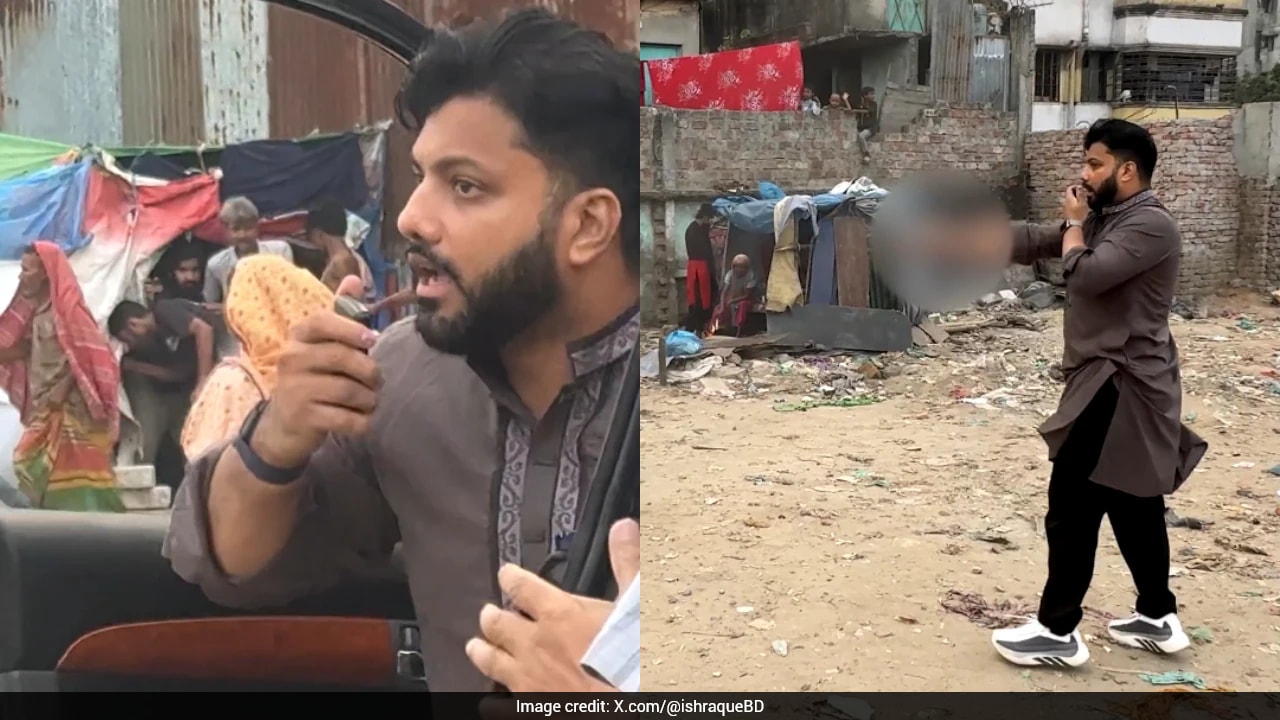
A politician walks into a suspected drug den with a pistol in his hand. Cameras roll. Headlines scream. Everyone claps or gasps on cue.
Stop falling for the theater.
A cabinet minister waving a sidearm in front of a camera is not law enforcement. It is content production masquerading as public safety. When a video of a Bangladesh minister raiding a suspected drug den hits social feeds, the lazy consensus splits into two equally useless camps. One side cheers for a "hands-on leader" who refuses to sit behind a desk while narcotics poison neighborhoods. The other side decries political grandstanding, overreach, or performative macho posturing.
Both reactions miss the real story. Both accept the framing that street-level raids led by politicians—or even street-level raids led by armed tactical units—actually shrink a drug market.
They don't. Anyone who has spent years studying illicit supply chains, public security governance, and urban policing in South Asia knows the uncomfortable truth. Retail drug enforcement is a treadmill bolted to a wall. You sprint. You sweat. You burn calories. The wall does not move.
The Lazy Consensus Everyone Swallows Whole
Standard coverage of a minister brandishing a pistol during a drug bust treats the event like a decisive blow against trafficking. The implied logic goes like this: find a suspected drug den, kick in the door, show lethal force, capture the video, and the local trade gets scared straight.
That logic collapses on contact with basic criminology and supply-chain economics.
First, a "suspected drug den" in an urban settlement is almost never the nerve center of a narcotics ring. Street-level drug nodes are low-capital, high-turnover distribution points. Think of them as neighborhood convenience stores selling high-margin contraband rather than the central bank or the shipping dock. Arresting a runner or clearing a shack removes a retail clerk. Another clerk steps into the apron within hours because unemployment is high, margins are fat, and the underlying demand has not changed.
Second, bringing a minister with a gun into the frame distorts accountability. Executive officials set policy, budget, oversight, and institutional standards. Tactical officers execute warrants under rules of engagement and chain-of-command discipline. When a political figure steps into the breach with a firearm, lines blur fast. Who holds operational command? Who reviews use-of-force compliance if a shot goes wrong? When political leaders act like action heroes, institutional checks take a back seat to optics.
I have watched security programs across developing economies burn millions of dollars on high-visibility sweeps, armored optics, and press-ready raids while ignoring unglamorous customs bottlenecks, financial intelligence, and court backlogs. Politicians love a raid because a raid has a clear visual. A five-second clip of a pistol looks decisive on a screen. Fixing procurement fraud at a port, tracking hawala or mobile-money laundering trails, or clearing drug-possession dockets in understaffed courts takes years and produces zero viral clips.
What Street Raids Actually Do to a Narcotics Market
To understand why a pistol-waving minister rarely breaks a drug network, you have to look at how illicit markets adapt to pressure.
Criminologists call the immediate displacement effect the balloon effect or spatial displacement. Press down on one corner of an urban neighborhood, and the trade pops out two blocks over, or shifts to encrypted messaging and home-delivery runners. In dense cities—whether in Dhaka, Chittagong, or any fast-growing South Asian hub—informal housing and narrow lanes make permanent containment nearly impossible through sporadic raids alone.
Price and purity tell the real story of whether supply is actually being choked. When enforcement genuinely disrupts wholesale supply over a sustained period, street prices usually rise and purity drops because smugglers face higher risk and higher replacement costs. When enforcement is mostly visible at the retail edge, prices often bounce back quickly once the cameras leave and patrols thin out.
Consider the incentive structure inside a retail drug operation. Low-level dealers face arrest or violence every day. Why do they keep working? Because their legal alternatives pay a fraction of what a few successful shifts can bring in. A raid raises the perceived risk for a week or two. If expected earnings still beat alternative wages—and if the kingpins supplying the pills or powder remain untouched—the labor pool refills automatically.
Imagine a scenario where a city conducts twenty high-profile raids in a month, complete with ministers, sirens, and live broadcasts, yet makes zero seizures at maritime terminals, land borders, or wholesale stash houses. Street dealers lay low for forty-eight hours, change drop spots, and resume business on Wednesday. Nothing structural changed except the media cycle.
Precision Terms That Separate Signal From Noise
Public debates over drug enforcement get muddled because people throw around big words as if they mean the same thing. They do not.
- Interdiction means intercepting illicit drugs while they are in transit—at borders, ports, airports, or transport corridors—before they reach local distribution networks.
- Retail enforcement targets street-level buying, selling, and small-scale possession inside neighborhoods.
- Financial investigation follows money trails, asset ownership, shell businesses, and payment channels to dismantle the profit engine behind trafficking.
- Harm reduction focuses on lowering disease transmission, overdose deaths, and health damage among people who use drugs, even when total abstinence or zero supply has not been achieved.
Confusing retail theater with systemic interdiction is how bad policy survives. A raid on a suspected den is retail enforcement at best and publicity at worst. Even when officers recover narcotics or weapons during a sweep, a single street bust rarely severs the cross-border routes feeding synthetic stimulants like yaba or methamphetamine into a country's markets.
Why Heavy Hitters in Policing and Policy Urge Restraint
This is not a fringe opinion cooked up to sound edgy. Serious researchers and practitioners in security studies, urban policing, and drug policy have warned for decades against theatrical, militarized, or purely punitive street sweeps.
Work associated with scholars like Herman Goldstein on problem-oriented policing emphasizes addressing underlying conditions and recurring crime patterns rather than relying on episodic, high-drama enforcement bursts that leave root drivers intact. Similarly, research from organizations such as the United Nations Office on Drugs and Crime (UNODC) and policy analysts studying transnational organized crime consistently points out that sustainable disruption depends on intelligence-led investigations, financial tracing, border controls, and judicial capacity—not isolated street showdowns.
Even seasoned tactical commanders know that unpredictability and operational security keep officers safe and investigations alive. Broadcasting a raid with political entourage optics can telegraph intent, compromise undercover groundwork, and turn a delicate enforcement action into a chaotic crowd-control problem.
The Questions You Should Be Asking Instead
When you see a headline about a minister with a pistol raiding a suspected drug den, your first instinct should not be "Is he brave?" or "Is this illegal?" Those questions keep you trapped inside the spectacle.
Ask sharper questions instead.
"Does this raid touch anyone who can actually move weight?"
If an operation nets small quantities from low-level sellers while mid-level distributors and financiers keep operating across town, the headline overstates the impact. Real disruption hits logistics, storage, wholesale brokers, and illicit cash.
"What happens to the neighborhood thirty days after the cameras leave?"
A single day of action proves nothing. Real security shows up in sustained neighborhood safety, reduced open-air dealing without abusive sweeps, and treatment access for people battling addiction.
"Are courts and prosecutors ready for the cases created by the raid?"
Arrests without solid chain-of-custody documentation, reliable forensic testing, and functional prosecution pipelines clog courts and breed revolving-door outcomes. Quantity of arrests is a vanity metric if convictions stall or target the wrong rung of the ladder.
"Who is protecting the border and the ledger?"
Drugs rarely materialize out of thin air inside a city slum. They cross frontiers, move along highways, and generate dirty money that gets cleaned through real estate, trade, or informal transfers. Anyone ignoring the border and the ledger is fighting shadows with a flashlight.
Honest Downsides to a Cold, System-First Approach
Taking a hard-nosed, system-first view of drug enforcement comes with real trade-offs. I will not pretend this approach is tidy or universally popular.
First, institutional reform and financial tracing are slow. The public wants visible action right now when families see addiction and neighborhood crime hurting their streets. Telling an anxious community "wait for better interdiction metrics and court reform" sounds cold—even when it is true.
Second, focusing on high-level networks and supply corridors does not immediately stop a local dealer from selling outside a school or park today. Communities living with open-air drug markets still need practical, lawful, day-to-day policing that protects residents without crossing into abuse.
Third, questioning high-profile enforcement often gets misread as excusing crime or ignoring victims. Pointing out that a pistol-waving minister makes bad security policy is not a defense of drug traffickers. It is a demand for competence over cosplay.
Actionable Steps That Actually Move the Needle
If policymakers, security leaders, and citizens want fewer drug dens and less violence, skip the action-movie script and focus on what works:
- Keep politicians out of tactical scenes. Let elected officials set budgets, pass tough laws against major traffickers and corrupt enablers, and demand audit trails. Keep firearms in the hands of trained, accountable officers under clear command.
- Prioritize financial and logistics disruption. Pair local intelligence with port and border controls, track illicit money flows, and go after asset networks rather than celebrating low-level seizures alone.
- Measure outcomes, not photo ops. Track sustained reductions in drug-related violence, conviction quality, and treatment capacity—not how many cameras showed up at a raid.
- Build treatment and off-ramps alongside enforcement. Lock up violent traffickers and major suppliers, while expanding accessible addiction treatment and community support so demand shrinks rather than recycling through jails.
A minister holding a pistol in a suspected drug den makes great clickbait. Real security looks like boring spreadsheets, sharp intelligence, clean evidence, and steady institutional discipline.