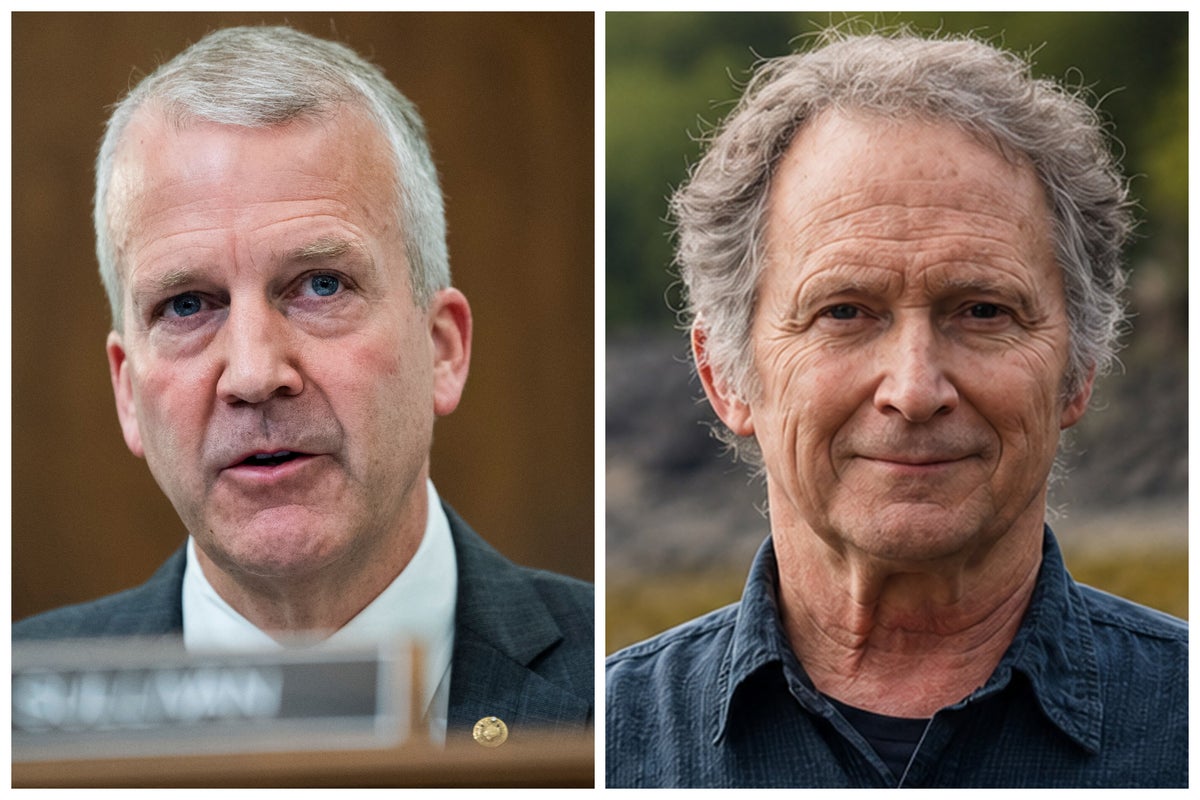
Picture a crisp morning in Petersburg, Alaska, where the salt air clings to the docks and the low tide leaves a carpet of yellowish seaweed across the grey stones. In towns like this, people know their neighbors by the pitch of their voice, the timber of their skiffs, and the simple truth of their names. But in the late summer of 2026, a single name became the most combustible object in the American political sphere.
It is a story of typography, legal battles, and identity. Meanwhile, you can find related events here: Inside the US Economic Asphyxiation Strategy Targeting Iran and Why Tehran Claims It Will Fail.
When Dan J. Sullivan, a retired schoolteacher, walked down to file his paperwork to run for the United States Senate, he triggered a chain reaction that shook the foundations of a high-stakes congressional showdown. The complication was remarkably straightforward and entirely maddening: he shared his exact name with the incumbent Republican senator, Dan S. Sullivan.
For the incumbent, who took office in 2015 and commanded the backing of national party apparatuses, the entry of a namesake felt like an existential ambush. Accusations flew fast and heavy. Allies of the senator argued that the retired teacher was a ghost candidate, a political plant engineered to bleed votes away from the incumbent and hand an opening to former Democratic Representative Mary Peltola, who was running a formidable campaign of her own. To explore the bigger picture, check out the recent article by TIME.
The challenger denied it entirely. His stance was simple and unyielding: his name was his own, and the ballot belonged to the public, not to any single officeholder.
The friction quickly spilled out of local diners and into the courts. State election officials initially attempted to block the challenger from the ballot, ruling that his filing risked confusing voters and undermining the fairness of the election. But the legal line did not hold. The Alaska Supreme Court ultimately stepped in, ruling that the challenger had every right to stand before the electorate, setting up an unprecedented primary battle where voters faced a literal duplication of identity.
Consider what happened when those ballots were counted. In Alaska’s open primary system, where the top four vote-getters advance regardless of party, both Sullivans, alongside Peltola, punched their tickets to the general election. The incumbent secured a substantial share of the tally, but the namesake challenger carved out his own slice, proving that name recognition—however duplicated—carries gravitational pull in a crowded field.
To make the political geometry even more surreal, a third Dan Sullivan—a former mayor of Anchorage—publicly waded into the fray with a social media endorsement for the incumbent, playfully asserting his status as the original holder of the name. It read like satire, but the electoral math was dead serious.
Alaska now sits at the center of a ranked-choice general election where voters will navigate a ballot featuring identical monikers, distinct middle initials, and a high-voltage struggle for control of the United States Senate. It is a collision of ordinary civic ambition and extraordinary political theater, played out against the backdrop of quiet coastal towns where the tide rises, falls, and leaves everyone to sort out who is truly who.
Two Dan Sullivans vie for Alaska Senate seat in unusual primary
This video provides an overview of the unusual primary race featuring the two candidates sharing the same name in Alaska.