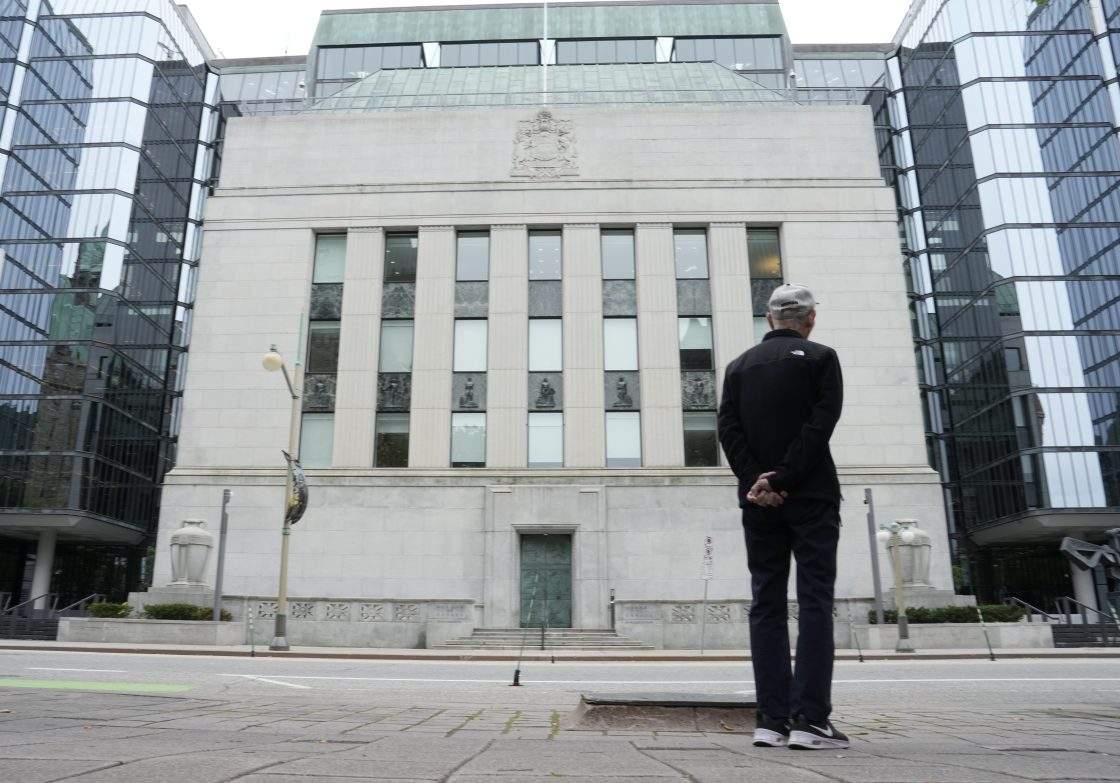
Central banks manipulate the cost of capital to suppress aggregate demand, operating under the assumption that commercial lending markets react symmetrically to policy adjustments. When the Bank of Canada signals or executes a benchmark interest rate hike, the intended economic vector is straightforward: higher borrowing costs constrain corporate investment, increase the opportunity cost of consumption, and cool inflation.
Yet this mechanism relies on an oversimplified transmission model that ignores structural fragmentation within private debt markets, balance-sheet heterogeneities among corporate borrowers, and the lag structures inherent in fixed-rate liabilities. Analyzing an impending rate adjustment requires moving past the headline policy rate and examining the friction points where macroeconomic intent collides with microeconomic realities.
The Transmission Failure Points
Monetary policy fails to transmit evenly across the economy because commercial banks and non-bank financial intermediaries filter rate changes through distinct risk-management frameworks. When the policy rate increases, deposit costs rise immediately, prompting banks to reprice floating-rate credit products almost overnight. However, the corporate sector is rarely uniform. Borrowers with locked-in, long-term fixed-rate debt experience zero immediate contraction in cash flow. Their cost of capital remains insulated until refinancing events occur, creating a temporal mismatch between central bank action and corporate behavior.
Policy Rate Hike ──> Interbank Lending Rate ──> Commercial Prime Rate ──> [Friction: Fixed vs. Floating Debt] ──> Uneven Corporate Response
This structural bifurcation divides the economy into two distinct operational tiers. Highly leveraged firms dependent on revolving credit facilities or short-term commercial paper absorb the shock instantly, cutting capital expenditures and reducing headcount. Conversely, cash-rich enterprises or those that successfully refinanced debt during low-rate regimes operate unaffected. Consequently, aggregate demand drops less than aggregate models predict, forcing central banks to push benchmark rates higher than would otherwise be necessary to achieve the same deflationary effect.
The Banking Sector Margin Imperative
Commercial banks act as the primary conduit for monetary policy, but their institutional incentives frequently conflict with central bank objectives. During a rising-rate cycle, banks face compressed net interest margins if asset yields fail to reprice faster than liability costs. To protect profitability, lending institutions tighten credit standards independently of the central bank's policy stance. This credit rationing disproportionately impacts small and medium-sized enterprises that lack alternative funding sources such as corporate bond markets.
The resulting contraction is qualitative rather than purely quantitative. Banks do not simply charge higher interest rates; they alter risk tolerances, reducing approval rates for marginal projects regardless of expected return. This introduces a credit freeze for productive ventures while established corporations with diversified capital structures continue business as usual. The monetary authority intends to cool the entire macroeconomy, but the banking sector executes a targeted squeeze on vulnerable market segments.
Asset Price Dynamics and the Wealth Effect
Central bank tightening attempts to depress asset valuations, reducing collateral values and dampening consumer spending through negative wealth effects. Higher discount rates diminish the present value of future corporate cash earnings, driving equity valuations downward. Simultaneously, fixed-income yields rise, making bonds more attractive relative to equities and real estate.
However, housing markets in advanced economies frequently exhibit sticky price behavior due to structural supply deficits. While transaction volumes plummet in response to higher mortgage rates, nominal prices decline slowly. Sellers prefer to withdraw properties from the market rather than realize capital losses, locking market liquidity. This creates a locked-in effect where the housing wealth channel transmits policy contraction at a fraction of its theoretical velocity. Households maintain perceived net worth despite restricted cash flows, delaying the adjustment of consumption patterns.
International Capital Flows and Exchange Rate Feedback Loops
Domestic monetary tightening interacts directly with foreign exchange markets, generating secondary effects that complicate domestic inflation control. When a domestic central bank raises rates relative to global peers, capital flows toward the higher-yielding currency, causing appreciation. A stronger domestic currency reduces the cost of imported goods, providing an immediate deflationary impulse.
At the same time, exchange rate appreciation damages export competitiveness, shifting the burden of economic contraction onto export-oriented industries. If global supply chains are experiencing structural cost pressures unrelated to domestic demand—such as geopolitical disruptions or energy shocks—the exchange rate channel offers temporary relief while undermining domestic industrial capacity. The central bank trades long-term productive output for short-term price stabilization, altering the composition of economic output without addressing the root causes of inflation.
The Lag Structure Trap
Monetary policy operates with long and variable lags, generally estimated between twelve and twenty-four months. Central banks must calibrate current policy decisions based on forward-looking inflation forecasts that are notoriously sensitive to exogenous shocks. Raising rates in response to lagging inflation indicators risks overshooting. By the time the full restrictive impact of a rate hike hits the real economy, external conditions may have shifted, turning a minor economic correction into an unnecessary recession.
Navigating this environment requires recognizing that interest rate adjustments are blunt instruments applied to complex, adaptive systems. Analysts tracking rate decisions must abandon simple linear models that equate rate hikes with immediate demand destruction. Evaluating the true trajectory of an economy requires continuous assessment of debt maturity profiles, banking sector liquidity buffers, and structural supply constraints that insulate specific sectors from monetary pressure.