The fatal crash of a Russian long-range strategic bomber during a routine training mission strips away the veneer of operational invulnerability that Moscow's aerospace command routinely attempts to project. Six crew members lost their lives when the aircraft went down, a devastating human cost for a specialized branch of military aviation that cannot easily replace experienced flight officers or complex airframes. While official statements from defense ministries typically point toward technical malfunction or pilot error, military analysts tracking the attrition rates of strategic aviation units recognize a deeper structural vulnerability. The fleet is flying harder, maintenance cycles are compressing under pressure, and the cumulative stress on aging airframes is reaching a critical threshold.
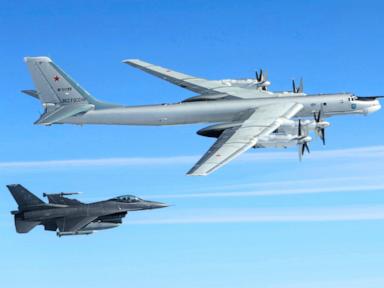
Strategic bombers are not ordinary military aircraft. Platforms like the Tu-95 Bear or Tu-22M3 Backfire require meticulous, time-intensive maintenance regimens, specialized hangar environments, and highly seasoned crews who train for years to manage complex mission profiles. When a nation accelerates training schedules to maintain a constant geopolitical posture or to feed operational demands elsewhere, maintenance windows shrink. Mechanics cut corners out of necessity or are simply overwhelmed by sortie rates. The inevitable result is an increased mechanical failure rate during flight phases that leave zero margin for error.
A closer examination of the operational environment reveals why these accidents carry disproportionate strategic weight. Russia maintains a finite number of active long-range strategic bombers. Unlike tactical fighter jets, which are produced in relatively high numbers and can absorb attrition without crippling the broader service branch, the heavy bomber fleet represents a strategic triad pillar. Losing a single airframe means losing a irreplaceable piece of national security infrastructure. Losing six seasoned crew members is an even heavier blow, because flight hours and tactical experience cannot be manufactured on an assembly line.
Training missions for long-range aviation are notoriously grueling. Crews routinely fly missions lasting ten to fifteen hours, executing complex navigation, electronic countermeasure simulations, and simulated weapon release profiles under severe weather conditions. Fatigue sets in. Mechanical systems pushed to their absolute limits begin to show micro-fractures in hydraulic lines, electrical harnesses, and turbine blades. When a critical subsystem fails at low altitude or during instrument meteorological conditions, the crew has mere seconds to diagnose the emergency and execute a recovery procedure. If the aircraft is operating at the edge of its operational envelope due to deferred maintenance, those seconds run out instantly.
The institutional response to such incidents follows a predictable script. Commissions are formed, black boxes are recovered, and blame is quietly assigned to localized factors—a faulty component, a momentary lapse in crew coordination, or unexpected wind shear. Yet this localized focus obscures the systemic degradation happening across the wider defense sector. Sanctions, supply chain bottlenecks, and the diversion of experienced engineering talent to front-line repair hubs all contribute to an invisible decay in the rear echelon. Training units are often relegated to secondary priority when spare parts are scarce, forcing ground crews to cannibalize parts from other grounded airframes just to keep a minimum number of training sorties in the air.
This practice of cross-part harvesting, known colloquially as cannibalization, introduces hidden risks. A component removed from an airframe that has been sitting exposed to weather for months may carry microscopic wear that standard non-destructive testing fails to detect. When installed on an active training aircraft, that component becomes a ticking clock. Flight safety in heavy aviation relies entirely on absolute redundancy and pristine component pedigree. Once that pedigree is compromised by supply shortages, the statistical probability of a catastrophic inflight failure climbs exponentially.
As geopolitical tensions remain elevated, the operational tempo for strategic aviation shows no signs of slowing down. Patrols must be flown, deterrence messaging must be broadcast, and junior crews must be rushed through qualification pipelines to replace aging veterans. Every shortcut taken to meet these demands increases the baseline risk profile for every flight crew that straps into a cockpit.
The tragedy of the lost six crew members extends far beyond the immediate grief of their families or the brief media cycle that follows a military accident. It serves as an unvarnished indicator of the immense physical and institutional fatigue gripping Russia's strategic air arm. When the machines and the men operating them are driven past sustainable limits, the laws of physics eventually intervene, and no amount of official spin can alter the wreckage left behind on the tarmac.