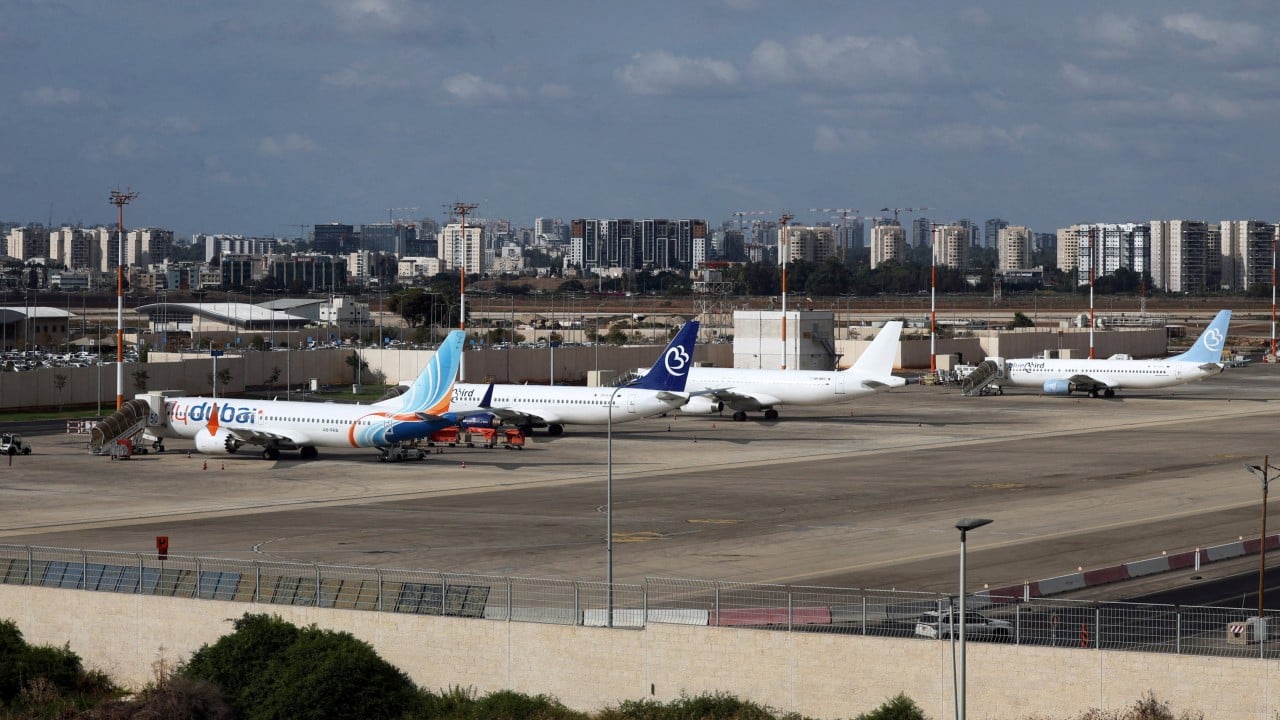
The closure of Moscow airspace following targeted Ukrainian drone incursions represents a profound shift in the security calculus governing the Russian capital. For years, the conflict remained a distant spectacle for the millions residing within the Garden Ring, confined to state television broadcasts and distant casualty reports. Recent waves of unmanned aerial vehicles have systematically shattered that psychological buffer. When municipal authorities halt civil aviation at Sheremetyevo, Domodedovo, and Vnukovo, the disruption extends far beyond logistical delays. It signals a direct challenge to the state's monopoly on security inside its own borders.
Strategic infrastructure protection in the Moscow Oblast relies on a dense network of electronic warfare systems and localized air defense batteries, including the Pantsir-S1 installations positioned on rooftops across the capital. Yet, the proliferation of low-cost, long-range uncrewed systems has exposed structural vulnerabilities in these defensive perimeters. Commercial flight paths depend on predictable radar transponder signaling and precise vertical separation. When active counter-drone measures deploy electronic countermeasures, civil aviation safety margins evaporate instantaneously. The resulting groundings are not merely a precautionary measure against falling debris. They are an admission that automated defense grids cannot permanently guarantee civilian airspace integrity during an active campaign of asymmetric aerial harassment.
The economic and psychological toll of these recurring shutdowns compounds steadily. Moscow functions as the undisputed financial, administrative, and political engine of the federation. Halting operations at primary international transit hubs disrupts supply chains, strands corporate executives, and forces foreign diplomatic missions to reassess operational continuity. More critically, the disruption punctures the carefully cultivated narrative of untouchability that has sustained domestic political stability. When ordinary citizens observe flight tracker applications displaying blank skies above the capital, the abstract notion of a special military operation transforms into an immediate, physical reality.
Air defense prioritization creates an inherent dilemma for military planners managing the capital's security. Shifting mobile anti-drone batteries to protect high-value administrative targets leaves surrounding industrial zones and logistical corridors exposed. Conversely, dispersing defensive assets dilutes their concentration, increasing the probability of successful saturation attacks. Ukraine's evolving tactical doctrine utilizes variable routing, swarm tactics, and encrypted navigation systems to probe for gaps in these overlapping coverage zones. The objective is not necessarily to inflict catastrophic structural damage on the Kremlin itself, but to force a perpetual state of defensive readiness that drains financial resources and erodes public confidence.
As Moscow airspace transitions into a contested operational environment, the long-term implications for Russian domestic governance come into sharper focus. The concentration of power in the capital depends upon an uninterrupted projection of control and order. Every instance in which regional governors announce emergency flight restrictions and civil defense sirens wail strips away another layer of official invulnerability. The question is no longer whether aerial threats can penetrate the perimeter of the capital, but how the political apparatus will manage the steady accumulation of systemic vulnerability over the duration of a protracted war of attrition.