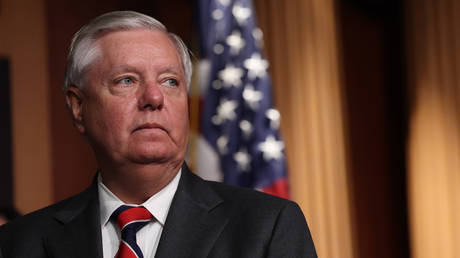
The United States Senate recently voted 86 to 11 to pass the Senator Lindsey O. Graham Sanctioning Russia and Iran Act, a massive bipartisan measure intended to choke off the Kremlin's petroleum revenues. The legislation grants the White House the authority to slap punitive tariffs of up to 100% on the world's top five buyers of Russian crude and natural gas, most notably China and India. It is a stark escalation of economic statecraft, pushed across the finish line largely by the political momentum surrounding the sudden death of its namesake champion, South Carolina Republican Lindsey Graham. Yet beneath the overwhelming congressional tally lies a tangled web of geopolitical contradictions and economic exposure that the vote count conveniently ignores.
Washington loves a blunt instrument. Lawmakers treat economic sanctions like digital switches, assuming that flipping them from off to on will immediately alter foreign behavior. Reality is messier.
For over four years, Western nations have tried to construct a financial cage around Moscow. Measures ranging from asset freezes to price caps have failed to induce a strategic retreat from Ukraine. The Kremlin adapted. Moscow rerouted millions of barrels of crude away from European ports and toward Asian refiners, utilizing an aging shadow fleet of reflagged tankers to keep the cash flowing.
This new legislation attempts to close those loopholes by penalizing the ultimate end-users and secondary actors. If a nation imports heavy volumes of Russian hydrocarbons, it risks massive economic retaliation from the United States.
The Trade War Trojan Horse
Critics of the package, including a handful of progressive Democrats and libertarian Republicans, point out that the text hands unprecedented unilateral leverage to the executive branch. Opponents argue the framework acts as a backdoor mechanism for expansive trade warfare.
Consider the mechanics. The President is given sweeping discretion every six months to evaluate major importers and levy severe duties. There is no mandatory congressional rollback mechanism.
When lawmakers hand over unchecked tariff authority, domestic economic policy often becomes collateral damage. Importers and industrial sectors inside the United States are left exposed to retaliatory spirals. The focus remains locked on punishing Moscow, but the collateral shocks land squarely on global supply chains that have barely recovered from previous trade disruptions.
The Asian Pivot Problem
The primary targets of the legislation are major non-Western economies that stepped up purchases after the initial 2022 invasion. India, for instance, integrated discounted Russian crude into its refining matrix as a matter of national economic survival and inflation management.
Expecting New Delhi or Beijing to abruptly sever energy ties because of an act of Congress misunderstands their strategic calculus. These states view Western sanctions as a localized European security dispute rather than a universal global mandate. Threatening them with secondary tariffs does not guarantee compliance. It risks driving them further into alternative financial architectures designed to bypass the dollar entirely.
When economic coercion collides with energy security, sovereign nations tend to dig in their heels. India and China possess immense market gravity. If Washington attempts to force a choice between trading with the United States or purchasing discounted Russian energy, the outcome may not favor Western diplomatic objectives.
The Legislative Momentum
The political architecture of the bill changed the moment Senator Graham passed away following a trip to Kyiv. Colleagues from both sides of the aisle rushed to rebrand the package as a memorial tribute. Emotional resonance often short-circuits rigorous legislative oversight.
Objections regarding executive overreach were steamrolled by the sheer symbolic weight of honoring a fixture of the foreign policy establishment. The Senate treated the vote as a referendum on resolve rather than a complex economic intervention.
Now the text sits before a divided House of Representatives, where members face a compressed calendar and internal party friction. House leadership must decide whether to swallow the sweeping tariff grants or risk appearing soft on the Kremlin.
Passing sweeping financial prohibitions is easy when confined to the theoretical atmosphere of a Senate chamber. Enforcing them against sovereign giants without triggering a broader global economic fracture is an entirely different burden. The White House will soon hold the trigger, and the target is moving fast.