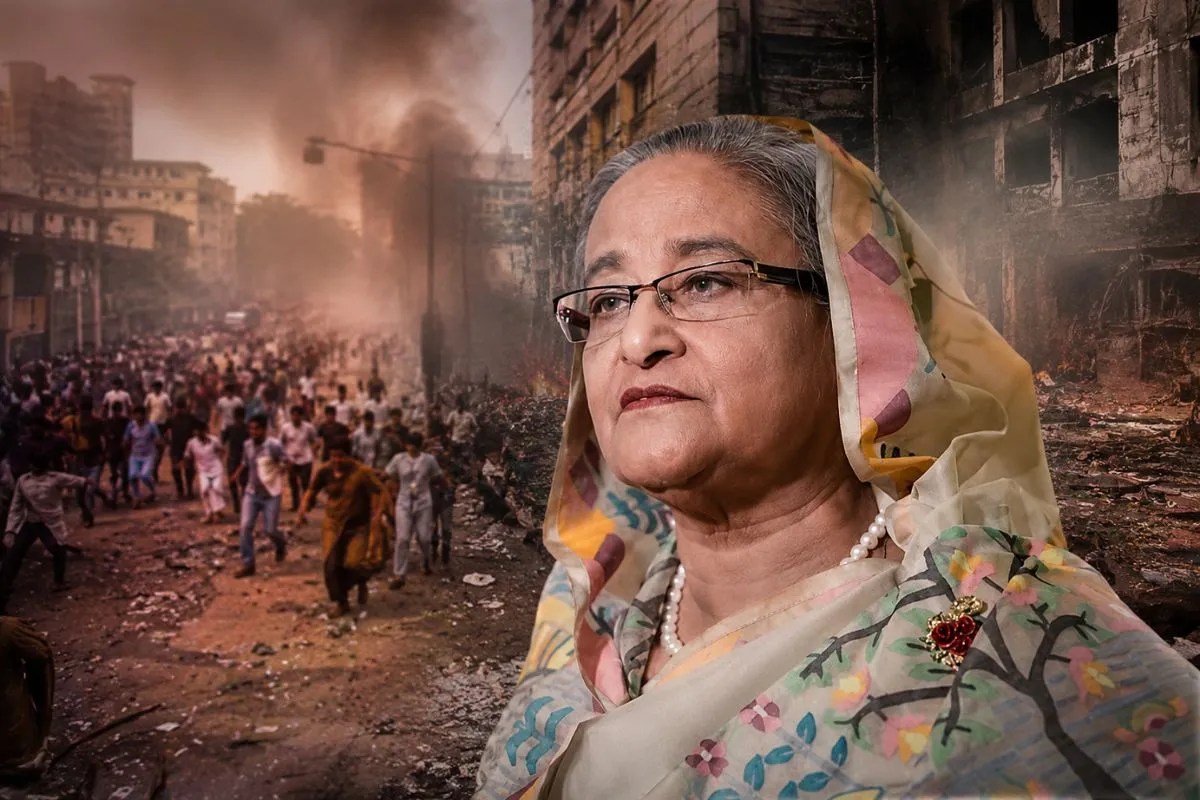
Anniversary rituals in South Asian politics have become a masterclass in collective amnesia. Every single year, mainstream pundits dust off the same solemn script regarding the August 21 Dhaka grenade attack. They point fingers, lament the tragedy of 2004 targeting an Awami League rally, and frame Sheikh Hasina as the eternal martyr of a blood-soaked political theater.
It is a lazy, comfortable narrative. And it is completely wrong. You might also find this related coverage useful: The Alaska Plane Crash That Left Eight Dead Near a Remote Radar Site.
Focusing exclusively on the personal survival of a dynastic leader misses the structural rot that allowed an open-air rally to turn into a slaughterhouse in the heart of Dhaka. The standard commentary reduces a systemic failure of state security, intelligence agencies, and partisan policing into a soap opera about one individual dodging death by inches.
Let us dismantle the conventional wisdom. As discussed in detailed coverage by The Washington Post, the implications are significant.
The Myth of the Accidental Carnage
The dominant narrative treats the 2004 grenade attack as an isolated aberration, a sudden eruption of rogue violence in an otherwise normal democratic ecosystem. History tells a vastly different, more brutal story.
State machinery under the BNP-Jamaat coalition was not merely negligent; it was an active participant in creating the conditions for impunity. When Arges-type military-grade grenades—weapons designed for front-line infantry, not street politics—find their way into a public square, you are not looking at a security lapse. You are looking at institutional capture.
Yet, the mainstream analysis stops at the surface level. We hear endless replays of the sirens, the blood-stained banners, and Hasina shielding herself behind a human wall of party workers. While those details make for compelling television, they obscure the mechanics of how deep state impunity actually operates in Bangladesh. The real tragedy is not just that twenty-four people died on that asphalt; it is that the political class across all factions treats violence as a legitimate bargaining chip until the shrapnel hits their own podium.
The Convenient Weaponization of Grief
Politicians love a good anniversary because grief is an easy emotion to monetize. For decades, the August 21 attack has been utilized as a blunt instrument to bludgeon political opponents, justify authoritarian consolidation, and shut down internal dissent within party ranks.
Whenever accountability for governance wobbles, the state machinery points backward to 2004. It functions as a perpetual motion machine of grievance.
Imagine a corporate board that responds to every quarterly loss by holding a mandatory, tearful seminar about the day a rival company tried to burn down their warehouse, while refusing to fix the faulty wiring in their own office. That is modern Bangladeshi political strategy. The focus shifts entirely away from institutional reform, judicial independence, and police demilitarization, retreating instead into a tribal cult of personality.
If your entire political legitimacy rests on surviving an assassination attempt, you have a perverse incentive to ensure the underlying conditions that made that attempt possible never actually change. A stable, transparent democracy with professional security forces does not produce martyrs. And martyrs are currency.
The Uncomfortable Truth About Intelligence Failures
Let us look at the operational reality of that day. Twenty-one grenades thrown into a crowd of tens of thousands, and what happened next? The investigation was intentionally sabotaged from hour one. Evidence was hosed down before forensic teams could arrive. Key suspects were allowed to flee the country under diplomatic cover or active police collusion.
This was not incompetence. Incompetence is dropping a file. Altering an entire criminal investigation to protect militant networks like Harkat-ul-Jihad al-Islami requires staggering coordination between political masters and law enforcement brass.
When analysts treat the subsequent trials and convictions as the final chapter of justice fulfilled, they ignore the institutional disease. Handing down a handful of high-profile death sentences decades later does nothing to cleanse a domestic intelligence apparatus that historically views political opposition as existential targets rather than civil rivals.
Beyond the Cult of Personality
The obsession with Sheikh Hasina's personal narrative creates a dangerous intellectual bottleneck. It reduces millions of citizens to passive spectators in a permanent feud between elite families.
When the news cycle fixates purely on how she felt, what she remembered, and how close the shrapnel came to her skull, it strips agency away from the actual victims, the low-ranking party workers and ordinary citizens who absorbed the blast so the leadership could walk away. Their names are footnotes in a hagiography.
Real analysis demands that we look past the stagecraft. The Dhaka grenade attack was a symptom of a chronically militarized political culture where the state itself was weaponized against its own populace. Until we stop treating political leaders as divine targets of cosmic tragedy and start treating them as accountable executives of public safety, history will keep repeating its worst chapters in high definition.
Stop mourning the myth. Start auditing the system.