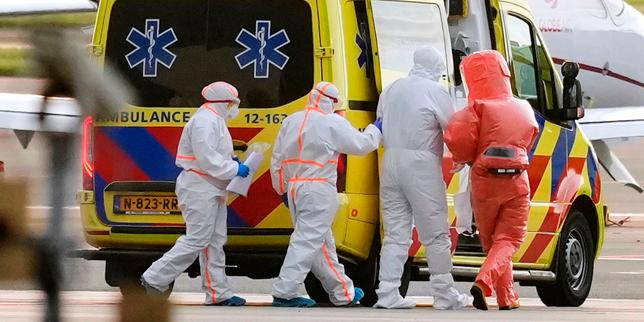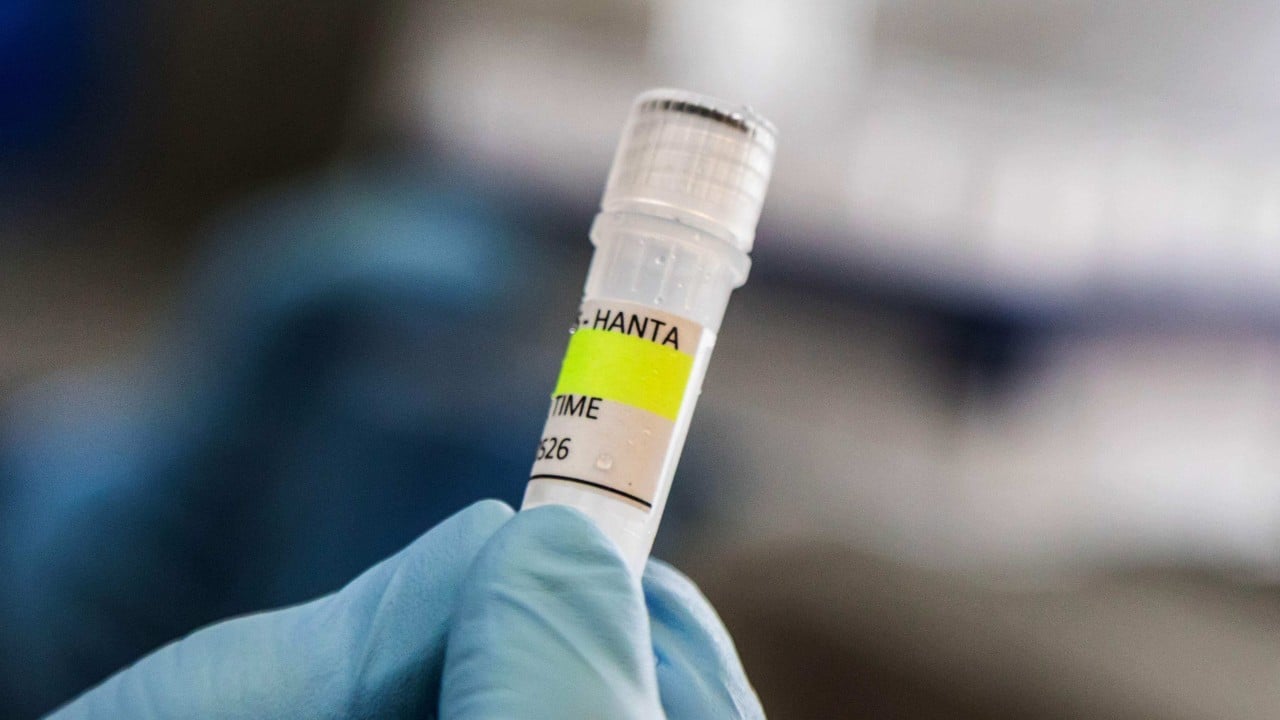
The headlines are designed to make you check your pulse. "Five states on alert." "New Jersey reports exposure." The subtext is always the same: a shadowy, incurable pathogen is creeping from the floorboards into your lungs. It sells clicks. It fuels anxiety. It also happens to be a gross distortion of epidemiological reality.
If you read the mainstream coverage of Hantavirus Pulmonary Syndrome (HPS), you’d think we were on the precipice of a rural plague. We aren’t. By obsessing over the "scare" of regional monitoring, we ignore the actual mechanics of risk, the math of transmission, and the uncomfortable truth that our fear is poorly calibrated.
The Math of the Non-Outbreak
Let’s start with the denominator. Public health departments "monitoring" residents is not a tally of the dying; it is administrative due diligence. In the United States, HPS is vanishingly rare. Since it was first identified in 1993, we see roughly 25 to 30 cases a year nationwide.
To put that in perspective: you are statistically more likely to be struck by lightning than to contract Hantavirus in most parts of the country. Yet, when a single exposure is reported in the Tri-State area, the media reacts as if we’ve found Ebola in the water supply.
This isn't to say the virus isn't lethal. With a mortality rate hovering around 38%, it is objectively terrifying if you happen to be the one in thirty million who catches it. But "exposure" does not equal "infection," and "monitoring" does not equal "crisis." The lazy consensus suggests that proximity to a mouse is a death sentence. The data suggests that for the vast majority of the population, Hantavirus is a statistical ghost.
The Geography of Panic
There is a distinct "East Coast bias" in how these stories are framed. Hantavirus is historically and biologically a creature of the American West. The Sin Nombre virus—the primary culprit for HPS—is carried by the deer mouse (Peromyscus maniculatus).
When news outlets report on cases in New Jersey or the surrounding states, they often conflate different strains. In the East, we frequently deal with the Bayou virus or the Monongahela virus. While still serious, the ecological footprint is different. By treating every rodent sighting from Maine to Montana as a uniform biological threat, we dilute the specific, localized advice that actually saves lives.
We’ve seen this pattern before. Every few years, a wet spring leads to a boom in rodent populations, which leads to a "cluster" of three people in a four-state radius, which leads to a national news cycle. It is a predictable seasonal rhythm, not a shifting paradigm in public health.
The Professional Sanitizer’s Reality Check
I have spent years looking at how people react to biological risks. I’ve seen homeowners spend five figures on professional remediation for a single nest in a crawlspace because they read a panicked article about "lethal dust."
Here is what the alarmist articles won't tell you: the virus is surprisingly fragile. It is an enveloped virus. That means its outer layer is easily degraded by sunlight and common household disinfectants. It doesn’t linger in the environment like anthrax spores. It dies.
The risk isn't "being near a mouse." The risk is the specific, high-intensity aerosolization of fresh droppings in an enclosed, unventilated space. If you are sweeping a dusty, sealed-up cabin that has been sitting for six months, you have a problem. If you see a mouse scurry across your garage floor, your risk of HPS is effectively zero.
Stop Vacuuming the Threat
The most dangerous thing the "awareness" articles do is fail to emphasize the method of cleaning. If you are truly worried about Hantavirus, the worst thing you can do is pull out a vacuum or a broom. That is how you take a localized pile of waste and turn it into a breathable mist.
You don't need a hazmat suit; you need a spray bottle of 10% bleach. Saturation is the enemy of aerosolization.
- Step 1: Soak the area. Don't just mist it. Drown it.
- Step 2: Wait five minutes. Let chemistry do the work.
- Step 3: Use paper towels and gloves.
- Step 4: Seal it in a bag and walk away.
The "experts" quoted in standard news pieces often bury these mechanics under layers of "consult your physician" boilerplate. They prioritize liability over utility.
The Hidden Cost of Hyper-Vigilance
Why does it matter if we overreact? Because public health trust is a finite resource. When we treat a handful of monitored exposures like a burgeoning epidemic, we train the public to tune out.
We are currently living in an era of "pathogen fatigue." After the global events of the last few years, the average person’s internal alarm system is broken. If every rodent-borne illness is framed as the next big threat, people stop taking the basic, necessary precautions for the things that actually kill them—like Lyme disease, which is infinitely more prevalent in the Northeast than Hantavirus will ever be.
Lyme disease affects nearly 500,000 people annually in the U.S. It is a slow-motion disaster that receives a fraction of the "breaking news" energy dedicated to a single Hantavirus exposure. We are hunting for sharks in a swimming pool while ignoring the mosquitoes.
The Structural Failure of "Monitoring" News
"Five other states say residents are being monitored."
Analyze that sentence. It is designed to imply a spread. It suggests a movement of the virus across borders. In reality, it usually means that a group of people attended the same event or stayed in the same infested building. It isn’t a contagion spreading from person to person.
Hantavirus is not transmissible between humans. You cannot "catch" it from your neighbor who went camping. This is a crucial distinction that is almost always omitted or buried in paragraph twelve. By failing to lead with the fact that this is an environmental, non-communicable threat, the media allows the reader’s imagination to fill in the gaps with "Outbreak" scenarios.
Disruption of the Pest Control Narrative
The pest control industry loves Hantavirus season. It is their best marketing tool. They sell fear to sell monthly contracts.
But here is the insider truth: mouse-proofing an old house is an exercise in futility. A mouse can fit through a hole the size of a pencil eraser. You aren't going to turn your 1950s rancher into a BSL-4 lab.
The contrarian approach isn't to live in fear of the "entry point." It’s to manage the habitat. If you have stacks of firewood against the house, standing water, and bird feeders that drop more seed than the birds eat, you are running a rodent hotel. No amount of "monitoring" or panic-reading the news will change that.
The Nuance of the Immune Response
There is a final, darker irony in the Hantavirus panic. The reason it is so lethal to the few who contract it is not because the virus "eats" your lungs. It’s because your own immune system overreacts.
It triggers what we call a cytokine storm. Your body’s defenses become so aggressive that they cause the capillaries in your lungs to leak fluid, effectively drowning you from the inside.
There is a metaphor there for our current media landscape. The "news" acts as a cytokine. It enters the body politic and triggers an inflammatory response that is far more damaging than the original stimulus. We are suffocating under the weight of our own hyper-active alerts.
Real Risk vs. Reported Risk
If you want to be smart about your health, stop reading the "monitoring" reports. They are noise. They are the bureaucratic byproduct of a system that is terrified of being sued for not saying something.
Check your cabin. Don't sweep dry droppings. Wear gloves when you clean the shed. Beyond that? You have significantly more reason to worry about your drive to work tomorrow than you do about a mouse-borne apocalypse in Jersey.
The virus is real, but the "alert" is a product. Treat it as such.
Put down the news feed and buy a bottle of bleach. That is the only intervention that matters.