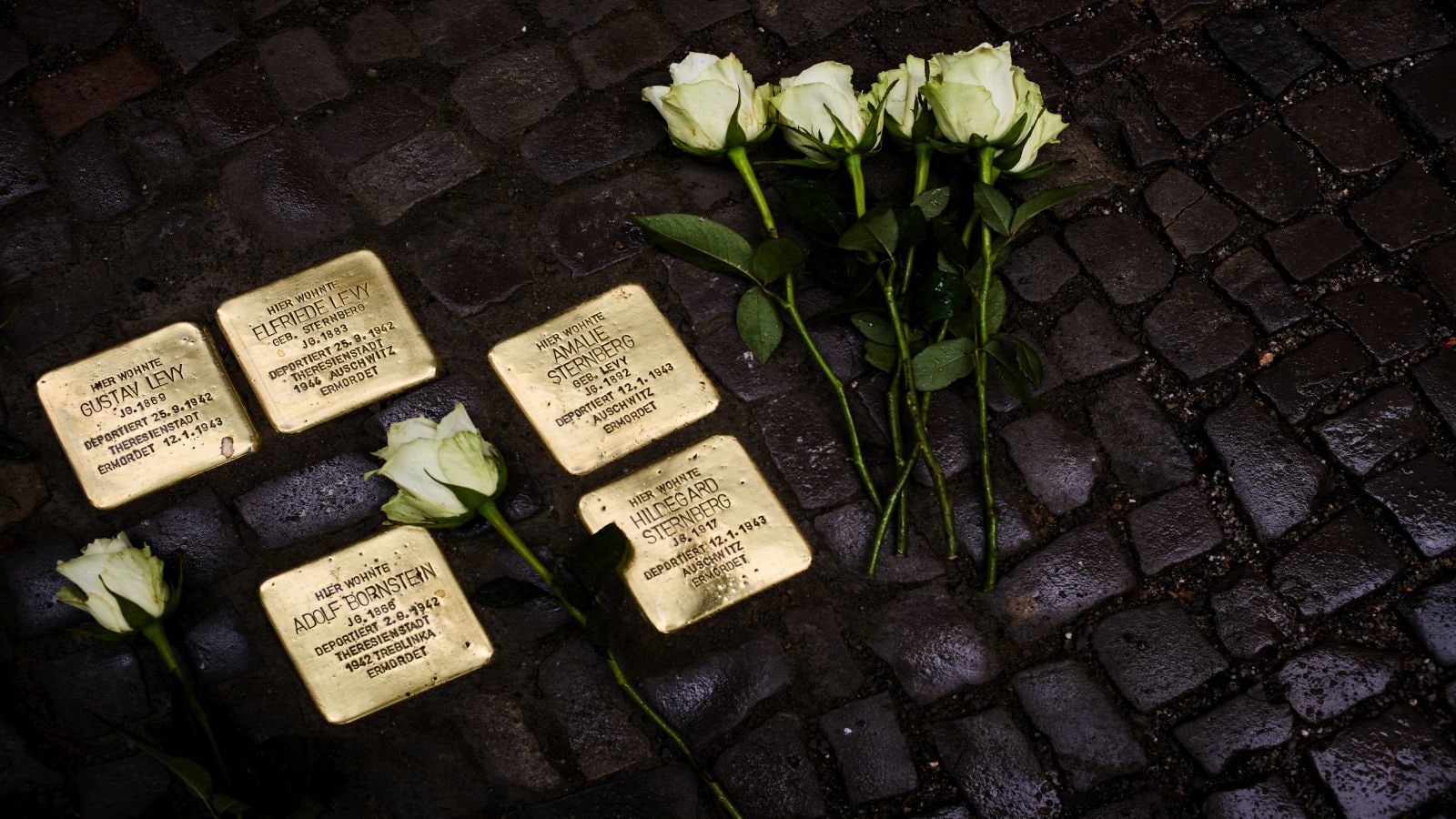
When a municipal council votes to prohibit the installation of future Holocaust memorial plaques, the event is frequently misread as a sudden ideological shock. In analytical terms, it represents the predictable collision point of administrative fatigue, legalistic boundary-setting, and local governance mechanisms operating under structural stress. A recent decision by an East German town council to halt the placement of commemorative Stolpersteine and public remembrance markers exposes the fault lines of modern historical accountability. This is not merely a cultural dispute; it is a case study in how bureaucratic machinery can be mobilized to alter the physical architecture of public memory.
To deconstruct this phenomenon, one must examine the intersection of local autonomy, property rights, and commemorative policy. The decision reveals specific operational dynamics that govern how communities negotiate a difficult past when national consensus meets local friction.
The Jurisdictional Architecture of Commemoration
Municipalities operate within a layered hierarchy of legal and ethical obligations. At the federal level, historical responsibility for National Socialism is codified as an unyielding state priority. However, the implementation of this mandate relies entirely on local authorities who control sidewalks, public squares, zoning permits, and infrastructure maintenance.
This creates an inherent structural vulnerability. When a town council asserts jurisdiction over public property, it holds a monopoly on authorization. The prohibition of memorial plaques does not require a direct assault on the memory of victims; it can be enacted through procedural vetoes.
[Federal Historical Mandate]
       ↓ (Delegation)
[Municipal Town Council]
       ↓ (Control of Public Space)
[Administrative Veto / Zoning Permit Denial]
By framing the ban around neutral administrative concerns—such as pedestrian safety, aesthetic uniformity, sidewalk maintenance liabilities, or the preservation of historical streetscapes—local councils create a legal shield against higher-level political interference. This mechanism allows political actors to achieve ideological outcomes while maintaining bureaucratic plausible deniability.
The Cost Function of Local Remembrance
To understand why a local government chooses to restrict remembrance infrastructure, one must analyze the perceived costs borne by the municipality. Commemoration carries both tangible and intangible ledgers for local stakeholders.
The Maintenance Burden
Plaques embedded in pavement, such as stumbling stones, require ongoing physical upkeep. Sidewalks shift, weather erodes brass surfaces, and construction projects disrupt paved installations. For financially constrained municipalities in eastern regions grappling with depopulation and shrinking tax bases, even minor municipal maintenance tasks become points of contention. When councils calculate the long-term operational overhead of maintaining thousands of dispersed memorials across aging infrastructure, budget prioritization frequently overrides ethical imperatives.
Property Value and Investor Sentiment
Local authorities are acutely sensitive to economic signaling. Tourism boards and real estate developers lobby municipal governments to project stability and forward-looking economic dynamism. In communities where local identity struggles against negative regional stereotypes, some council members and business owners perceive visible reminders of historical atrocities as a deterrent to investment. This zero-sum framing pits economic revitalization narratives against historical accountability, treating memory as a friction coefficient rather than a civic asset.
Ideological Fatigue and Historical Distance
As living witnesses disappear, historical memory transitions from lived experience to institutionalized heritage. This transition introduces ideological fatigue. Communities that feel economically marginalized or misunderstood by metropolitan political elites often manifest a generalized resentment toward state-mandated narratives. Restricting memorials becomes a proxy mechanism for asserting local autonomy against external political pressure, regardless of the specific historical subject matter.
The Divergence of Memory Regimes
The geographical context of East Germany introduces a specific historical divergence in how remembrance is institutionalized. Post-war East Germany operated under an official state ideology that defined the socialist republic as an anti-fascist state. Consequently, official state memory prioritized communist resistance fighters while largely eliding the specific racial and religious dimensions of the Holocaust, as well as broader societal complicity.
Following reunification, West German models of Vergangenheitsbewältigung (coming to terms with the past) were formally integrated into eastern municipalities. However, the institutional roots of this memory culture did not grow from native municipal grassroots movements; they were introduced via federal frameworks and external civil society initiatives.
This top-down implementation left local institutions structurally detached from the ownership of remembrance. When economic stagnation and demographic shifts placed stress on eastern towns, the external origin of these memorial projects made them vulnerable targets for populist pushback and administrative retrenchment.
Administrative Proxies for Ideological Resistance
When analyzing how councils execute such bans without violating constitutional protections against discrimination or hate speech, the methodology relies on procedural substitution. Local administrations utilize standard municipal ordinances to achieve restrictive aims.
- Infrastructure Integrity Arguments: Councils cite the physical impact of embedding objects into public pavement, arguing that differential thermal expansion rates between brass and concrete damage public walkways.
- Consultative Bottlenecks: Bureaucracies introduce multi-tiered approval processes requiring unanimous consent from adjacent property owners, utility companies, and historical preservation boards, effectively creating an impossible administrative hurdle.
- Aesthetic Standardization: Regulations are passed mandating uniform grey paving materials, explicitly prohibiting contrasting metallic inserts on aesthetic grounds.
These tactics demonstrate how legalism can be weaponized. The restriction is codified as an exercise in municipal design coherence, masking the ideological contraction of public space.
Strategic Outlook on Commemorative Governance
The restriction of memorial plaques in an East German municipality signals a broader vulnerability in decentralized historical remembrance. When national consensus relies on voluntary local cooperation, any shift in local political alignment can disrupt the entire commemorative network.
Addressing this vulnerability requires a structural shift in how memorial infrastructure is legally categorized. If remembrance is treated as a discretionary municipal amenity rather than protected public infrastructure, local political cycles will continue to dictate the physical presence of history.
Future initiatives must decouple memorial maintenance from the whims of shifting town councils by elevating historical markers to protected national infrastructure status. Until the legal cost of removing or banning remembrance exceeds the political convenience of doing so, local administrative bodies will retain the structural power to erase the physical traces of the past one sidewalk permit at a time.