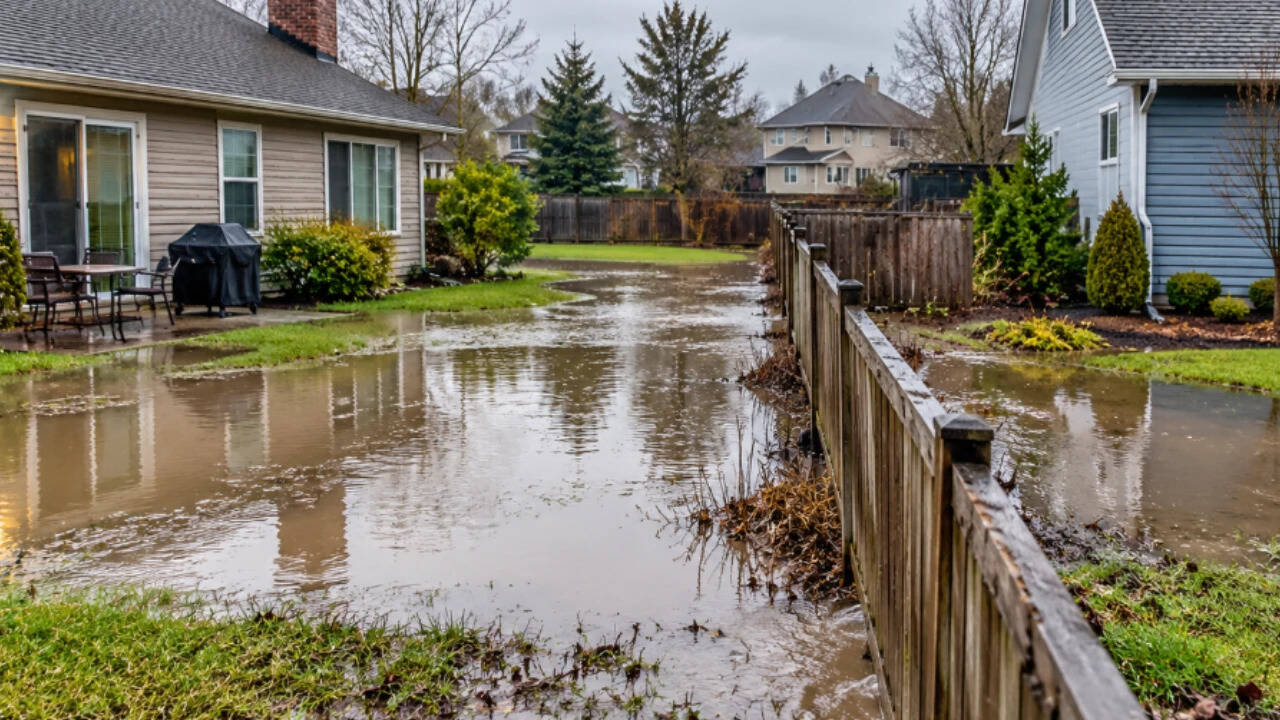
Two Michigan neighbours spent small fortunes in legal fees to sue each other over mutual property flooding. The court looked at the wreckage of waterlogged backyards, shrugged, and awarded both parties damages. Local headlines treated this as a Solomonic triumph of justice. It is actually a terrifying indictment of property law. When the judiciary decides that two people can simultaneously drown each other's land and both deserve a payout, the system has stopped solving disputes and started monetizing dysfunction.
We love to tell ourselves that property rights are sacred. We buy land, put up fences, and assume the boundary lines act as an absolute shield against the outside world. Physics does not care about your property deed. Water flows downhill, driven by gravity, topography, and municipal engineering failures. When courts treat drainage disputes like moral battlegrounds where blame must be assigned and equalized, they ignore the physical reality of hydrological systems.
I have watched landowners spend years fighting over regraded lawns and redirected runoff, burning through cash that could have bought an industrial drainage system ten times over. They are hooked on the high of vindication. They want a judge to look at the defendant and declare them the villain.
The lazy consensus in these neighbourhood water wars is that tort law provides a neat fix. Someone changed the grade, water moved onto your grass, therefore they owe you for the sod. This is a child's understanding of property stewardship. Real estate is not a static postcard. Every time you pave a driveway, plant a thirsty oak tree, or clear brush, you alter the local water table.
Michigan courts chose to split the baby because doing anything else requires a radical admission: traditional property law is fundamentally unequipped for modern suburban hydrology.
Let us look at the mechanics of what actually happens when neighbours point garden hoses and finger-pointing lawsuits at each other. The common enemy is rarely the person next door. The real culprit is forty years of poor municipal zoning, undersized culverts, and developers who paved over natural wetlands to build cookie-cutter subdivisions with maximum lot density.
When a heavy storm hits, the municipal storm sewer system chokes. The excess water has to go somewhere. It spills over curbs, pools in low spots, and backs up onto private parcels. Instead of dragging the city council or the county drain commissioner into court, homeowners take the path of least resistance. They sue the guy twenty feet away whose sump pump happens to point toward the fence line.
It is a tragedy of the commons played out in Kiddie pools and soggy sod.
Courts that award damages to both sides are engaging in judicial appeasement. They are splitting the economic difference to clear a docket, leaving both litigants with drained bank accounts and lawns that are still underwater. The legal term for this is a mess. The practical term is extortion by litigation.
If you find yourself locked in a drainage feud with the family next door, stop calling lawyers. You are paying a professional to validate your stubbornness. Lawyers bill by the hour to watch water pool. Contractors bill once to fix it.
The counter-intuitive truth is that you should stop trying to win the water war and start engineering around your neighbour's incompetence. If their runoff is flooding your yard, grading your own topography, installing French drains, or putting in dry wells will solve your problem in a week. Winning a court judgment for three thousand dollars in damages while spending twelve thousand in legal fees to prove a point is financial self-harm disguised as standing your ground.
Water does not care who owns the title deed. It obeys gravity. Until property owners realize that fighting nature through the court system is an exercise in supreme vanity, judges will keep splitting the damages, and the lawyers will keep laughing all the way to the bank.
Grade your yard. Fix your drainage. Leave the courts out of the puddle.



