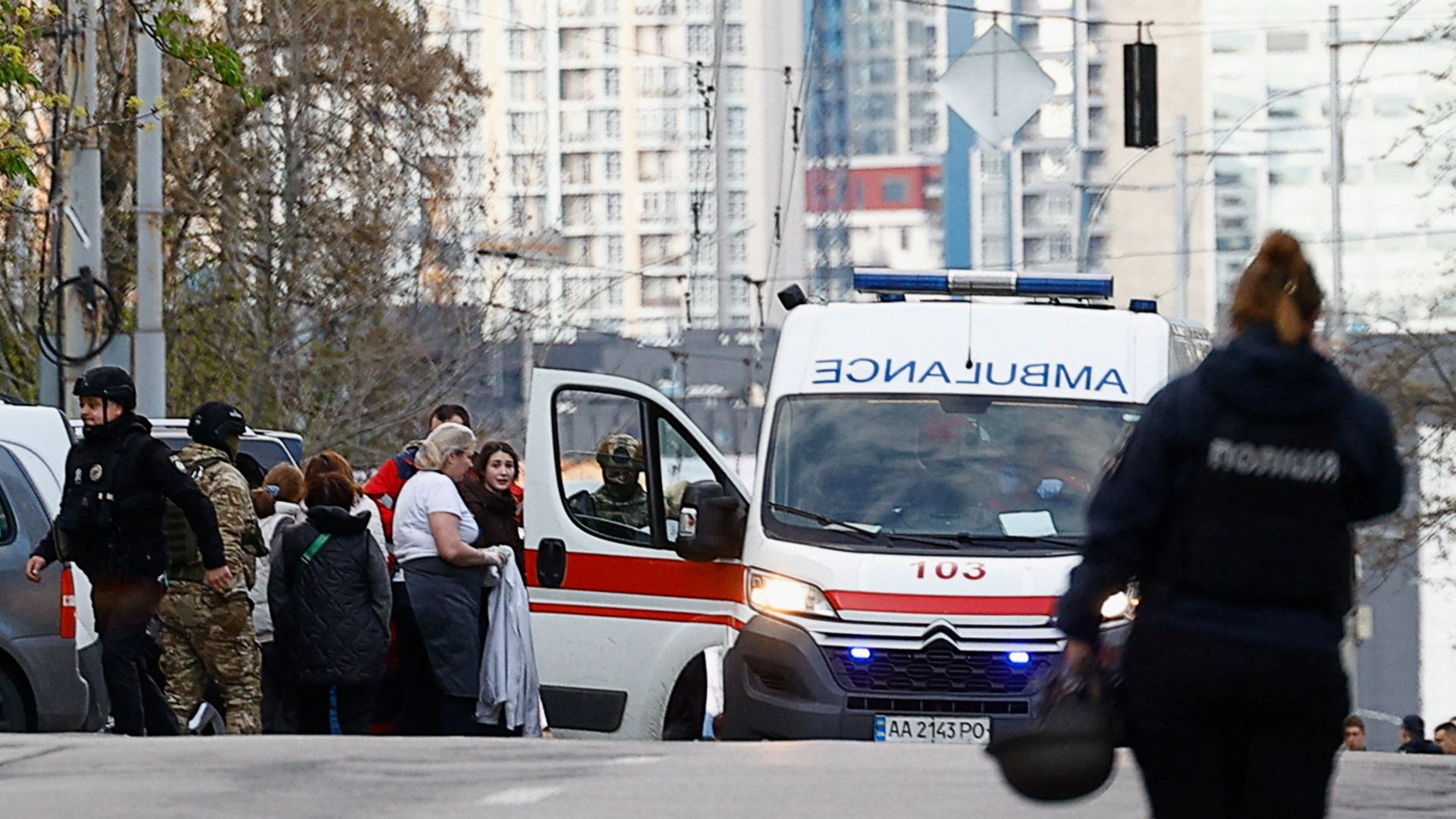
The headlines are bleeding the same tired narrative. Six dead. A "senseless" act of violence. A city in shock. If you are reading the mainstream reports about the shooting in Kyiv, you are being fed a diet of emotional fluff and tactical ignorance. The media wants you to focus on the tragedy because they don’t have the spine to analyze the systemic failure of the "Smart City" security theater that promised to prevent exactly this.
We are told that Kyiv, a city hardened by years of geopolitical tension and equipped with thousands of high-end surveillance cameras, is a fortress. It isn't. This shooting didn't happen because of a lapse in "community spirit." It happened because the security infrastructure we rely on is built on a foundation of reactive observation rather than proactive intervention.
The Surveillance Trap
Most people believe that more cameras equal more safety. This is the first lie. Cities across the globe have spent billions on facial recognition and real-time monitoring. In Kyiv, the "Kyiv Smart City" initiative was supposed to be the gold standard for Eastern Europe.
Here is the brutal truth: Surveillance is a forensic tool, not a preventative one. A camera does nothing to stop a bullet; it only helps the police identify the body and the shooter after the blood has already hit the pavement.
I’ve consulted on urban security projects where officials bragged about their 4K coverage. It’s useless. Unless you have an AI-driven system capable of identifying weapon silhouettes and anomalous behavior before the first shot is fired—and a rapid-response team that can beat a three-minute fuse—you are just filming a snuff movie. The "lazy consensus" says we need more eyes. I say we need fewer eyes and more teeth.
The Fallacy of the Lone Wolf
Every time a shooting occurs, the narrative defaults to the "deranged lone wolf." This is a comforting fiction. It suggests that these events are lightning strikes—unpredictable and unpreventable.
They aren't. Violence of this scale requires logistics. Even a single shooter needs a supply chain. They need a weapon, they need transit, and they need a window of opportunity created by predictable patrol patterns. By labeling these actors as "lone wolves," we absolve the security state of its failure to track the digital and physical breadcrumbs that always precede an attack.
- The Dark Web Arms Pipeline: The weapons used in these incidents don't vanish into thin air. They move through specific corridors.
- The Intelligence Gap: We are drowning in signals but starving for sense. The failure isn't a lack of data; it's the inability to filter the noise.
If you think this was a random act of madness, you aren't paying attention to the mechanics of modern urban warfare. This was a failure of signal intelligence.
Why "Emergency Response" is an Oxymoron
The term "emergency response" is a marketing gimmick. If the police arrive five minutes after the shooting starts, they aren't "responding" to a shooting; they are documenting a crime scene.
In a high-density urban environment like Kyiv, five minutes is an eternity.
Imagine a scenario where a shooter enters a crowded metro station. In the first 60 seconds, the majority of casualties occur. By the time the call reaches a dispatcher, the shooter is likely moving to a second location or preparing to end the engagement. The traditional model of policing is geographically and chronologically incapable of stopping mass casualty events in progress.
The fix isn't "more training." The fix is decentralization. We need to stop pretending that a centralized command-and-control structure can handle the speed of a modern kinetic strike.
The Cost of the Status Quo
The downside to my argument is obvious: a more proactive, decentralized security model feels "militaristic." It’s uncomfortable. It requires us to admit that the police cannot protect us and that the current "Smart City" model is a billion-dollar paperweight. But would you rather feel comfortable in a city that is secretly a shooting gallery, or slightly uneasy in one that actually works?
Stop Asking "Why" and Start Asking "How"
The media loves the "why." They want to dig into the shooter's manifesto, their childhood, their political leanings. This is a distraction. The "why" is irrelevant to the victims. The only question that matters is "how."
- How did the shooter bypass the "state-of-the-art" monitoring?
- How did the hardware reach the site?
- How did the response time fail the victims?
When we stop treating these events as psychological mysteries and start treating them as engineering failures, we might actually get somewhere.
The current security paradigm is a relic of the 20th century. It relies on a visible presence to deter crime. But you cannot deter someone who doesn't care about their own survival. You can only intercept them.
The Kyiv shooting is a wake-up call for every major city that thinks its "Smart" infrastructure is a shield. It’s not a shield; it’s a scoreboard. And right now, the score is zero for the bureaucrats and six for the morgue.
Forget the candles and the moments of silence. If you want to honor the dead, start demanding a security architecture that prioritizes kinetic interception over digital voyeurism. The technology exists. The data is there. What’s missing is the political will to admit that our current systems are designed for the evening news, not for saving lives.
Stop looking for "meaning" in the tragedy. There is no meaning. There is only a failure of the systems you were told to trust. Dismantle them and build something that actually shoots back.